Active Recall Study Method Explained: What It Is & How It Works
You've read the chapter three times and you still can't play the passage or recall the answer without peeking. That's the gap the active recall study method explained here is meant to close. Passive review, rereading notes, replaying a video, watching your hands move through a piece, feels productive but barely touches long-term memory.
Active recall means forcing your brain to retrieve information or a skill from memory before you check if you got it right. Instead of looking at the answer first, you test yourself first, then compare. This single change, tested repeatedly in cognitive science research, produces stronger, longer-lasting memory than any amount of passive review.
In this article, you'll get a clear definition of active recall, the research behind why it works, and concrete ways to apply it whether you're memorizing facts or drilling a musical passage. We'll also cover how spaced repetition pairs with active recall to tell you exactly when to retrieve something again, right before you'd otherwise forget it, so your practice time actually sticks.
Why active recall outperforms passive studying
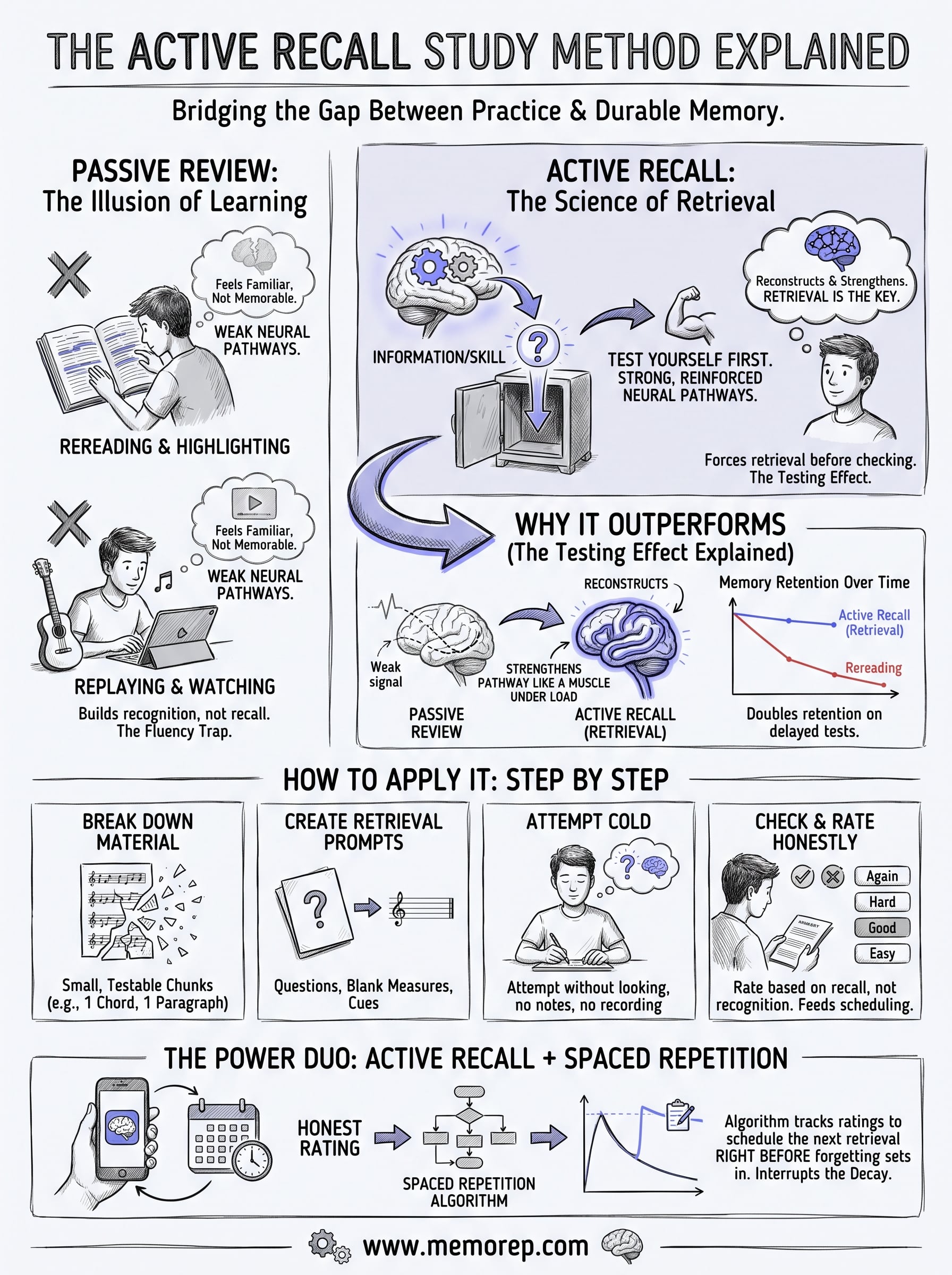
Cognitive scientists have measured the difference between active recall and passive review for decades, and the results are consistent: retrieval practice beats rereading almost every time. A well-known 2006 study published through the National Institutes of Health found that students who tested themselves on a passage remembered significantly more a week later than students who reread it four times. The effect isn't marginal, it often doubles retention on delayed tests, and it holds across ages, subjects, and skill types.
The testing effect explained
Researchers call this phenomenon the testing effect, and it shows up everywhere from vocabulary drills to surgical training. Every time you retrieve a memory, you strengthen the neural pathway that stores it, much like a muscle growing stronger under load. Passive review skips that strengthening step entirely, letting you recognize material without ever forcing your brain to reconstruct it from scratch.
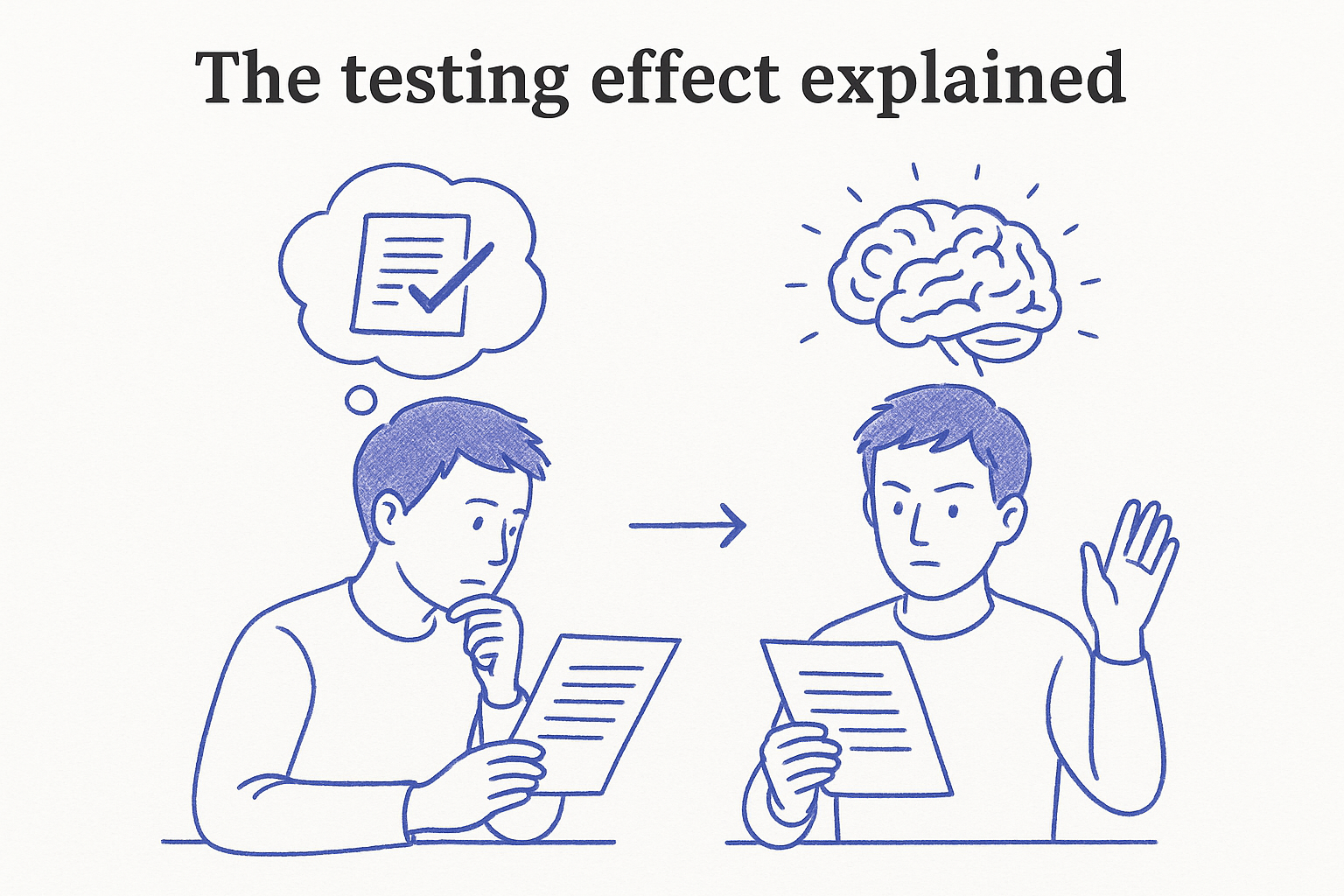
Retrieval, not repetition, is what builds durable memory.
Why rereading feels productive but isn't
Highlighting and rereading create a dangerous illusion called fluency: the material feels familiar, so your brain assumes you've learned it. That familiarity is a poor predictor of actual recall under pressure, whether you're facing an exam or a live performance. The table below breaks down the practical difference between these approaches.
| Method | What you do | What your brain builds |
|---|---|---|
| Rereading | Scan familiar text | Recognition, not recall |
| Highlighting | Mark "important" lines | False sense of mastery |
| Active recall | Retrieve without looking | Durable, retrievable memory |
Musicians hit this trap constantly: playing along with a recording feels like practice, but it rarely transfers to playing alone on stage. Skills fade through the same forgetting curve as facts do, and only genuine retrieval interrupts that decay. This is exactly why the active recall study method explained here matters for anything you need to perform, not just remember.
How to apply active recall step by step
Applying active recall doesn't require special software or a tutor, just a shift in how you approach any material you want to remember. Break the material into small, testable chunks before you start, whether that's a single chord progression, a formula, or a paragraph of vocabulary. Then force yourself to retrieve the answer before you check it, and only after that comparison should you move on.
Turn material into retrieval prompts
Convert whatever you're learning into a question or a challenge you can attempt cold:
- Write a prompt for each concept or skill (a question, a blank measure, a cue).
- Attempt the answer or the passage from memory, with no notes or recording playing.
- Check against the source material only after you've committed to an answer.
- Rate how it went (correct, close, or missed) so you know what needs another pass.
If you can look at the answer before you try, you're not doing active recall.
Grade yourself honestly
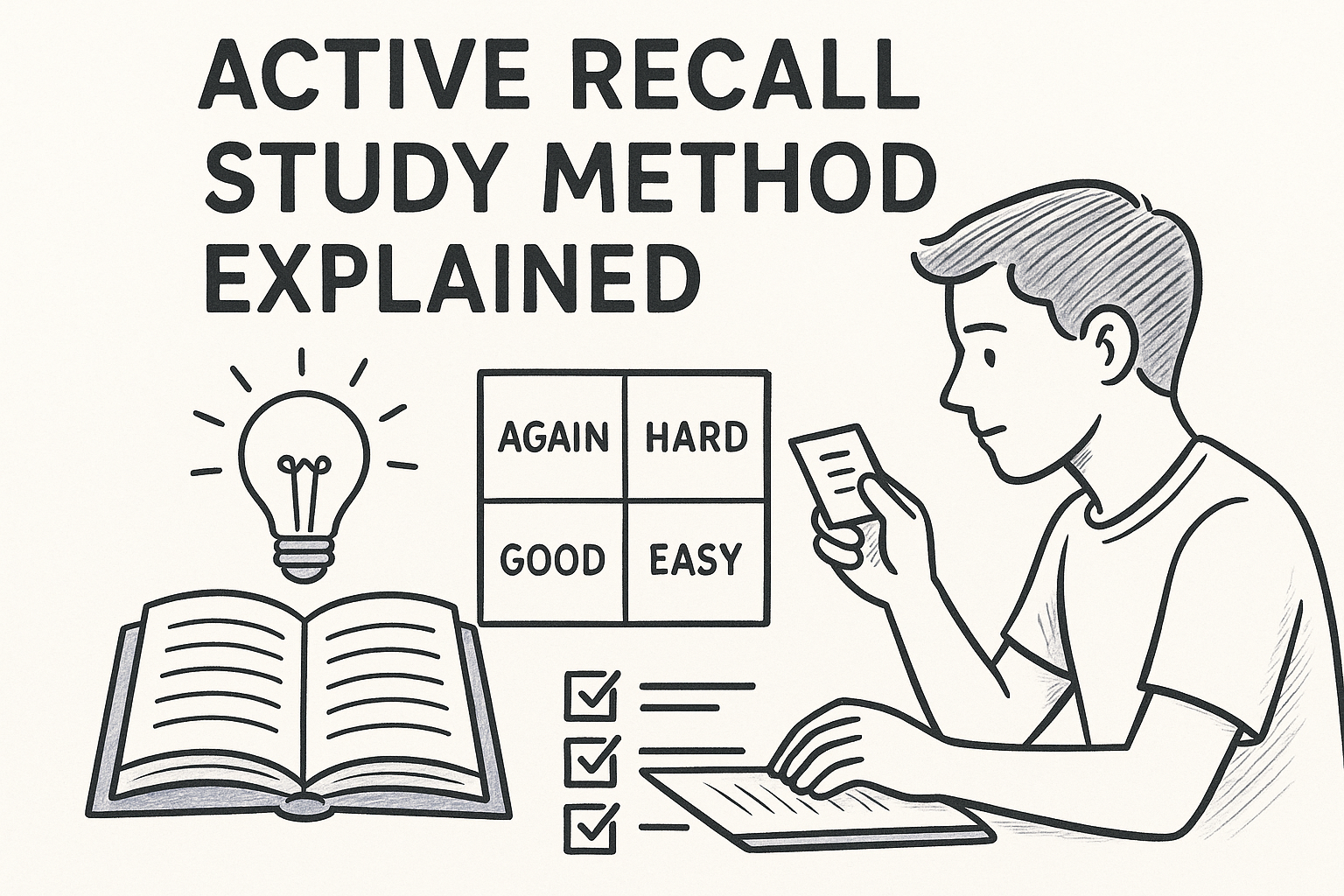
Honest self-assessment is what makes retrieval practice work long term, because it feeds the scheduling decision that comes next. Rate each attempt using a simple scale like Again, Hard, Good, or Easy, and resist the temptation to round up just because you recognized the answer. That single rating determines when you'll retrieve that item again, which is the bridge between active recall and spaced repetition covered later in this piece.
Active recall techniques you can start using today
You don't need fancy tools to start retrieving instead of rereading. Practice cards are the simplest entry point: write a question or cue on one side and force yourself to answer before flipping it over. The key is picking a technique that fits what you're learning, then sticking with it long enough to feel the difference.
Simple methods to try this week
- Flashcards without peeking: Cover the answer, commit to a response, then check.
- The blank page method: Close your notes and write everything you remember about a topic, then compare against the source.
- Self-quizzing out loud: Ask yourself questions and answer verbally before checking, useful for anything you'll eventually explain or perform.
- Practice without the recording: For skills, attempt the passage or motion cold before referencing a guide or video.
- Teach it to someone else: Explaining a concept from memory exposes gaps that silent review hides.
The best technique is whichever one makes you retrieve first and check second.
Match the technique to the material
Declarative facts, like dates or vocabulary, work well with flashcards and blank-page recall. Procedural skills, like scales or a tennis serve, need retrieval built into the actual doing, not a separate quiz. Either way, the technique only works if you resist looking at the answer or model before you've made your own attempt. Once you've picked a method, the harder question becomes timing: how often should you retrieve each item before it fades? That's where spaced repetition takes over, and it matters even more once you move from flashcards to physical or performance-based skills.
Using active recall for music and other practical skills
Playing a scale from memory is retrieval practice, even if you never call it that. Practical skills like an instrument, a golf swing, or a dance sequence rely on the same retrieval mechanism as facts, except the "answer" is a motion instead of a word. Every time you attempt a passage before listening to the recording, you're forcing the same reconstruction that makes flashcards work.
Why musicians need retrieval, not repetition
Running a piece top to bottom with the sheet music open feels like progress, but it's closer to rereading than testing. Cold attempts without notation, without a backing track, without watching your hands, expose exactly which measures are shaky. That's the information you need to direct your next session.
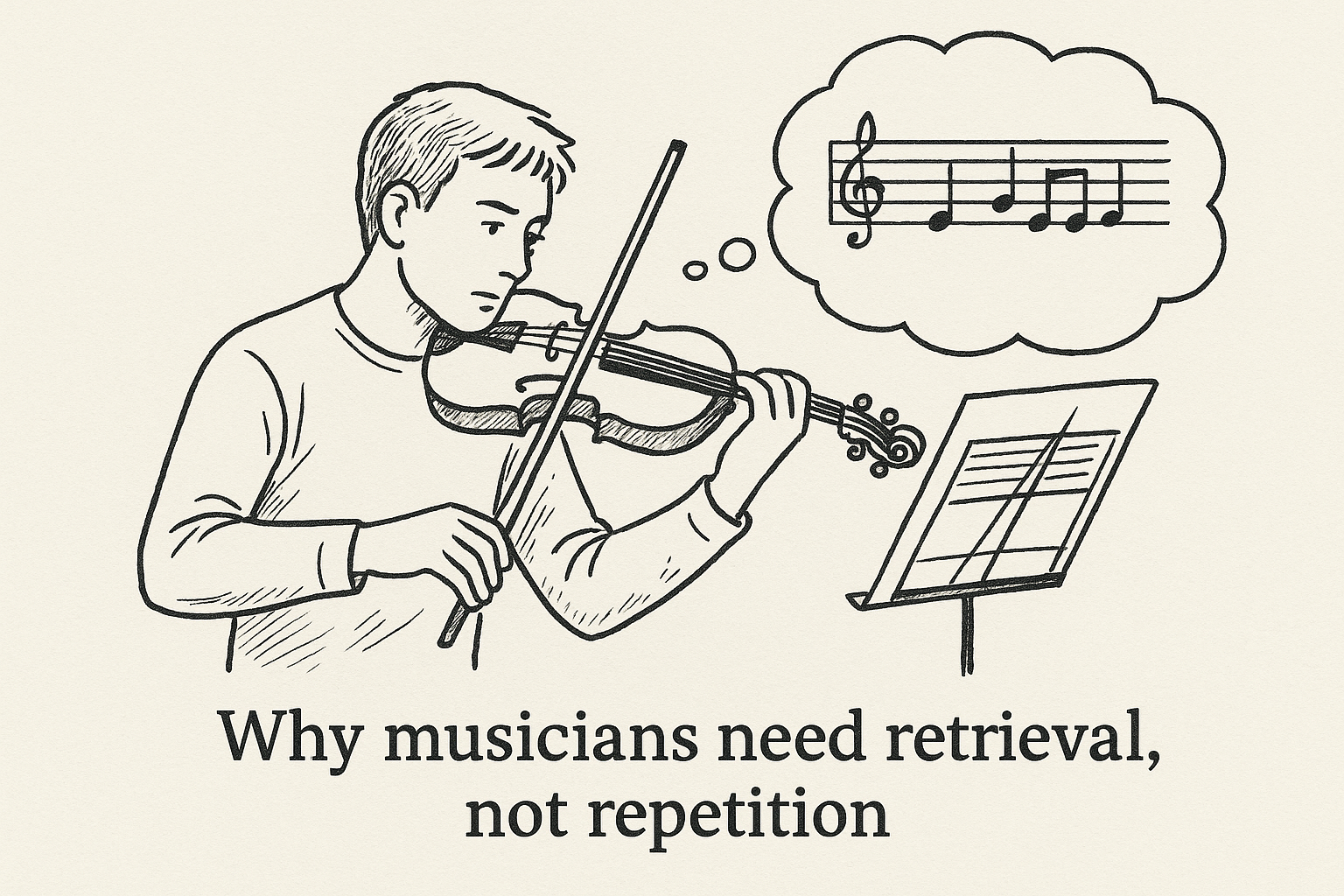
A passage you can only play while reading isn't learned yet, it's being read.
Applying retrieval across skill types
Break any practical skill into small units you can test independently:
- Instrument passages: Attempt a phrase from memory before checking the score.
- Sports drills: Perform the motion cold, then compare against a coach's cue or video.
- Craft techniques: Recreate a joint or stitch from memory before consulting a reference.
Each unit needs its own retrieval schedule, since a tricky bridge fades faster than a section you've nailed for months. That's exactly the kind of tracking spaced repetition handles once you're juggling more than a handful of skills.
Turning active recall into a habit
Knowing the theory behind active recall won't change your results. Consistent retrieval across days and weeks is what builds durable memory, whether you're drilling vocabulary or a chord change. The hard part isn't understanding the method, it's remembering which items need another pass and when, especially once you're juggling more than a handful of skills at once.
That's the gap spaced repetition software was built to close. Instead of guessing when a passage or fact is about to fade, an algorithm tracks every rating you give and schedules the next retrieval right before forgetting sets in. You get the testing effect without the mental overhead of managing it yourself.
If you want to see the algorithm behind this scheduling, check out how memoRep works. Musicians and skill learners already using it report fewer rusty passages and less time wasted deciding what to practice next.