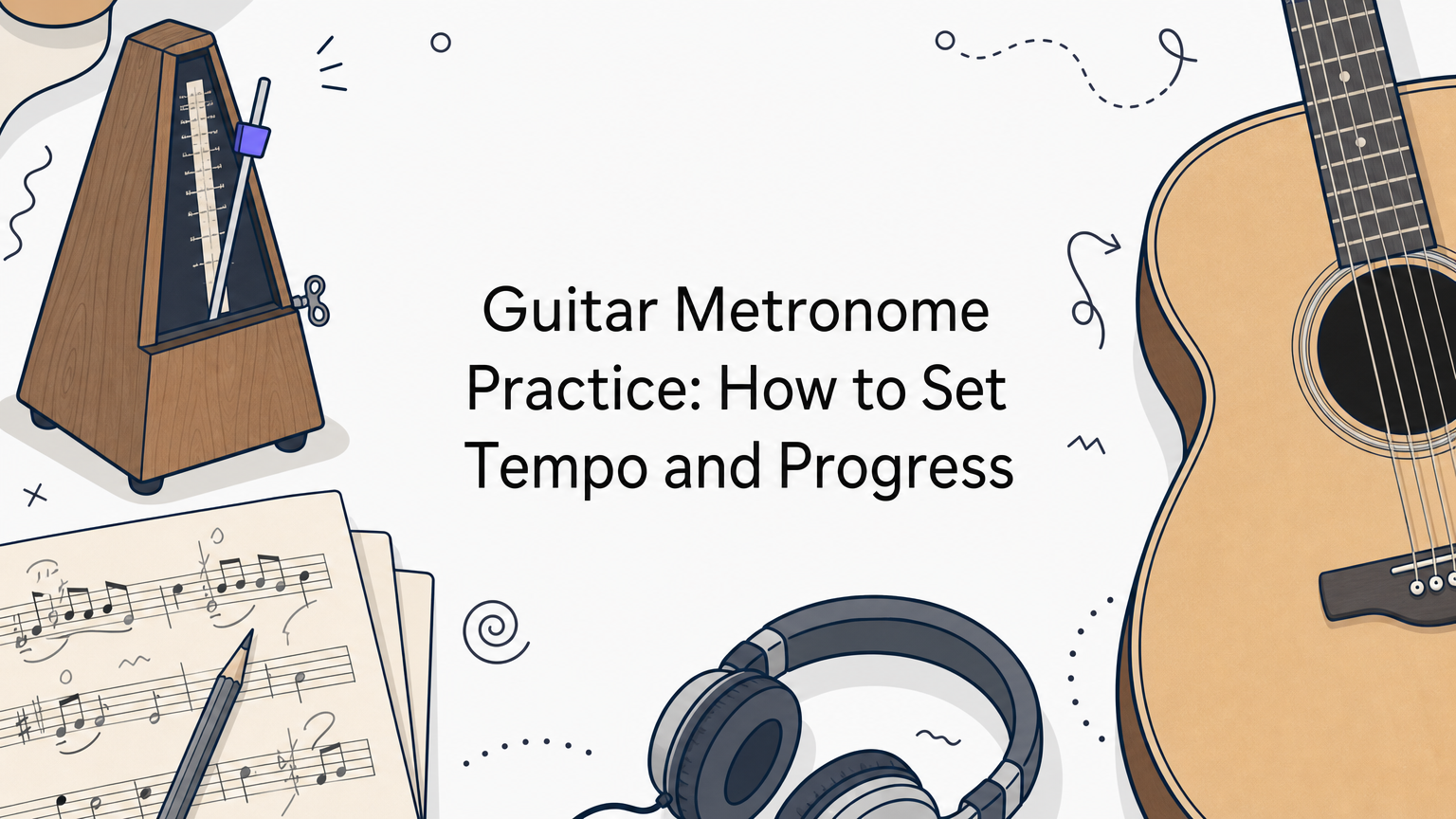
Guitar Metronome Practice: How to Set Tempo and Progress
To learn how to practice with a metronome on guitar, pick one passage you can already play without the click. Set the metronome about 15% below your comfortable tempo, then raise it by 2 to 4 BPM only after three clean passes in a row. Write down the tempo you reached and come back to it a few days later. That loop is the whole method.
Most players never get that far. They switch the click on, set it to the tempo printed on the sheet music, fall apart, and decide the metronome is cold and unforgiving. Or they use it for a week, forget which number they reached, and restart from a guess. A metronome only helps when you treat its number as data and keep that data.
This guide walks you through four steps: finding a starting tempo, climbing in small increments, running a few focused checks, and logging tempos so you review them at the right time. At MemoRep we build a spaced repetition practice planner for musicians, so the scheduling side is our home turf. We do not cover technique or theory here. What to play and how to play it is your teacher's call. This guide covers how to organize the click.
Why a metronome belongs in your guitar practice
A metronome gives you a fixed outside reference for time, and your own sense of tempo cannot do that. It turns "that felt okay" into a number you can compare from week to week.
What the click gives you
The first benefit is that the click exposes drift. Rushing or dragging builds up so gradually that you rarely hear it yourself, but the click shows it within a few bars. The second is a measurable ceiling. You can either play a passage cleanly at 96 BPM or you cannot, and that answer tells you exactly where to work.
Third, the number makes progress visible. Watching a tempo creep from 85 to 100 over two weeks keeps you practicing through the slow stretches.
Keep in mind that the metronome is a training tool, not a performance partner. The goal is an internal sense of time you can take on stage, so plan to spend part of your sessions without the click.
What you need before you start
Gather four things before you press play:
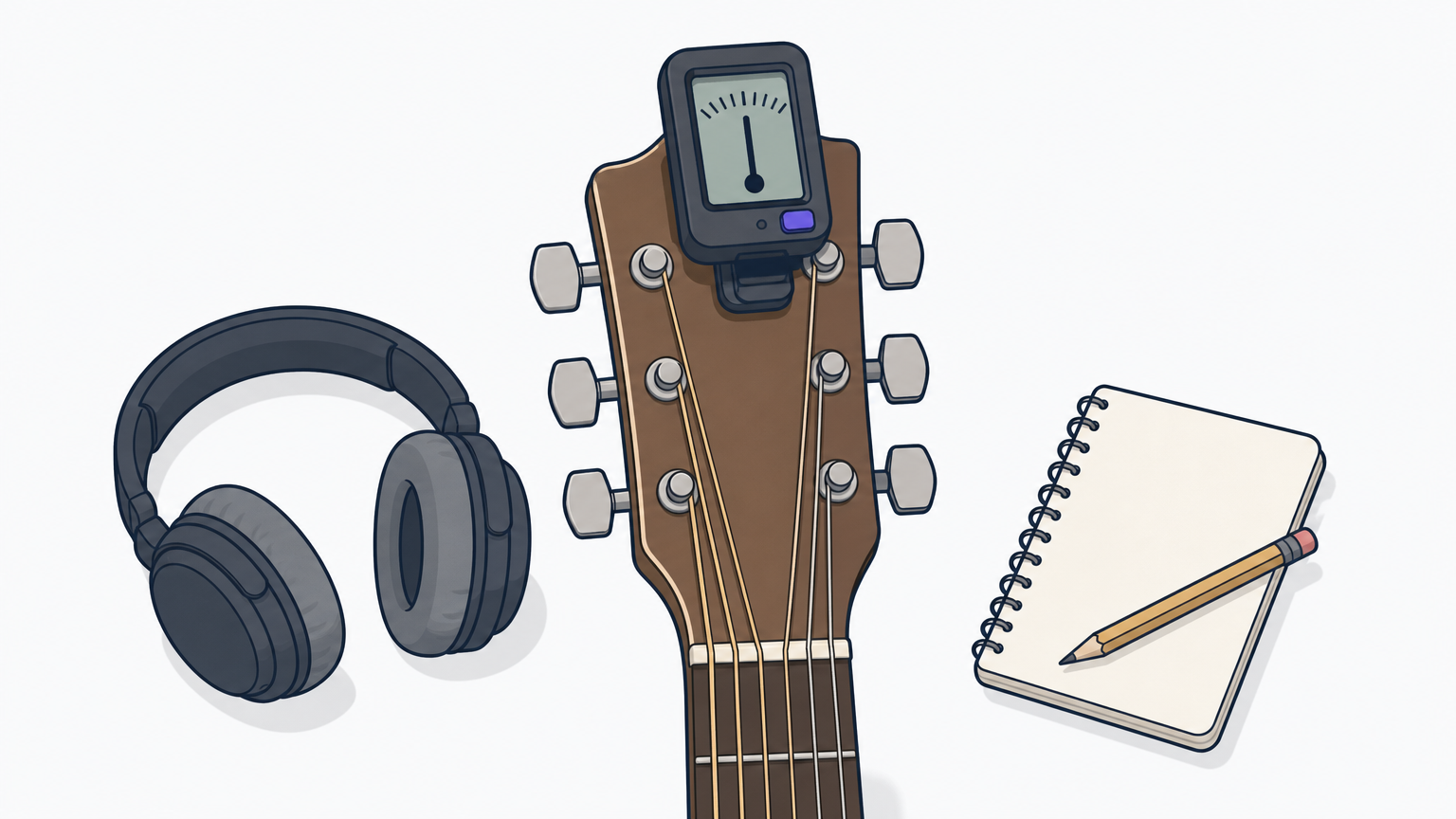
- A metronome with adjustable BPM. An app, a digital clip-on, or a mechanical model all work, and tap tempo is handy but optional.
- A way to hear it clearly, such as headphones or a click loud enough to sit over your guitar.
- One passage that you can already play at a slow pace, without stopping, and without the click.
- A notebook or notes app for logging tempos.
The last point on that list is where most players go wrong. Do not add the click while you are still learning the notes. The steady pulse pressures you into rushing, and that rushing can lock in sloppy habits. Learn the passage first, then add the metronome.
The click is for measuring a passage you already know, not for learning one.
Step 1. Find your starting tempo
Your starting tempo is your comfortable tempo minus about 15%. Measure the comfortable tempo first, then do the subtraction.
Measure your comfortable tempo
Play the passage without the click at a pace where it feels settled, not at the speed you wish you had. Then read that pace in BPM. If your app has tap tempo, tap along with your foot for ten seconds and it will show the number. If not, set the metronome, find the BPM where your playing matches the click without strain, and use that.
Write the number down. That figure is your baseline, and every later step refers back to it.
Subtract 15% and start there
Multiply your comfortable tempo by 0.85 and round to the nearest whole BPM. Here are a few examples:
| Comfortable tempo | Starting tempo with click |
|---|---|
| 60 BPM | 51 BPM |
| 80 BPM | 68 BPM |
| 100 BPM | 85 BPM |
| 120 BPM | 102 BPM |
Starting lower matters because the click waits for no one. A spot you thought was solid can wobble once an external pulse is judging it. Your first goal is not to go faster. It is to play along with the click at your comfortable tempo and feel in control. Only after that does the climb begin.
Your first target with the click is the tempo you already own, not a faster one.
Step 2. Raise the tempo in small steps
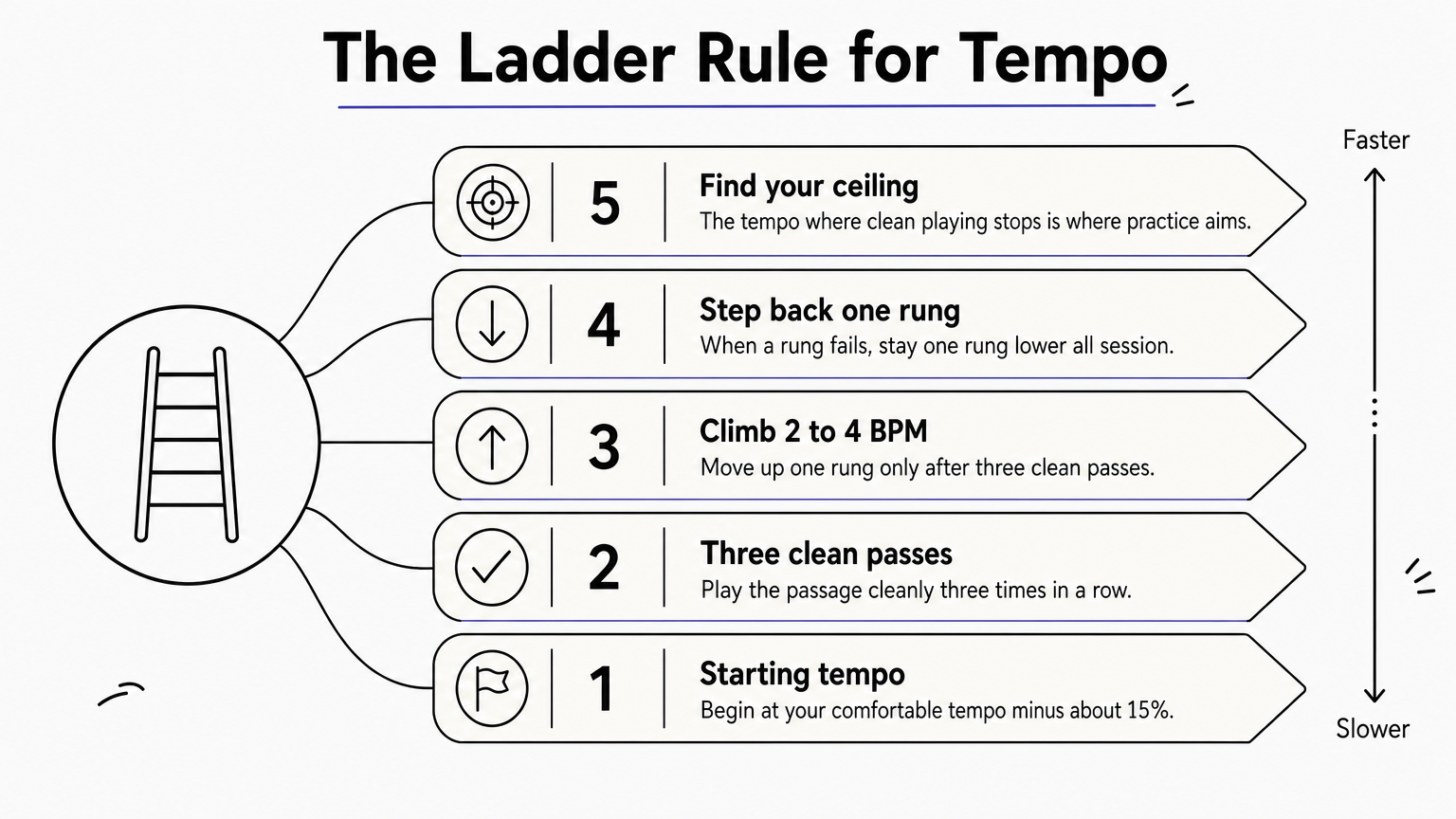
Raise the tempo by 2 to 4 BPM at a time, and only after you play the passage cleanly three times in a row. Clean means you did not stop, did not lose the click, and did not scramble to catch up.
Use the ladder rule
Start at your starting tempo and climb one rung at a time. When a rung goes clean three times, move up 2 to 4 BPM. When it fails, step back one rung and stay there for the rest of the session. The tempo where clean playing stops is your ceiling, and that is where your practice is aimed.
Here is how three sessions might look for a passage with a comfortable tempo of 100 BPM:
| Session | Tempos played | Result | Log entry |
|---|---|---|---|
| 1 | 85, 90, 95, 100 | All clean | Comfortable with click: 100 |
| 2 | 100, 104, 108 | 108 breaks down | Ceiling: 108, finish at 104 |
| 3 | 104, 106, 108 | 106 clean, 108 shaky | Comfortable: 106, ceiling: 108 |
The increments are so small that you barely notice them, but they add up. Without the click, most players jump too far at once.
End on a tempo you own
Never finish a session on a failed tempo. After you hit your ceiling, drop back to a tempo that feels easy and play it once or twice more. You leave the session remembering success rather than a breakdown.
Also resist changing the number every day. If a tempo felt easy yesterday and feels hard today, that is normal, so hold your position for a few days. The goal is a tempo you can repeat on demand, not one lucky pass.
Raise the tempo only when the current one has been clean three times in a row, and finish each session on a tempo you control.
Step 3. Run four metronome checks
The ladder builds speed, but four short checks cover the rest of what a metronome can tell you: slow control, tempo drift, and independence from the click. Use them on any passage you are tracking.
Four checks you can run on any passage
- Slow check. Drop below your comfortable tempo, perhaps 20 to 30% under. Slow tempos are harder to hold than fast ones because there is more room between clicks to drift. If you start guessing where the next click lands, you found the limit.
- Sparse click. Set the metronome so it clicks only once every 2 or 4 beats. You must carry the beats in between yourself, and the click only confirms whether you drifted. Try this only if you already keep time well with a click on every beat.
- Click drop-out. Play with the click for a few bars, switch it off and keep going for a few more, then switch it back on. If you land on the click, your internal time is holding. If you land early or late, you rush or drag without it.
- Recorded pass. Record yourself with the click on your phone, then listen back. Note where you sit ahead of or behind the beat. Listening gives you more honest data than playing does.
Run one check per session, not all four. Log what you found next to the tempo.
If the click still feels impossible
If you struggle to play with a metronome at all, the cause is nearly always that the tempo is too fast or the passage is not settled yet. Drop another 15 to 20%, or go back to playing the passage without the click until you can play it without stopping. That is not failure. It is the same prerequisite from earlier.
If a slow, familiar passage still feels impossible, bring it to your teacher. They can see what you are doing and tell you why. That is a question about how you play, and no article can answer it better than someone watching you.
A click that feels impossible usually means the tempo is too high or the passage is not ready yet.
Step 4. Log tempos and schedule your reviews
Write down your tempo after every session and revisit each passage at spaced intervals. A tempo you reached on Monday can fade by the following week, and a log shows you when to check it again.
Keep a simple tempo log
Record the same few facts each time. Here is a template you can copy into any notebook or notes app:
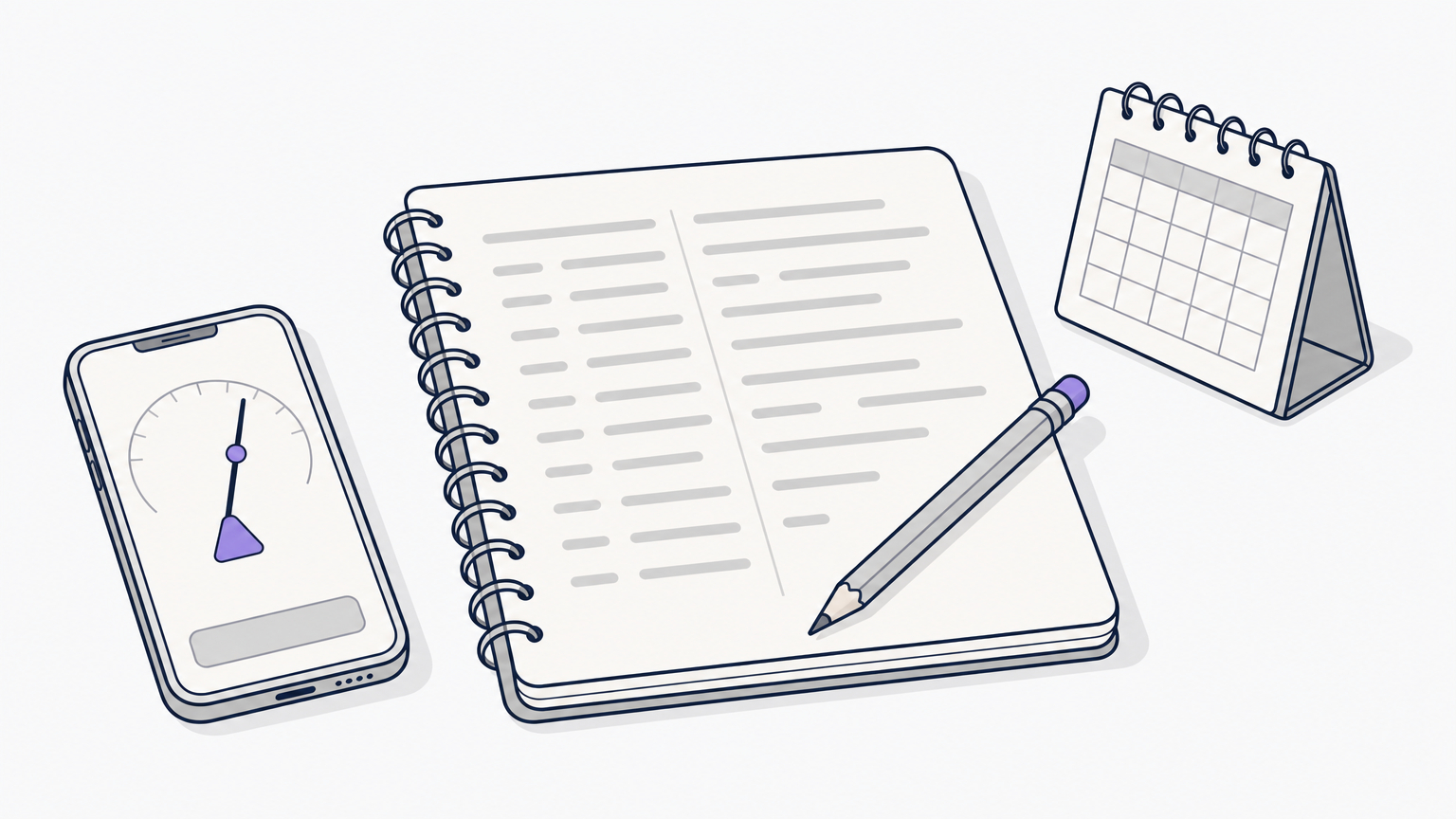
Passage: Verse chord changes, Song A
Date:
Target tempo: 120
Comfortable with click: 100
Ceiling today: 108
Check run: click drop-out (drifted early after 4 bars)
Next session start: 100
Rating: Good
The "next session start" line removes the guesswork. You open the log, set the number, and begin. Keep one entry per passage so you can see the numbers trend upward over weeks.
Space your sessions
Do not drill the same passage every day until it feels perfect. Review it at widening intervals, such as the next day, then three days later, then a week later. If the passage held its tempo, wait longer. If it slipped, shorten the gap. Spaced repetition does exactly this, and it also frees you from deciding what to practice next. A rough balance of about half your time with the click and half without is also a sensible default.
Rate each session honestly and let the rating set your next move. One practical mapping:
| Rating | What it means | Next session |
|---|---|---|
| Again | Lost the click, ceiling dropped | Start two rungs lower, review soon |
| Hard | Clean only at the lower tempos | Repeat the same starting tempo |
| Good | Matched your last ceiling | Start at your comfortable tempo and climb |
| Easy | Passed the old ceiling cleanly | Start one rung higher, wait longer to review |
MemoRep uses the same four ratings (Again, Hard, Good, Easy) on each practice card, and it adjusts when that card returns based on how the practice felt. You still own the metronome work. The app handles when each passage comes back.
A tempo log tells you where to start, and spaced review tells you when to come back.
Start with one passage
A metronome works when you treat it as a measuring tool. Pick a passage you can already play, start 15% below your comfortable tempo, climb 2 to 4 BPM at a time after three clean passes, and run one check per session. Then write the number down and review it on a widening schedule so the gains hold.
Do this with one passage this week. If you want the logging and review timing handled for you, try MemoRep and let it schedule when each passage comes back.