How to Improve Memory Retention: 5 Science-Backed Habits
The fastest way to improve memory retention is to review what you learn on a spaced schedule, test yourself instead of rereading, and protect the basics your brain needs to store information: sleep, exercise, and focus. A good pick is one with solid research behind it that you can repeat without much effort. Spacing and self-testing suit anyone who needs to keep material for weeks or months. Sleep and exercise suit anyone who feels foggy. Attention habits suit anyone whose problem is that information never sticks in the first place.
The problem feels the same for most people. You learn something, feel sure of it, and a few days later it has faded. Cramming feels productive, but it gives you a short-term memory that disappears quickly. Rereading your notes feels safe, but it is a weak way to build recall. The fix is rarely a trick. It is a handful of habits that you repeat.
Below are five of them, each with how it works, how to use it, and who gains the most. At MemoRep we build a spaced repetition platform for musicians and practical-skill learners, so spacing comes first. Every habit here works for any kind of learning, and none of them replaces a teacher's guidance on what to study.
1. Space your reviews with spaced repetition
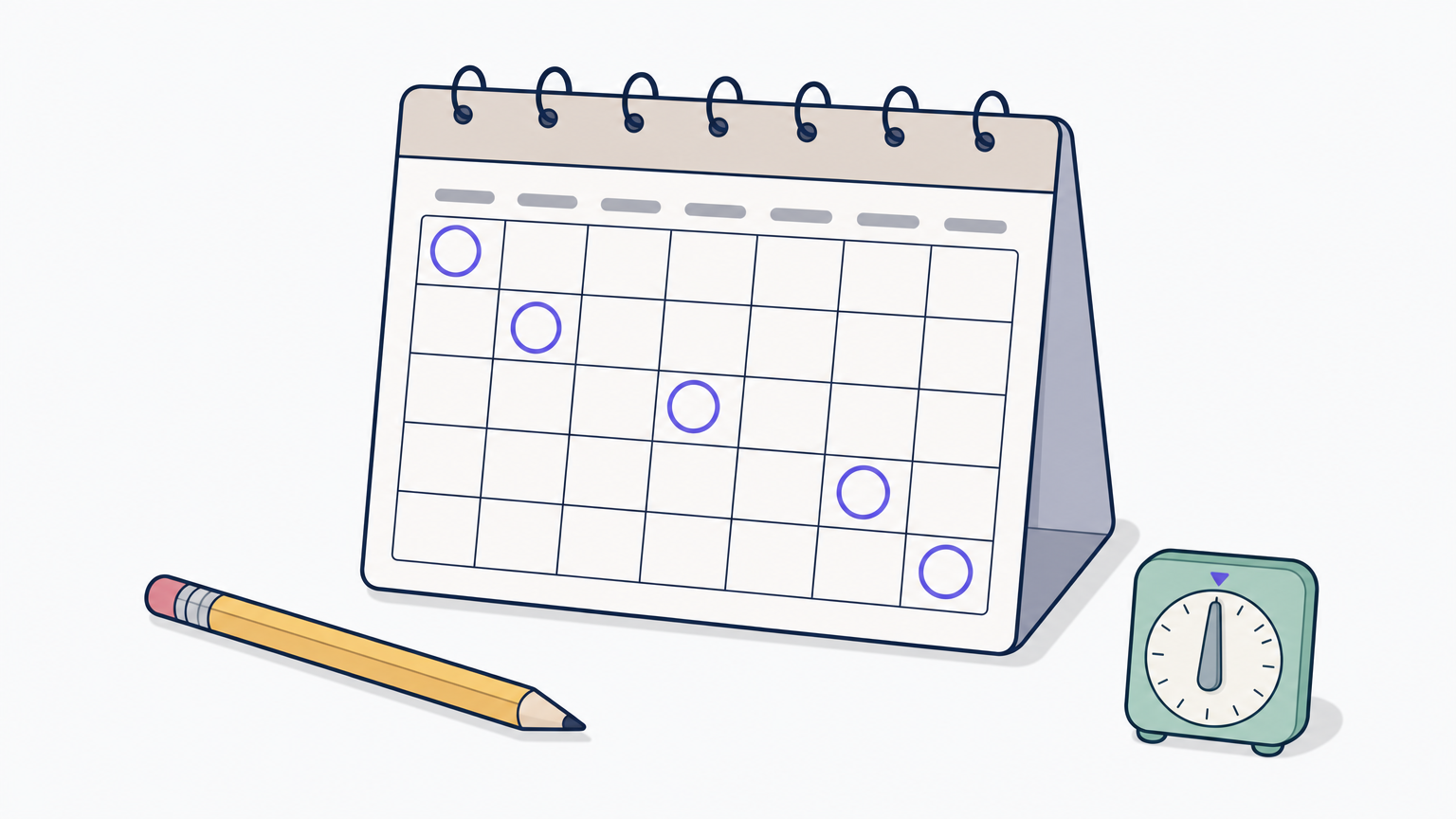
Spaced repetition means reviewing information at growing intervals, just as it starts to fade, instead of in one long block. It is the strongest answer to how to improve long term memory retention, and it also steadies short-term memory because each review is brief and well timed.
How it works and who it suits
The method builds on the Ebbinghaus forgetting curve. Memory drops fastest right after learning, and each well-timed review flattens the drop and pushes the next review further away. Studies suggest that spacing learning over time is more effective than cramming the same amount into a short period.
It suits anyone with material to keep for weeks or months: exams, certifications, a repertoire, a set of drills. MemoRep applies the idea to practical skills rather than text flashcards. You create practice cards inside projects, rate each pass Again, Hard, Good, or Easy, and a scheduler based on the SuperMemo SM-2 algorithm decides when each card returns. It does not tell you how to play or perform anything. That stays with your teacher.
Each review works best when it lands just before you would have forgotten.
How to put it into practice
Start with an expanding schedule and adjust it by how hard each review felt. If a review was easy, lengthen the next gap. If you struggled, shorten it. Here is a common pattern for something you first learn on a Monday.
| Review | Days after learning | Example day |
|---|---|---|
| 1 | 1 | Tuesday |
| 2 | 3 | Thursday |
| 3 | 7 | Next Monday |
| 4 | 14 | Monday, two weeks later |
| 5 | 30 | Wednesday, four weeks later |
Five 10-minute reviews add up to 50 minutes across a month, far less than a three-hour cram, and the memory lasts longer. A reminder system helps because the hard part is remembering when to review, which is why MemoRep sends daily practice notifications.
2. Test yourself instead of rereading
Self-testing, often called retrieval practice, means pulling information out of memory instead of looking at it again. It improves both memory retention and recall because recalling is the skill you are training.
How it works and who it suits
Each time you retrieve a fact, your brain strengthens the path to it. Studies show that retrieval practice beats simply restudying the material, and a failed attempt still helps because it shows you exactly what you missed. Rereading feels easier because the text looks familiar, and that familiarity fools you into thinking you know it.
It suits students, professionals preparing for a presentation or certification, and anyone who learns from books or courses. You may have seen claims that you keep 90% of what you teach others. That figure comes from the "learning pyramid", which has no solid research behind it. Teaching can still help, because explaining something from memory is retrieval.
If you only recognize the material when you see it, you have not learned it yet.
How to put it into practice
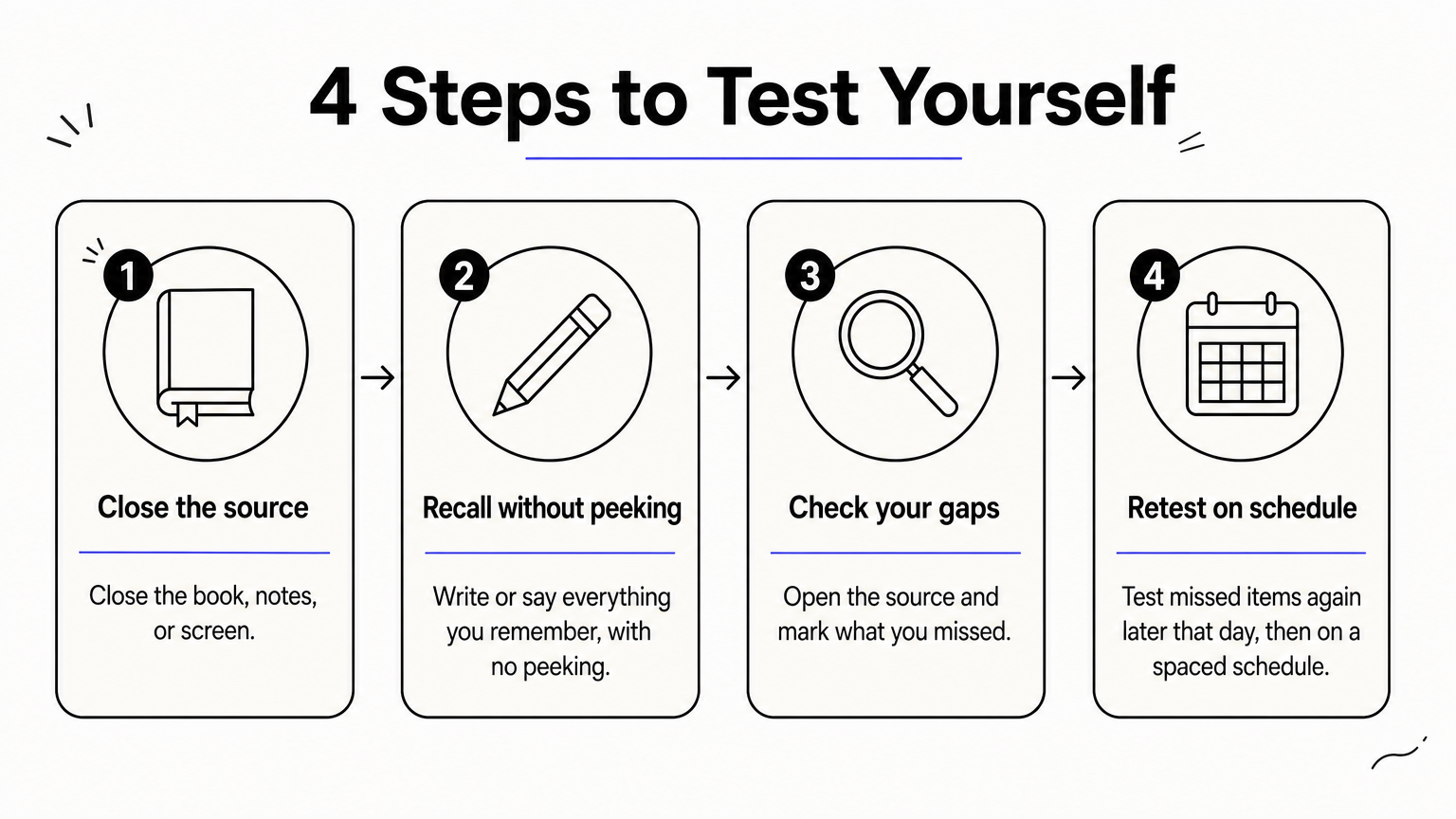
Make testing your default way to finish a study session. A simple routine looks like this:
- Close the book, notes, or screen.
- Write or say everything you remember, with no peeking.
- Open the source and mark what you missed or got wrong.
- Test the missed items again later the same day, then again on a spaced schedule.
For example, after reading a ten-page chapter, write five questions about it, answer them tomorrow from memory, and score yourself. Keep tests short. Ten honest minutes beat an hour of passive review.
3. Sleep 7 to 9 hours to lock memories in
Sleep is when your brain turns fresh, fragile memories into lasting ones, so cutting it short undermines everything else on this list. Mayo Clinic advises adults to get 7 to 9 hours a night, and the CDC sets the floor at 7.
How it works and who it suits
During sleep, your brain performs memory consolidation, strengthening what you took in during the day. Poor or interrupted sleep has been linked to memory loss, and a lack of sleep also hurts concentration, which reduces how much you take in to begin with. That makes sleep a fix for short-term retention as well as long-term.
It suits everyone, and especially people who study late, work shifts, or snore. Snoring can signal a sleep disorder such as sleep apnea, and if you have it, using your prescribed treatment matters for your memory too.
Sleeping after you learn is part of the learning.
How to put it into practice
Protect your sleep window like an appointment. If you wake at 6:30 a.m., being in bed by 11:00 p.m. gives you 7.5 hours. These habits make that window count:
- Keep the same bedtime and wake time, weekends included.
- Avoid caffeine in the afternoon and evening.
- Limit alcohol, which disrupts sleep and can cause confusion and memory loss in excess.
- Talk to your healthcare team if snoring or restless nights are constant.
4. Exercise and eat for your brain
Regular aerobic exercise and a brain-friendly diet support memory by feeding the brain and cutting stress. Neither gives an instant boost, but both pay off in how well you retain information over the years.

How it works and who it suits
Physical activity raises blood flow to the whole body, including the brain. Regular aerobic exercise also appears to increase the size of the hippocampus, a region involved in verbal memory and learning, and it helps you sleep better and feel less stressed. A diet of fruits, vegetables, whole grains, fish, and beans is thought to support brain health, while heavy alcohol and a lot of added sugar can hurt recall.
It suits anyone, but especially people who spend most of the day seated. Supplements are a different story. Research on vitamins such as B12 and E, ginkgo biloba, and omega-3s is inconclusive, so ask your doctor before buying any for memory.
Your brain runs on the same blood flow and fuel as the rest of you.
How to put it into practice
Federal guidelines recommend at least 150 minutes of moderate aerobic activity a week, or 75 minutes of vigorous activity. In practice, that is 30 minutes of brisk walking on five days. If you lack time for a full session, three 10-minute walks count toward the same total. On the plate, small swaps do the work:
- Choose fish, beans, or skinless poultry for protein.
- Fill half your plate with vegetables and fruit.
- Cut back on added sugar and refined carbohydrates.
- Keep alcohol moderate, or skip it.
5. Protect your attention and organize your input
Information you never fully noticed cannot be retained, so protecting your attention is the cheapest way to improve memory retention and concentration together. This habit targets short-term memory, the stage where most forgetting begins.
How it works and who it suits
Working memory holds only a small amount at once, and distractions push things out before they are stored. Doing many things at once splits your focus, so you remember less of each. Chunking helps by grouping information into smaller meaningful units, the way you split a phone number into three parts. Mindfulness is also associated with less interference in working memory, so older information gets in the way of new learning less often.
It suits anyone whose concentration slips or who forgets names, numbers, and tasks within minutes. If forgetfulness affects daily activities, keeps getting worse, or worries a family member or friend, make an appointment with your healthcare team.
You cannot keep what you never fully took in.
How to put it into practice
Treat attention as something you set up before learning, not something you hope for. Try this:
- Work in one focused block of 25 to 30 minutes, phone out of sight, then take a short break.
- Repeat new names and numbers several times when you first hear them.
- Chunk long lists into small groups before you study them.
- Keep keys, wallet, and glasses in one set place, and write tasks in a single notebook or planner.
- Spend a few minutes focusing on your breathing when your mind is racing.
Start with one habit and keep it going
To improve memory retention, space your reviews, test yourself, sleep enough, move your body, and protect your focus. The first two shape how well you learn, and the last three decide how well your brain can store it. You do not need all five at once. Pick the one that matches your weakest spot and repeat it until it is routine.
If you are learning songs, techniques, or exercises and you struggle to know what is fading and when to revisit it, a schedule does that thinking for you. You can see how the approach works in MemoRep's science section, or try MemoRep and get a free for life subscription while the limited offer lasts.