How to Practice Drums Effectively: Tips That Work
You sit behind the kit with an hour to practice and no real plan. Maybe you run through the same warm-up, noodle on a groove you already know, and call it a session. That's the real question behind how to practice drums effectively: not which rudiments exist, but how to organize your time so every session actually moves your playing forward. Most drummers lose progress not from lack of talent but from scattered practice habits that let old skills go stale while new ones get rushed.
Effective practice comes down to structure: knowing what to work on, for how long, and when to revisit it before it fades. That means building a repeatable routine, tracking what you've covered, and spacing out review so techniques and patterns stick instead of evaporating a week later.
Below you'll find concrete strategies for organizing sessions, rotating material, and measuring real progress instead of guessing. We'll also show how tools like spaced repetition scheduling can take the guesswork out of deciding what to hit next, so you spend your practice time playing, not planning.
1. Schedule your practice sessions with spaced repetition
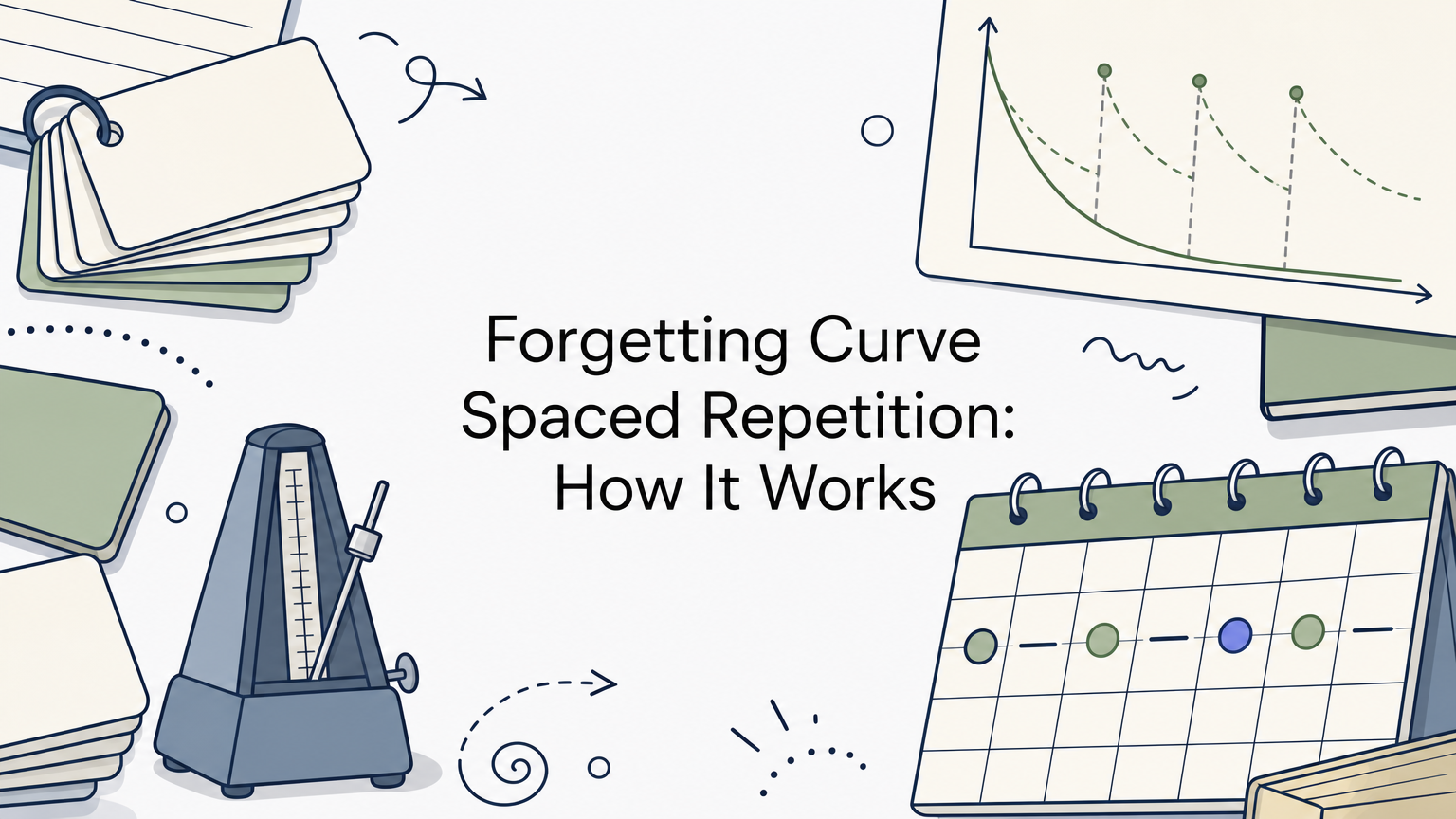
Drummers forget material for a predictable reason: the Ebbinghaus forgetting curve. Any pattern, fill, or groove you learn starts fading from memory almost immediately unless you revisit it at the right moment. Practice a paradiddle variation once and move on, and you'll likely need to relearn half of it next week. That's not a discipline problem, it's a memory problem, and it's exactly what spaced repetition was built to solve.
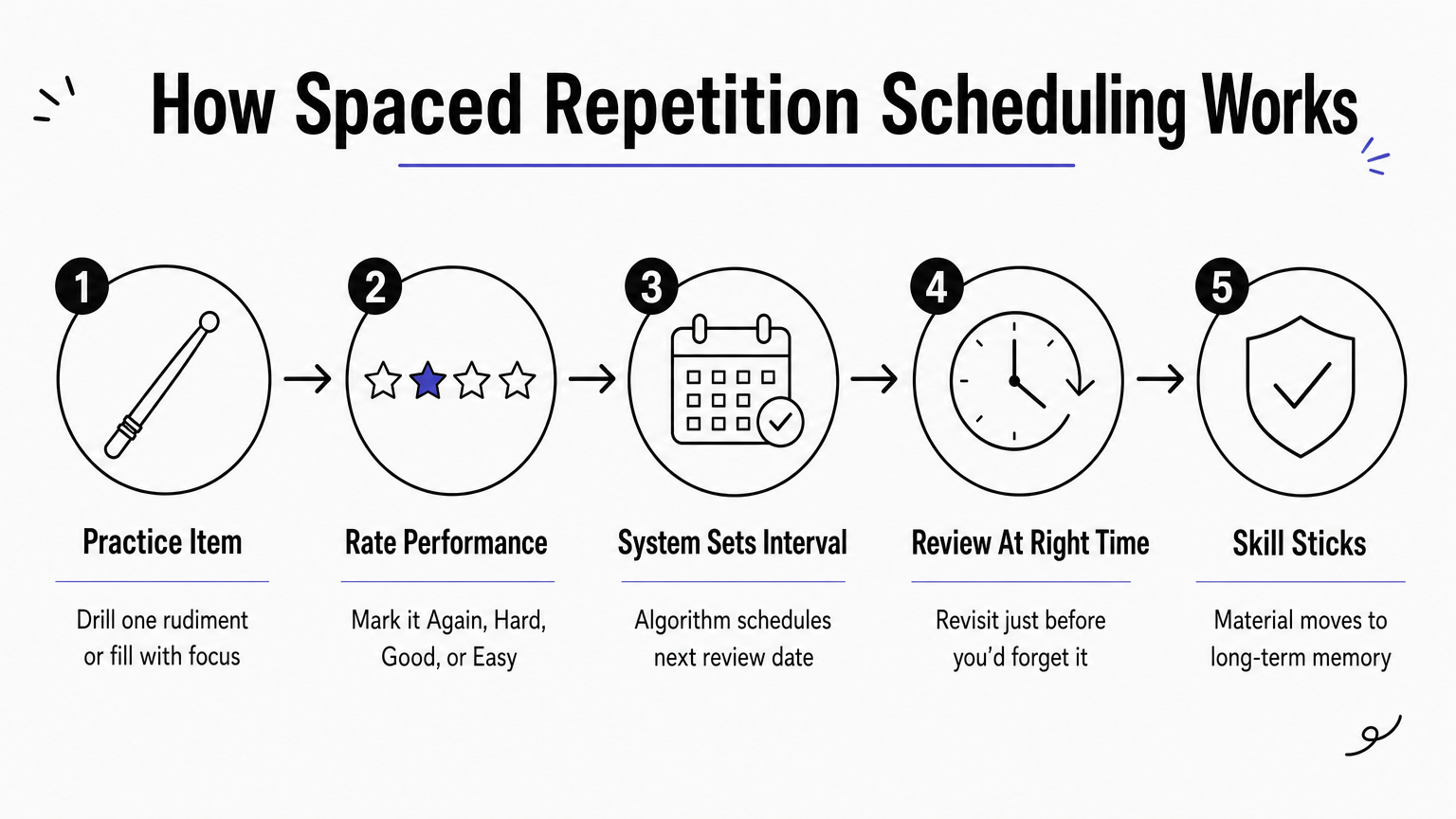
How it works
Spaced repetition schedules review sessions at increasing intervals, right before you'd naturally forget the material. Instead of drilling a rudiment daily until you're bored of it, you practice it, rate how it went, and the system tells you when to bring it back, maybe two days later, then five, then two weeks. The SuperMemo SM-2 algorithm, originally built for language learners, adapts these intervals based on your own performance rather than a fixed calendar, and it helps to know how spaced repetition algorithms calculate intervals.
Why it helps
This approach fixes the two failure modes drummers hit constantly: skills going rusty from neglect, and sessions wasted re-teaching yourself things you already knew. Instead of guessing whether you should revisit that linear fill from three weeks ago, the schedule decides for you based on actual forgetting curves, not vague memory.
Spacing out review isn't extra work, it's what makes the practice time you already spend actually stick.
How to start today
You don't need software to test the concept. Try this for one week:
- Pick three exercises: one rudiment, one groove, one fill.
- Practice each with focused attention, then rate it Again, Hard, Good, or Easy based on how clean it felt.
- Revisit "Again" and "Hard" items the next day; push "Good" and "Easy" items out two to three days.
- Log the date and rating so you're not relying on memory to track memory.
Once you're juggling more than five or six exercises, manual tracking gets messy fast. That's the exact gap MemoRep fills: it runs the scheduling automatically, so you open the app and it tells you what's due today, no spreadsheet required.
2. Set clear, measurable goals before every session
Sitting down to "practice drums" without a target is like driving without a destination. You'll move, but you won't arrive anywhere specific. Vague intentions like "get better at fills" don't tell you what success looks like today, so you end up noodling instead of drilling.
How it works
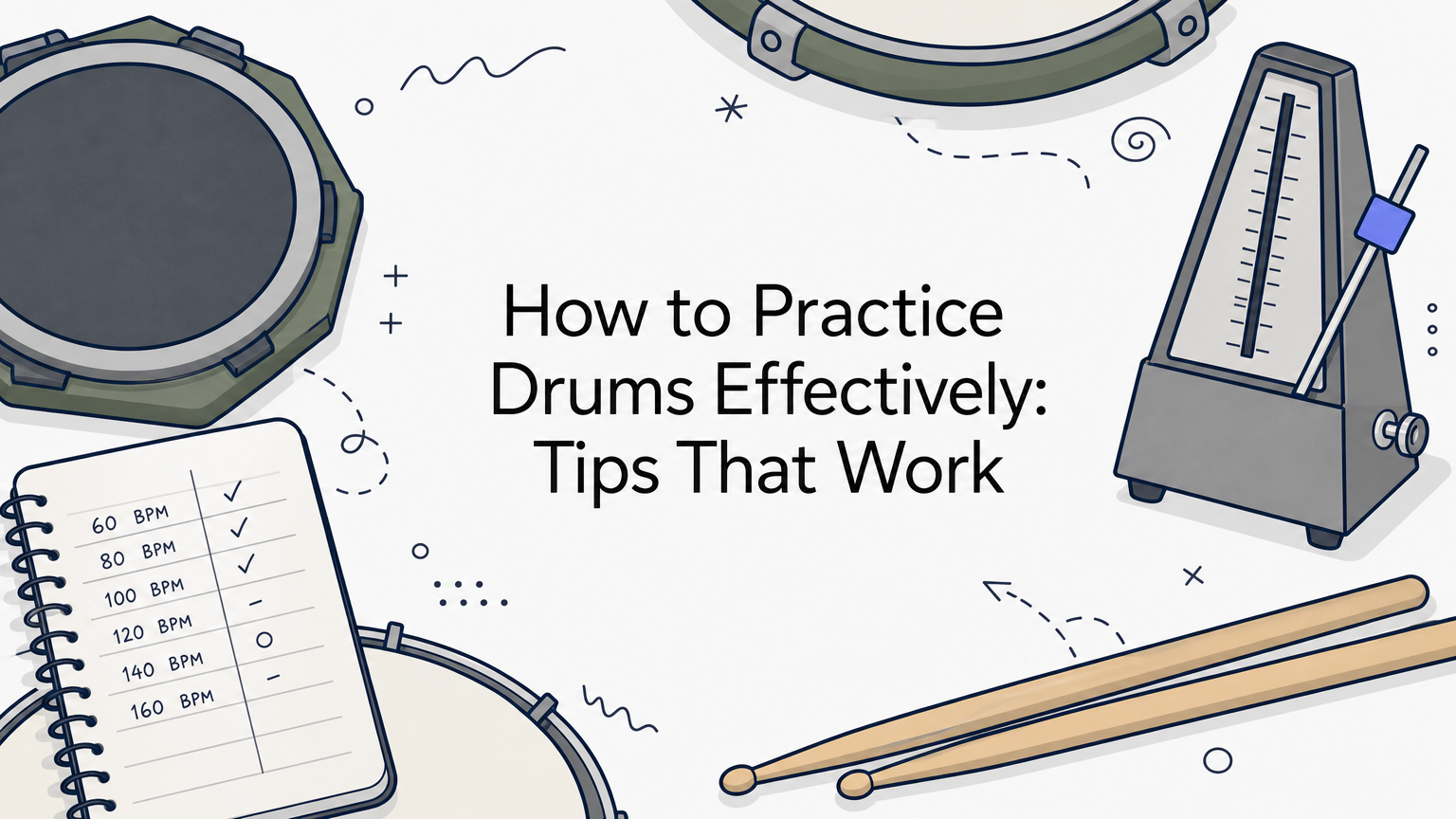
Before you pick up your sticks, write down one to three specific outcomes for the session: "play this paradiddle-diddle pattern at 120 BPM cleanly" beats "work on rudiments." Each goal should have a measurable target you can test at the end of the session, whether that's tempo, repetition count, or accuracy on a specific transition.
Why it helps
Clear goals turn practice from open-ended wandering into a checklist you can complete. This is one of the simplest ways to practice drums effectively, because it forces you to define done before you start, which cuts decision fatigue mid-session and gives you a real answer when you ask yourself if today's practice actually worked.
A session without a defined target isn't practice, it's just playing.
How to start today
Grab a notebook or your phone and write three goals before your next session:
- One technical goal (tempo, sticking, or dynamics)
- One repertoire goal (a section of a song or fill)
- One review goal pulled from material you're spacing out
Check each off only when you hit the measurable target, not when time runs out.
3. Keep a practice log to track real progress
Memory plays tricks on drummers. You feel like you've been grinding on double bass patterns for weeks, but without a record, you can't tell if you're actually faster or just more tired. A practice log turns that fuzzy feeling into hard evidence you can check.
How it works
After each session, jot down what you worked on, the tempo or rep count, and a quick rating of how it went. It doesn't need to be fancy: a notebook, a notes app, or a spreadsheet column all work, and there are ready-to-use log formats for musicians if you'd rather not build one. The point is capturing specific data points you can compare over time, like "linear fill at 90 BPM, clean" versus last month's "same fill at 70 BPM, sloppy."
Why it helps
Logging closes the gap between how practice felt and how it actually went. Musicians chronically underestimate slow, steady gains because daily change is nearly invisible. A log gives you proof, and that proof keeps you motivated when progress feels flat. It also flags patterns fast: if a fill has been "Hard" five sessions running, you'll spot it in the log before frustration builds.
If you can't point to a number from three weeks ago, you're guessing at progress, not tracking it.
How to start today
Start your log tonight with three columns: date, exercise, tempo or rating. Fill it in after every session this week, even briefly. Within ten days you'll have enough entries to see real trends instead of relying on memory alone.
4. Balance technical drills with musical playing
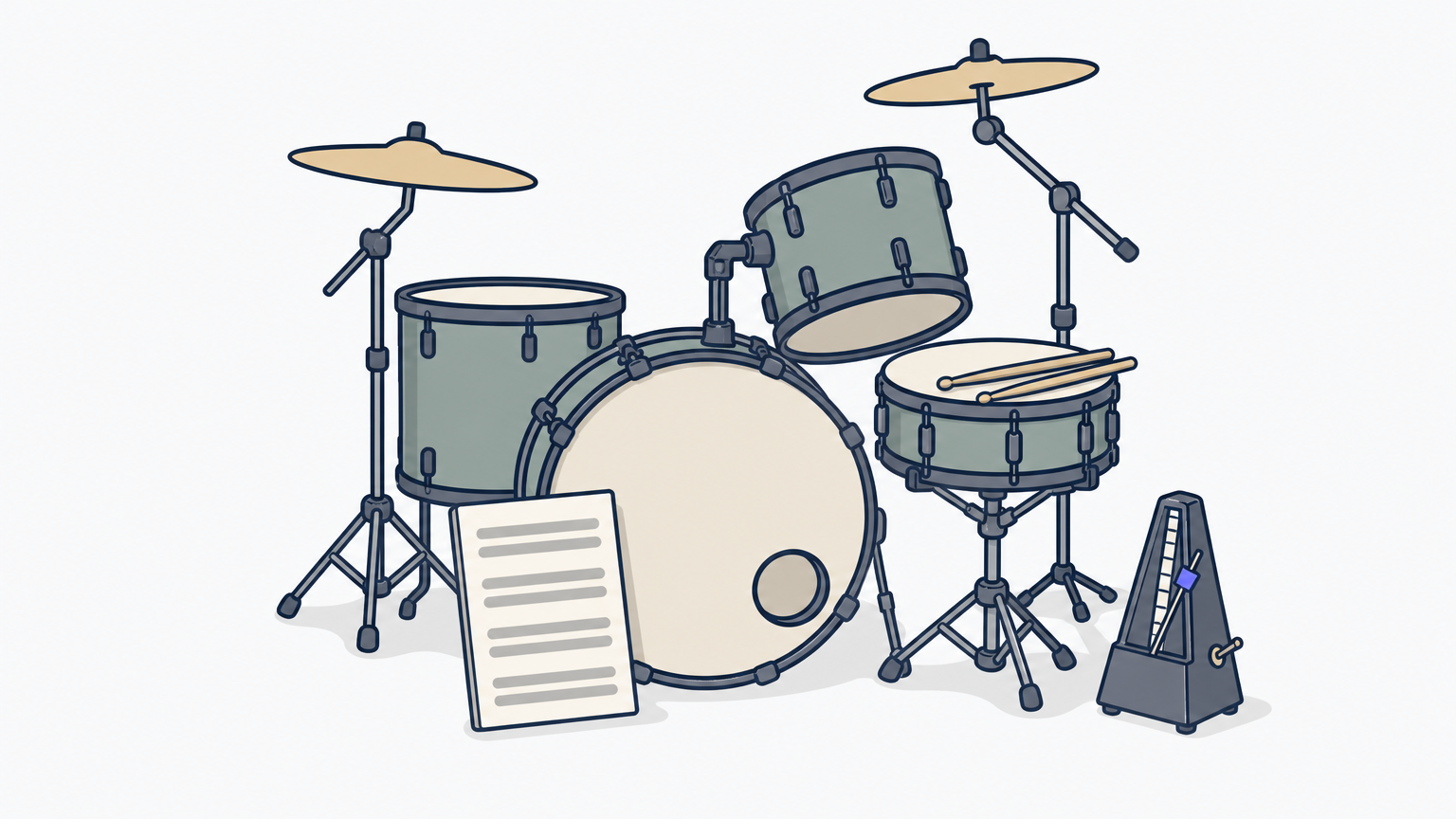
Rudiments alone don't make you a better drummer behind a real song, even with a solid drum rudiments practice routine behind you. Plenty of players can rip through a paradiddle-diddle at 160 BPM but fall apart the second a singer changes tempo mid-verse. Balancing technical work with musical context is one of the most overlooked ways to practice drums effectively, because chops only matter when you can apply them.
How it works
Split each session so technical drills feed directly into musical application. If you spent ten minutes on a linear fill, spend the next ten dropping that same fill into an actual song section, not just a metronome click. Alternate between isolated technique work and playing along to full tracks, so your hands learn both precision and context.
Why it helps
Drills build control; songs build judgment about when and how to use it. Without musical practice, you end up with technique you can't deploy under pressure, like a guitarist who knows scales but can't solo. Pairing the two closes that gap and makes your practice transfer straight to gigs, jams, or recordings.
Technique without music is just exercise. Music without technique is just guessing.
How to start today
Restructure your next session with this split:
- 15 minutes: isolated drill (rudiment, fill, or foot pattern)
- 15 minutes: same skill applied inside a song you know
- 10 minutes: play along to a full track, no stopping
Rotate which song you use weekly so the application side stays fresh too.
5. Break your day into short, focused practice blocks
Most drummers assume a solid session means an uninterrupted hour behind the kit. But real life rarely hands you that block, and forcing it often means low-focus playing where your mind wanders after twenty minutes anyway. Splitting practice into shorter blocks spread across the day can beat one marathon session, especially when you're tight on time or juggling a busy schedule.
How it works
Instead of one 60-minute sit-down, try three 15 to 20 minute blocks: morning, lunch break, evening. Each block gets one focused task, a single rudiment, one section of a song, or a review item that's due. You're not trying to cover everything in one sitting, you're hitting material fresh, multiple times, with full attention each time.
Why it helps
Short blocks fight the fatigue that kills quality in long sessions, one of several tips for practicing your instrument effectively. Attention drops fast once boredom sets in, and sloppy reps under fatigue train sloppy habits. Spacing blocks throughout the day also naturally supports spaced repetition, since you're revisiting material at intervals instead of cramming it once and hoping it sticks.
Four sharp fifteen-minute sessions beat one foggy hour every time.
How to start today
Block out three slots on your calendar today:
- Morning: 15 minutes on one rudiment or warm-up pattern
- Midday: 15 minutes reviewing something due from yesterday
- Evening: 20 minutes applying that material to a song
Treat each block as complete once you've hit your goal, not once the clock runs out.
6. Practice drums effectively without a full kit
Not everyone has a kit sitting ready at all hours. You might live in an apartment with thin walls, travel for work, or just have thirty minutes at the office before a meeting. Limited access to a kit doesn't have to mean limited progress, because most of what makes practice effective happens above the waist anyway.
How it works
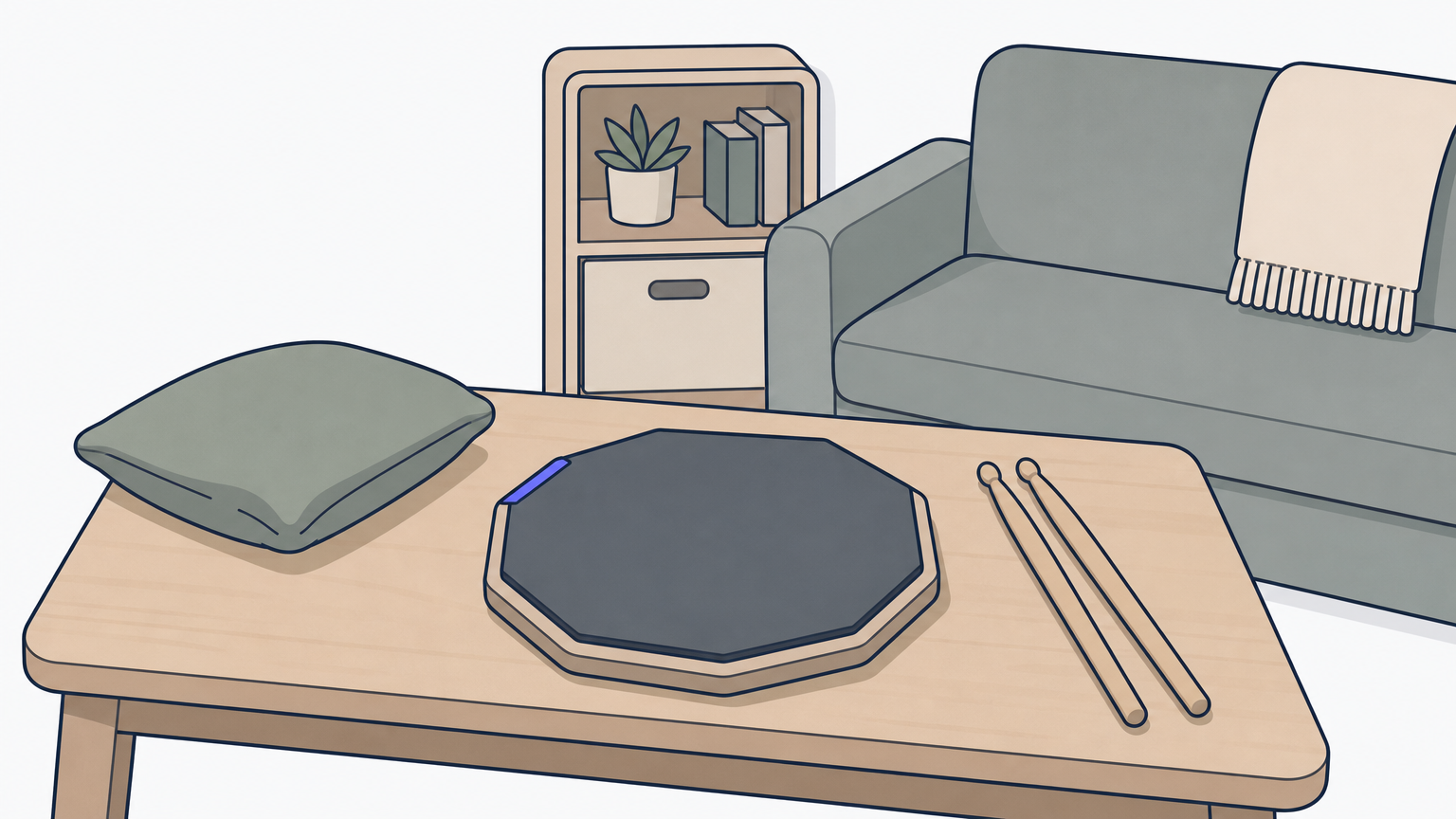
Swap stick time on drums for stick time on a practice pad, a pillow, or even your knees. Rudiments, sticking patterns, and hand speed all transfer directly since the movement pattern matters more than the surface. Add mental practice too: mental rehearsal and other science-backed practice methods, like visualizing a fill note by note or singing a groove out loud, reinforce the same neural pathways as physical reps.
Why it helps
Dropping the kit as a requirement removes your biggest excuse for skipping sessions. Silent practice also sharpens focus, since you're not distracted by volume or full-kit feel, just the raw mechanics of the pattern. Drummers who keep a pad by the couch tend to log far more consistent reps than those who only count real kit time as practice.
A pad and ten quiet minutes beat a missed session every single time.
How to start today
Keep a practice pad within reach, at your desk, in your bag, by the TV. Log pad sessions in the same practice log as kit time, since the reps count toward the same skill.
Building a routine that sticks
None of these six strategies work in isolation. Scheduling with spaced repetition, setting measurable goals, logging progress, balancing drills with music, breaking your day into blocks, and practicing off the kit all reinforce each other. Consistency beats intensity every time, and the drummers who improve fastest aren't the ones grinding six hours on Sunday, they're the ones showing up for fifteen focused minutes most days.
Questions about what to practice next shouldn't eat into your actual playing time. That decision fatigue is exactly what derails routines before they stick. If you want the scheduling handled for you instead of juggling notebooks and guesswork, see how MemoRep schedules your drum practice and try it on your own material. The beta is free for early users, so there's no real cost to testing whether structured practice finally makes your progress measurable.