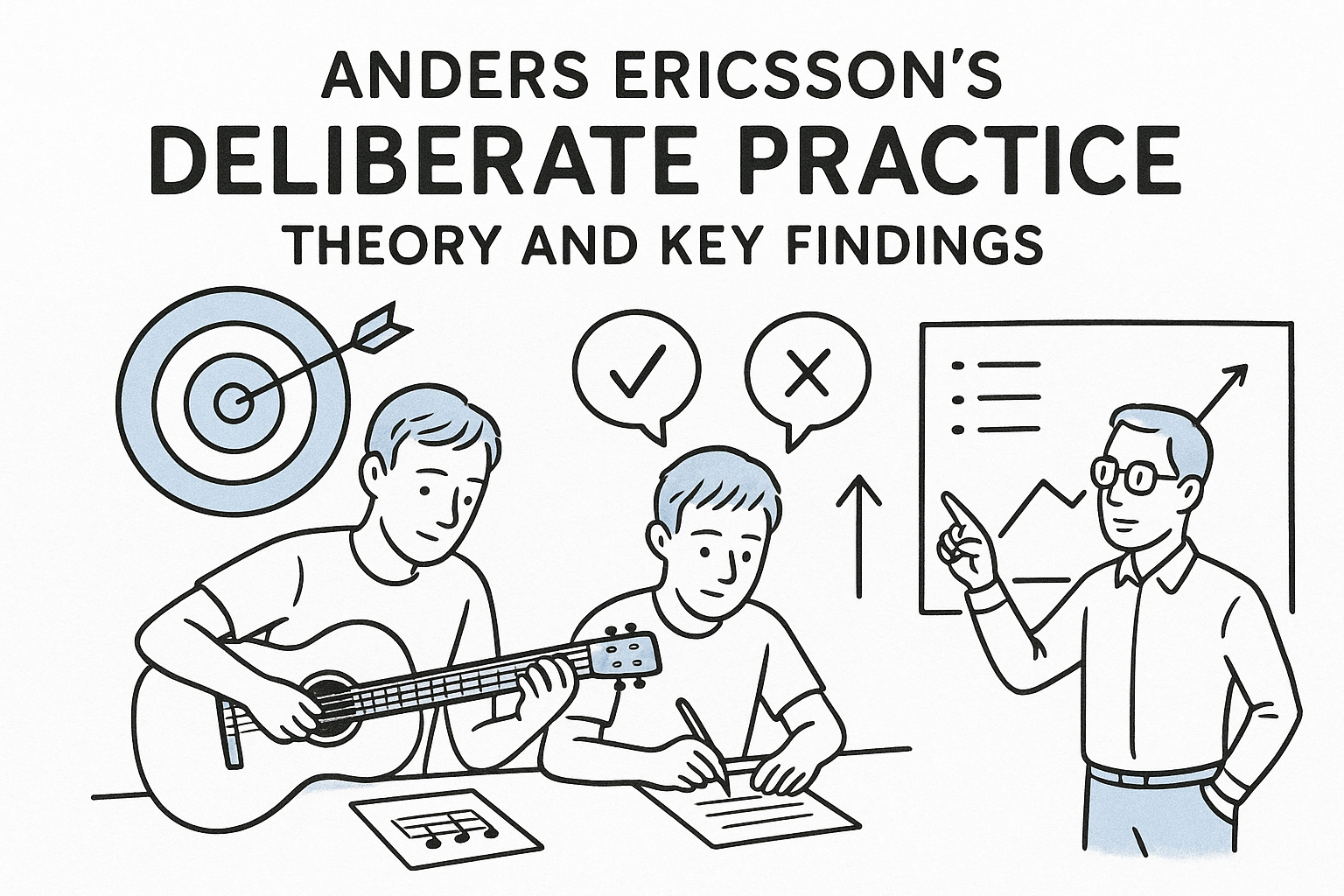
Anders Ericsson's Deliberate Practice: Theory and Key Findings
You've probably heard the
Why deliberate practice matters for building real skill
Most people assume that hitting the practice room for hours automatically makes them better. Anders Ericsson's deliberate practice research proved that assumption wrong. In his landmark 1993 paper, "Deliberate Practice and the Acquisition of Expert Performance: A General Overview," Ericsson and his colleagues studied violinists, chess players, and athletes to figure out why some people plateau while others keep climbing. The answer wasn't talent or hours logged. It was the structure of the practice itself.
The 10,000-hour myth versus what actually happened
Journalists ran with the "10,000 hours" idea and turned it into a shortcut for mastery, but that's not what Ericsson's data showed. His research found that elite performers accumulate deliberate practice, not just any practice, and the difference matters enormously. Two violinists can each log 10,000 hours, but if one spent that time running through pieces she already knew while the other targeted specific weaknesses with a teacher's feedback, only one of them becomes world class. Ericsson later pushed back publicly on the popularized version of his work, pointing out that quantity without the right kind of structure doesn't produce expertise. You can read his own rebuttal and clarification on this point through resources like the American Psychological Association, which has published extensively on his findings.
Why unstructured repetition stalls progress
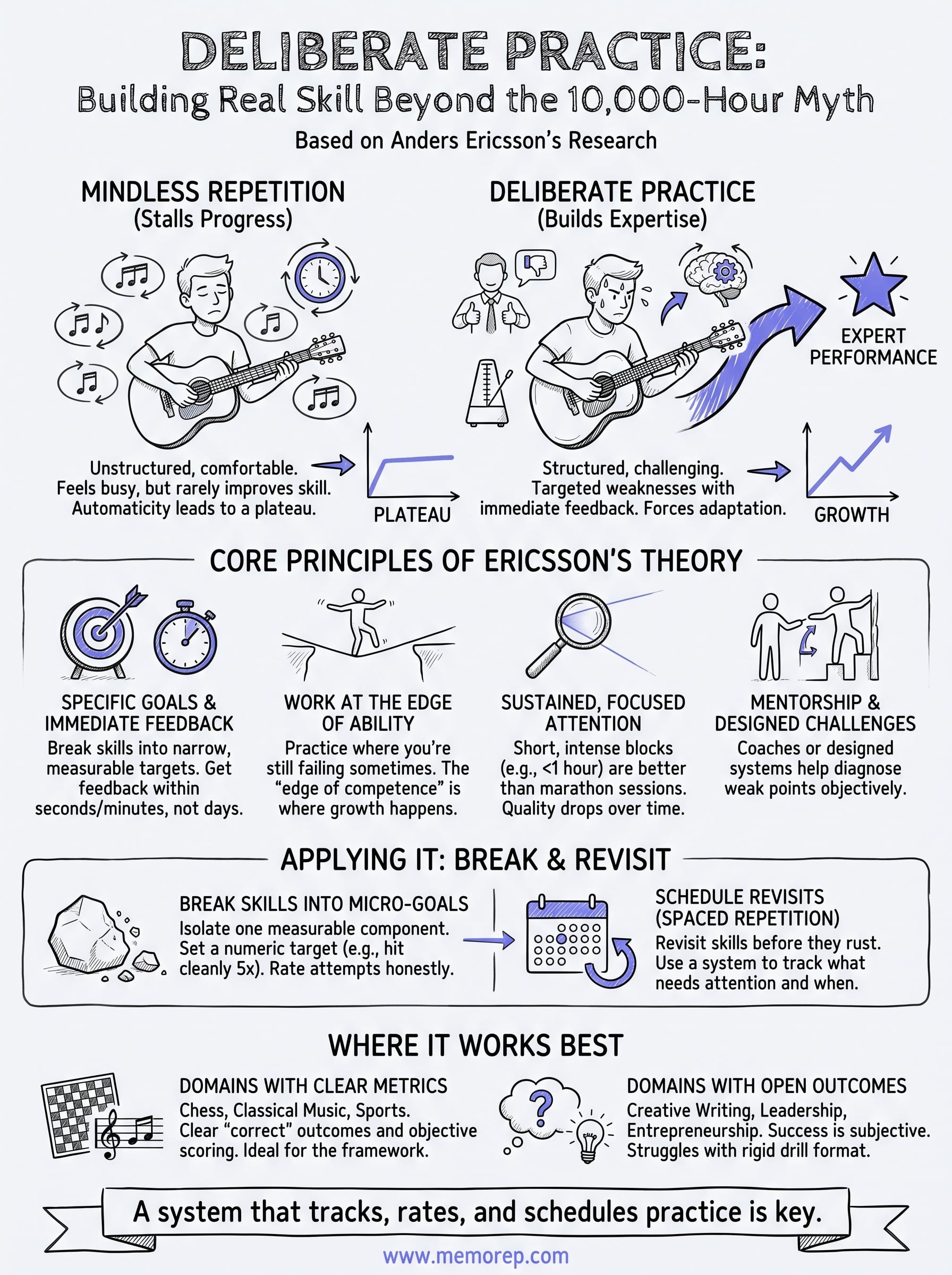
Unstructured repetition feels productive because you're doing something, but it rarely pushes your skill level anywhere new. Guitarists who noodle through the same three songs for a decade often play at roughly the same level they did in year two. Ericsson's studies found that once a skill becomes automatic, the brain stops adapting unless you deliberately introduce a challenge just beyond your current ability.
Real improvement comes from practice designed to make you slightly uncomfortable, not practice that makes you feel busy.
That discomfort is the entire point. It forces your nervous system and cognitive processes to adapt rather than coast. For musicians, a music practice app that tracks individual skills can preserve the target, result, and next review date instead of reducing the session to minutes logged.
Beginners especially benefit from understanding this early, because bad habits formed in month one can take years to unlearn. Learners who skip structured feedback loops often build technique on a shaky foundation, then hit a ceiling they can't explain. Understanding deliberate practice ericsson theory from the start helps you avoid wasting years on practice that feels productive but goes nowhere. It's the difference between motion and progress, and it's why serious teachers, coaches, and now software tools built around spaced repetition keep coming back to Ericsson's original framework.
The core principles behind Ericsson's theory
Anders Ericsson didn't just say "practice harder." He identified specific, testable conditions that separate deliberate practice from casual repetition. Anders Ericsson deliberate practice rests on a handful of principles that show up across every domain he studied, from surgeons to chess grandmasters, and they hold up just as well for someone learning scales on a guitar.
Specific goals and immediate feedback
Generic intentions like "get better at solos" don't work. Ericsson's subjects improved fastest when they broke skills into narrow, measurable targets and got feedback right after each attempt, not days later. A drummer working on rushing tempo needs a metronome telling him he's off by three beats per minute, not a vague sense that his timing "felt weird."
- Set one narrow goal per session, not five broad ones
- Get feedback within seconds or minutes, never weeks
- Track the specific metric you're trying to move
Working at the edge of your ability
Journeyman musicians often practice comfortably inside what they already know. Ericsson's research showed that growth requires sitting right at the boundary between what you can and can't yet do, a zone researchers call the "edge of competence."
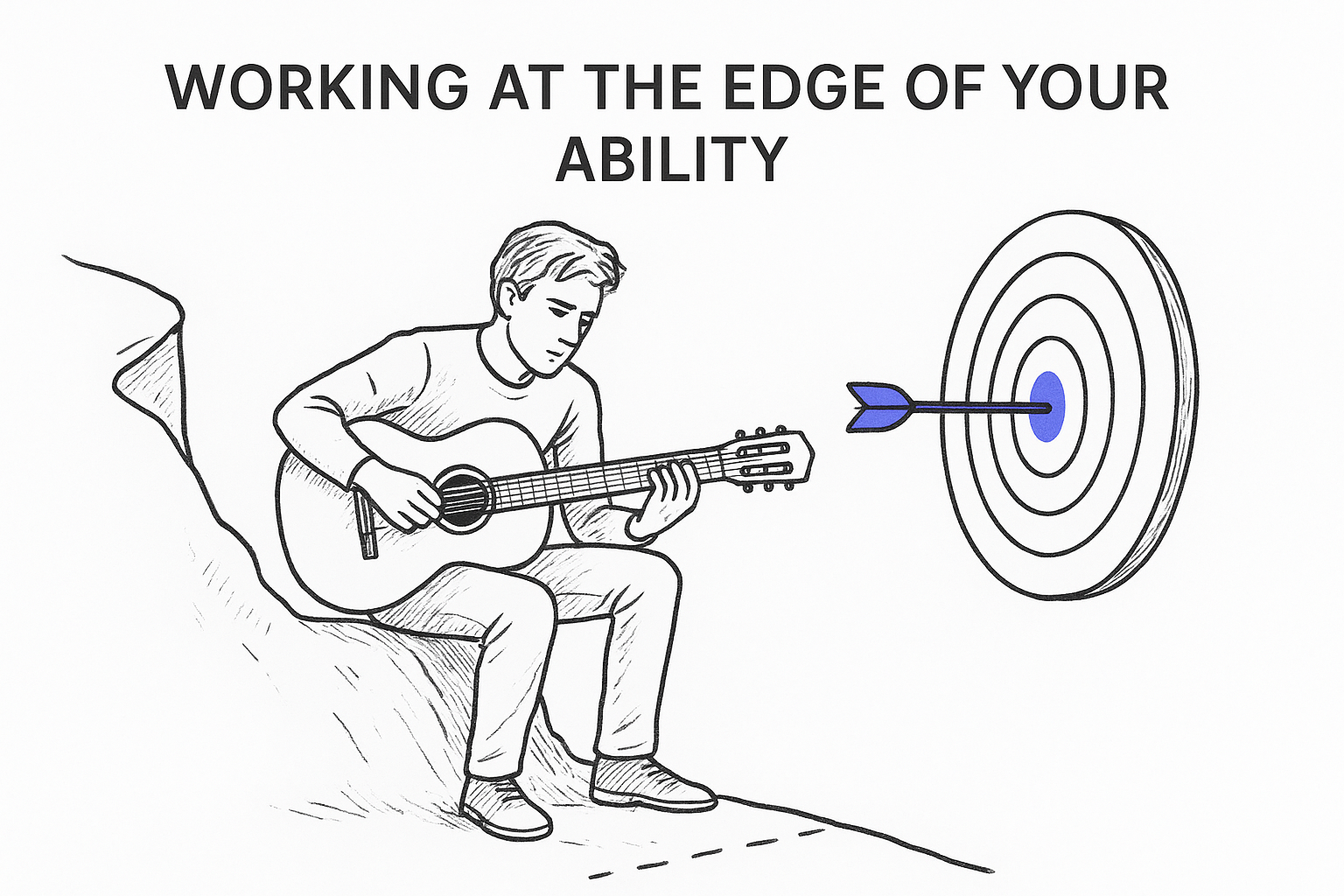
Skill grows fastest at the exact point where you're still failing sometimes, not where you've already succeeded.
Keystone to this idea is sustained, focused attention. Ericsson found that deliberate practice sessions rarely last more than an hour before quality drops, which is why elite performers train in short, intense blocks rather than marathon sessions. Mentorship matters too. Nearly every case study in Ericsson's research involved a coach or teacher who designed the challenges, since most learners struggle to diagnose their own weak points objectively.
How to apply deliberate practice to your own training
Translating Ericsson deliberate practice research into daily habits doesn't require a lab or a coach with a clipboard, though it does require intention. Musicians who apply this correctly treat every practice block like a small experiment: pick a target, attempt it, get feedback, adjust, repeat. The structure matters more than the instrument or skill you're building.
Break skills into testable micro-goals
Vague ambitions like "improve my rhythm" don't give your brain anything to grab onto. Instead, isolate one measurable component and attack it directly.
- Pick a single technical weakness, such as a specific chord transition or bowing motion
- Set a numeric target, like hitting a passage cleanly five times in a row at a set tempo
- Rate each attempt honestly using something like Again, Hard, Good, or Easy
- Log the result so you can see the trend over weeks, not just today
This rating habit, borrowed straight from spaced repetition research, gives you the immediate feedback loop Ericsson's studies say is non-negotiable.
Schedule revisits before skills go rusty
One-off intense sessions fade fast if you don't come back to the material at the right interval. Skills you nailed on Monday can feel foreign by the following week if nothing brings you back to them at the right moment.
A skill you don't revisit on schedule is a skill you'll have to relearn from scratch.
Quietly, this is where most self-directed learners fall apart, not from lack of effort but from lack of a system tracking what needs attention and when. Pairing deliberate practice principles with an algorithm that schedules your next revisit, rather than relying on memory or guilt, closes that gap and keeps hard-won progress from quietly slipping away.
Where deliberate practice works, and where it falls short
Critics have pushed back on Ericsson's deliberate practice theory, and their objections are worth taking seriously. Domains with clear rules, objective scoring, and a long history of coaching, like chess, violin, and gymnastics, respond beautifully to the framework because you can measure progress in concrete units: notes per minute, moves that don't lose material, seconds off a routine. Musicians fit this mold almost perfectly, which is part of why Ericsson's original research leaned so heavily on conservatory students.
Domains with clear performance metrics
Skills with a defined "correct" outcome give deliberate practice room to shine. You know instantly whether a passage was clean or sloppy, whether a chess move held up, whether a free throw went in. That instant feedback loop is exactly what the theory demands.
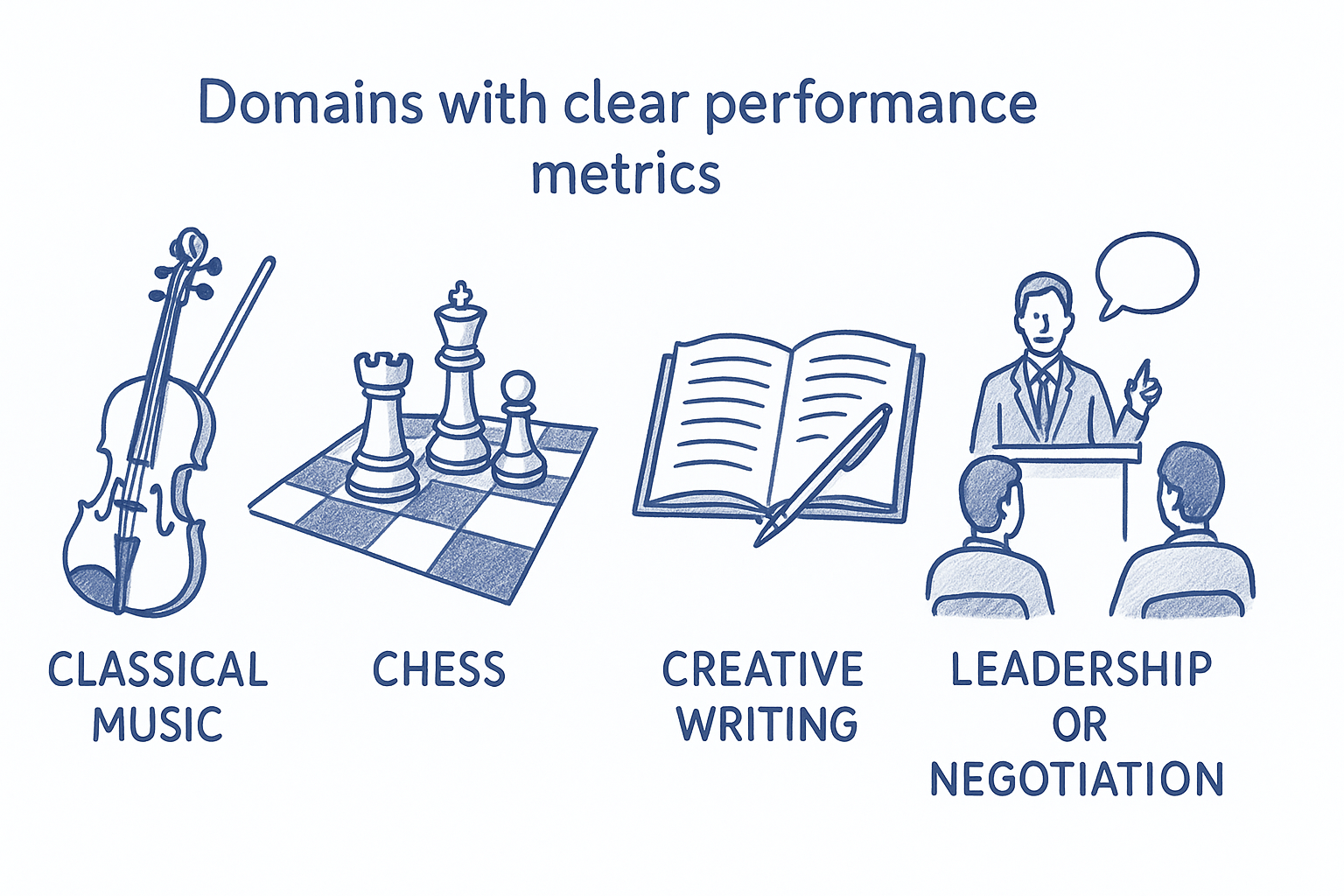
| Domain | Fits the model well | Struggles with the model |
|---|---|---|
| Classical music | Yes, clear technical benchmarks | |
| Chess | Yes, objective win/loss data | |
| Creative writing | Yes, no single "correct" draft | |
| Leadership or negotiation | Yes, outcomes are contextual |
Where the theory struggles
Fields without a stable, measurable target resist the framework. Researcher critiques, including rebuttals published through outlets like the American Psychological Association, note that entrepreneurship, leadership, and open-ended creative work don't have a fixed "correct" answer to drill toward.
Deliberate practice works best when success can be measured, and struggles wherever success is a matter of judgment.
Open-ended pursuits still benefit from structure, feedback, and spaced revisiting, just not the rigid drill-and-correct format Ericsson studied in musicians and chess players.
What this means for your practice
Anders Ericsson's research boils down to one hard truth: deliberate practice beats mindless repetition every time, but only if you build the structure around it. Specific goals, honest feedback, and practice at the edge of your ability separate people who plateau from people who keep improving year after year. Knowing the theory is one thing. Living it out daily, especially the part about revisiting skills before they go rusty, is where most self-taught musicians and skill learners quietly drop the ball.
You don't need a research lab to fix that. What you need is a system that tracks what you practiced, rates how it went, and tells you exactly when to come back to it. That's the entire idea behind how memoRep works, built on the same spaced repetition principles Ericsson's findings point toward, minus the guesswork.