Active Recall Retrieval Practice: What It Is, How to Use It
Active recall retrieval practice is the habit of pulling information out of your memory instead of looking at it again. Active recall and retrieval practice are the same thing under two names. Students usually say "active recall," and researchers say "retrieval practice." In both cases you close your notes, try to produce what you learned, and then check your answer. For long-term memory, this beats rereading almost every time.
Most people study the other way around. They reread chapters, highlight lines, and skim notes, because familiar text feels like knowledge. The feeling is misleading. Every attempt to remember something strengthens the memory, and it also shows you exactly what you have not learned yet.
This article explains why retrieval practice works, how to run a session step by step, which techniques to use, and how to combine it with spacing so memories last. We build MemoRep, a spaced repetition practice app for musicians and practical-skill learners, so the timing side of memory is our daily work. This guide stays on how memory works. It does not tell you how to play an instrument or perform a skill. That is a teacher's job.
Why active recall and retrieval practice work
Active recall works because the act of retrieving a memory changes that memory. Each successful attempt makes the information easier to find next time, and each failed attempt tells you where to look. Rereading does neither.
What the research shows
Psychologists call the underlying finding the testing effect: long-term memory improves when part of your study time goes to retrieving the material. In a well-known 2008 experiment, Karpicke and Roediger had college students learn foreign word pairs. Students who kept testing themselves on every pair, even pairs they had already recalled, remembered about 80% of the words a week later. Students who stopped testing pairs they had gotten right remembered closer to 30%.
A 2011 study by Karpicke and Blunt compared retrieval practice with concept mapping. The retrieval group did better on later tests of comprehension, including questions that required inferences. So the benefit is not limited to rote facts.
Every attempt to remember is a learning event, not just a measurement of what you know.
Why rereading feels better than it works
When you reread, the text hands you the question and the answer at the same time. The words look familiar, and familiarity feels like mastery. Researchers call this the illusion of competence. It disappears the moment the page is gone, usually in the exam room.
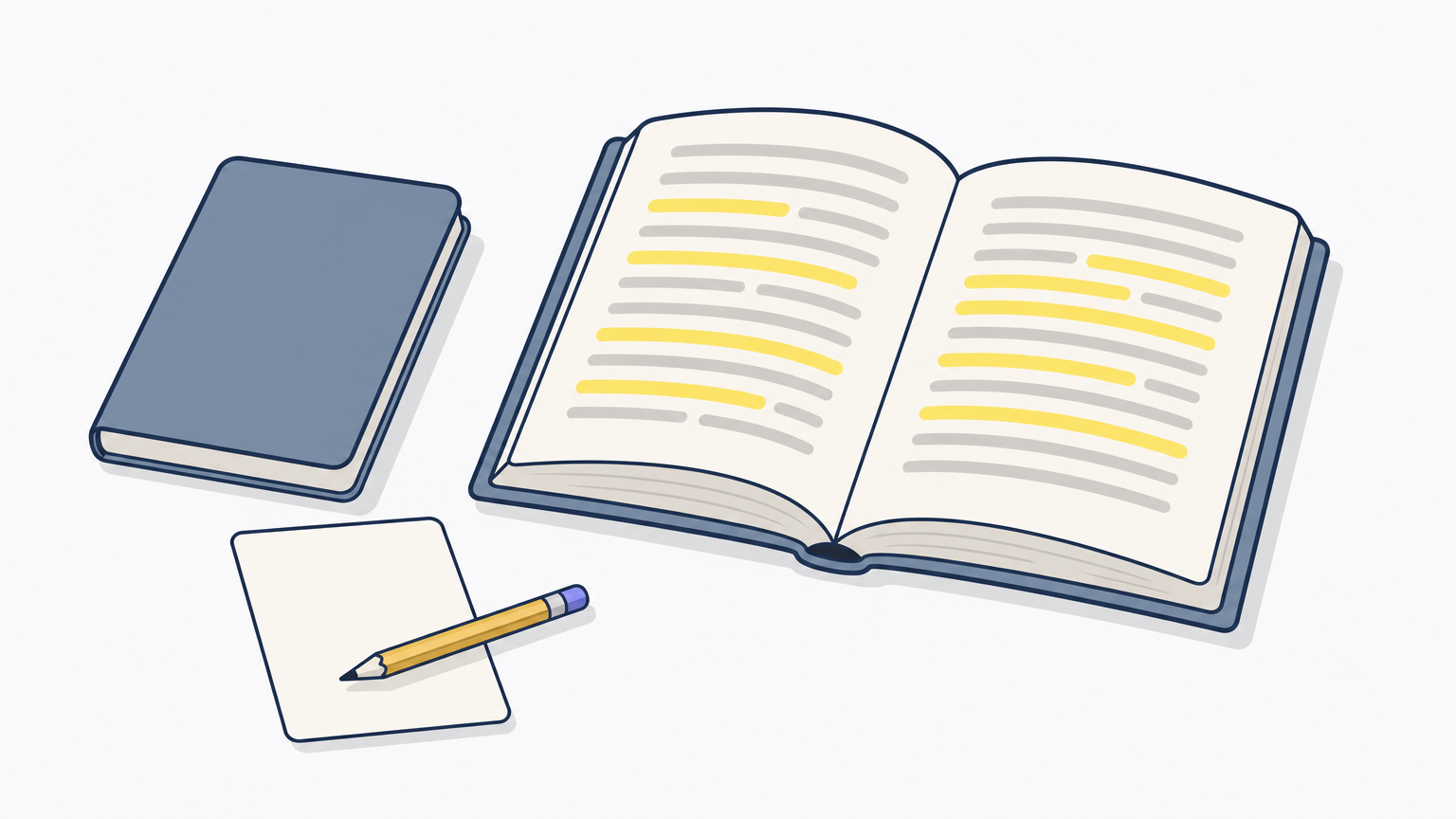
Retrieval practice removes the page first. If you cannot produce the answer, you find out while it is still cheap to fix.
What a failed attempt gives you
A struggle to recall is not wasted effort. Cognitive scientists call this desirable difficulty: the harder your brain works to retrieve something, the stronger the memory becomes afterward. A miss also acts as immediate feedback, so you know where to spend the next twenty minutes. That awareness of your own knowledge is called metacognition, and passive review rarely builds it.
How to use active recall in your own studying
To use active recall, read a small chunk of material, close everything, write or say what you remember, check it against the source, and restudy only the gaps. Then repeat the process on a later day. The loop is simple, and doing it consistently matters more than doing it perfectly.
The basic cycle
- Read one manageable section, such as a few pages or one lecture slide set.
- Close the book, the notes, and the screen.
- Recall everything you can on a blank page or out loud. Do not stop at the first gap.
- Check your attempt against the source. Mark what you missed or got wrong.
- Restudy only the marked items, then try to recall them again.
- Return to the same material on a later day and start from step 3.
This is the same structure as the Read-Recite-Review method described in the learning research. The recite step is where the learning happens.
Size your sessions
A 45-minute block works well as a template. Spend about 15 minutes reading, 20 minutes on recall, and 10 minutes on checking and fixing gaps. If your recall time is shorter than your reading time, you are probably back to passive study.
Make it hard, but not impossible
Start retrieving before you feel ready. Attempting recall on material you barely know still helps, as long as you check your answers quickly afterward. Also recall in the same format you will be tested in. If the exam is written, write. If you must explain something aloud, say it aloud.
Close the page before you feel ready, then check the answer right away.
Active recall techniques with concrete examples
The best active recall technique is the one you will actually repeat, and several of them work equally well. They differ mostly in how much structure they give you and what kind of material they suit.
Techniques compared
| Technique | What you do | Example | Best for |
|---|---|---|---|
| Blank-page recall (blurting) | Write everything you remember on a blank page, then check | After a biology chapter, list every term and process you can | Broad topics, essays |
| Self-quizzing | Write questions as you read, answer them later | "What are the stages of the water cycle?" | Facts, definitions |
| Flashcards | Question on one side, answer on the other | Vocabulary, formulas, dates | Short, discrete facts |
| Practice tests | Answer past papers or your own mock exam | A timed set of past exam questions | Exam preparation |
| Teach it | Explain the topic to someone without notes | Walk a friend through how a bill becomes law | Concepts, reasoning |
| Copy-cover-check | Cover your notes, recall, uncover, compare | Cover one column of a table and fill it in | Zero-prep review |
A worked example
Say you are studying 20 drug classes and their main uses for a pharmacology exam. You read the list for 10 minutes, close the notes, and write down every class and use you can. You get 13 right. You check the notes and see that the 7 you missed are all similar-sounding names. You study just those 7 for five minutes, take a short break, and write them again from memory. This time you get 6 right.
You spent about half your time on the 7 weak items instead of rereading all 20. That is the main practical advantage of retrieval practice. It points your effort where memory is weakest. This is also a direct answer to the common question of what retrieval practice looks like: it is any closed-book attempt followed by a check.
Pick one technique, run it for a week, and let your misses decide what to review next.
How spaced repetition makes active recall last
Spaced repetition makes active recall last by scheduling each retrieval attempt for just before you would forget. Active recall decides what kind of studying you do, and spacing decides when you do it. Together they produce far more durable memory than either one alone.
Why timing matters
The Ebbinghaus forgetting curve describes how quickly new memories fade without review: steeply at first, then more slowly. Reviewing right after learning is too easy to help much. Reviewing after a long gap means you have forgotten too much. The sweet spot is just before the memory fades, when retrieval is effortful but still possible.
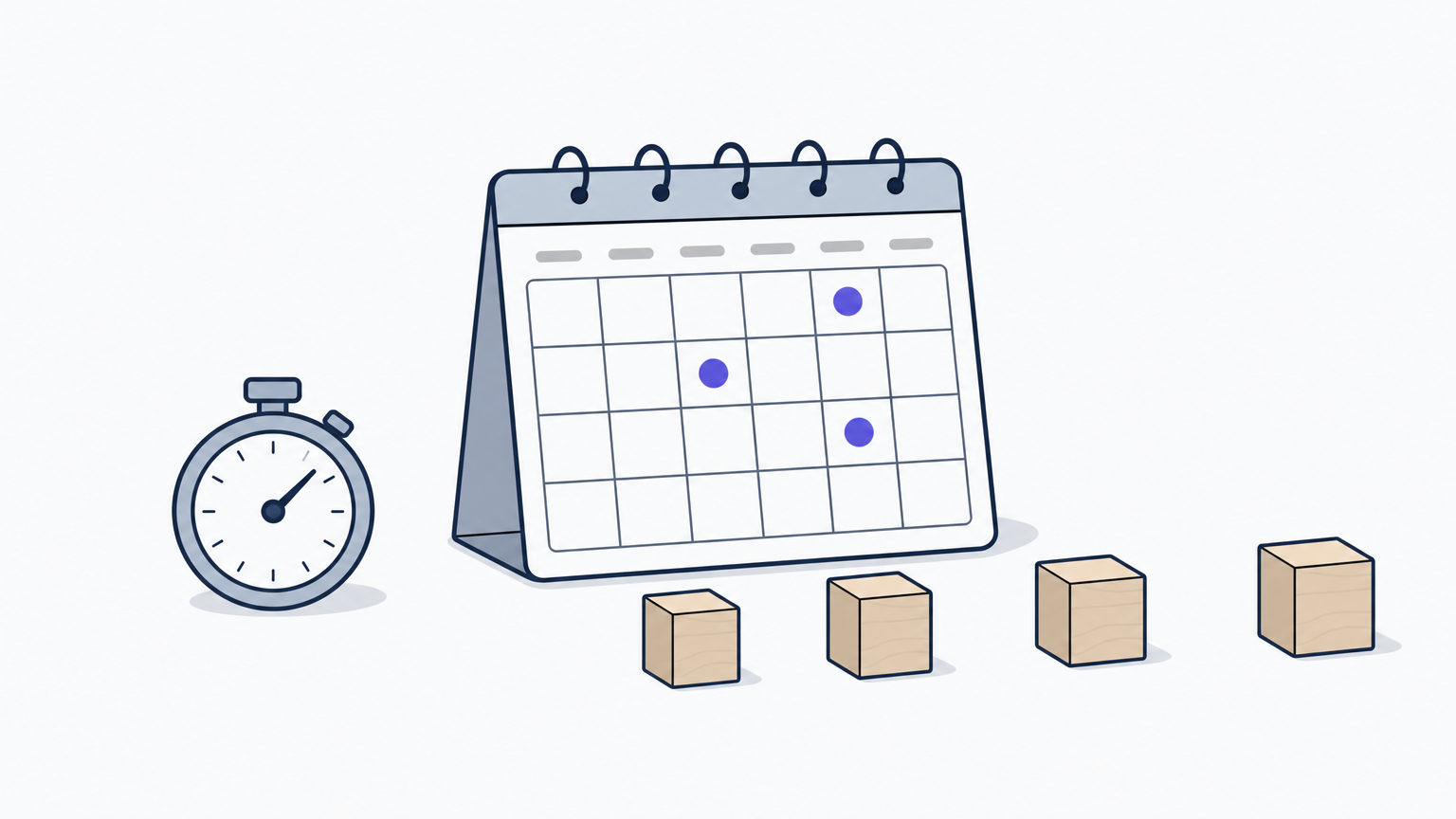
A popular rule of thumb is the "2-7-30" pattern: review after about two days, again after about a week, then after about a month. It is a heuristic, not a law of memory, but it captures the idea of widening gaps. Here is how it might look for the pharmacology list above.
| Review | Timing | What to do |
|---|---|---|
| First recall | Day 0 | Study, recall, check, fix gaps |
| Second recall | Day 2 | Recall all 20 from scratch |
| Third recall | Day 7 | Recall all 20, then check |
| Fourth recall | Day 30 | Recall all 20, then check |
Items you miss should come back sooner than the table says. Items you get right instantly can wait longer.
Letting software handle the schedule
Fixed intervals are a decent start, but a real scheduler adapts to your results. That is what algorithms like SuperMemo's SM-2 do: after each attempt you rate how it went, and the next review date moves accordingly. MemoRep applies this idea to practice cards for musicians and practical-skill learners, using ratings of Again, Hard, Good, or Easy to decide when a card returns. It is not a flashcard or text-memorization tool, and it does not instruct you on how to practice. It only decides what is due and when, so you spend your energy on the practice itself.
Retrieval decides how you study; spacing decides when you come back.
Common mistakes that weaken retrieval practice
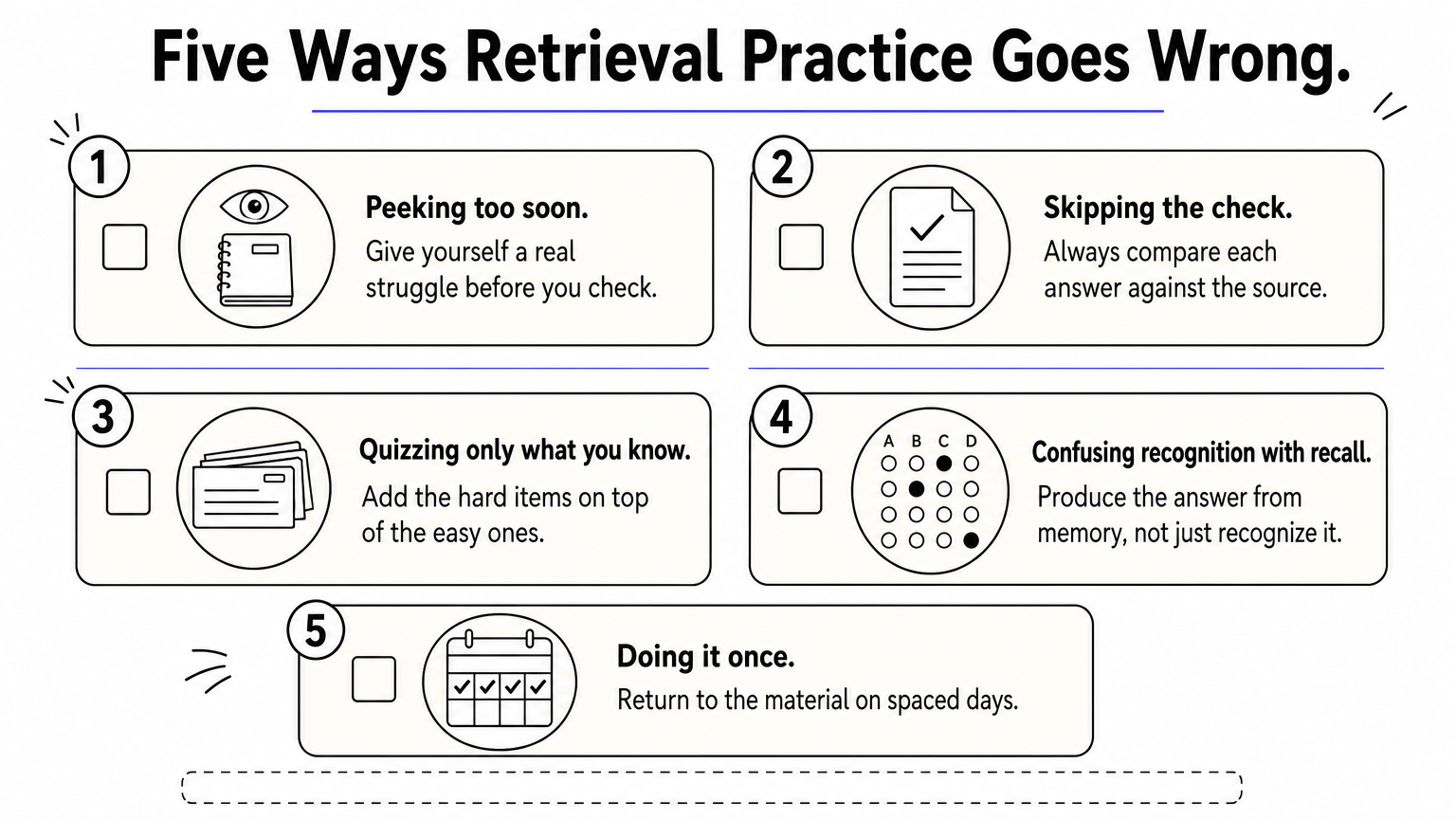
Retrieval practice fails when it turns back into passive review without you noticing. Most failures fall into a handful of patterns, and each one is easy to fix once you spot it.
Mistakes that waste a session
- Peeking too soon. If you check the notes after ten seconds, you are rereading. Give yourself a real struggle first.
- Skipping the check. Retrieval without feedback can lock in errors. Always compare against the source.
- Quizzing only what you know. It feels good, but the Karpicke and Roediger result shows that continued testing on already-recalled items still helps. Add the hard items on top, not instead.
- Confusing recognition with recall. Multiple choice and "that looks right" are easier than producing the answer. Use free recall when you can.
- Doing it once. One recall session is a start. The memory sticks after repeated, spaced attempts.
When retrieval practice is the wrong tool
You cannot retrieve what you never learned. Brand-new material needs a first pass of reading or instruction before recall helps, and confusing material needs explanation, not more quizzing. Retrieval practice also does not replace guidance. For any practical skill, a teacher decides what to work on and how. Retrieval and spacing only help you keep hold of what you have already been taught.
If you cannot answer it yet, learn it first, then test yourself on it.
Putting retrieval practice to work
Active recall and retrieval practice are one idea: test yourself instead of rereading, check your answer, and come back at widening intervals. The research behind it is more than a century old, and the method needs nothing but a blank page and a few minutes. Start with one chapter or one topic this week and run the six-step cycle.
If you learn a practical skill or play music and want the scheduling handled for you, join the MemoRep beta. The limited beta offers free premium access, and the app tells you what is due and when.