How to Practice Acoustic Guitar in an Apartment Quietly
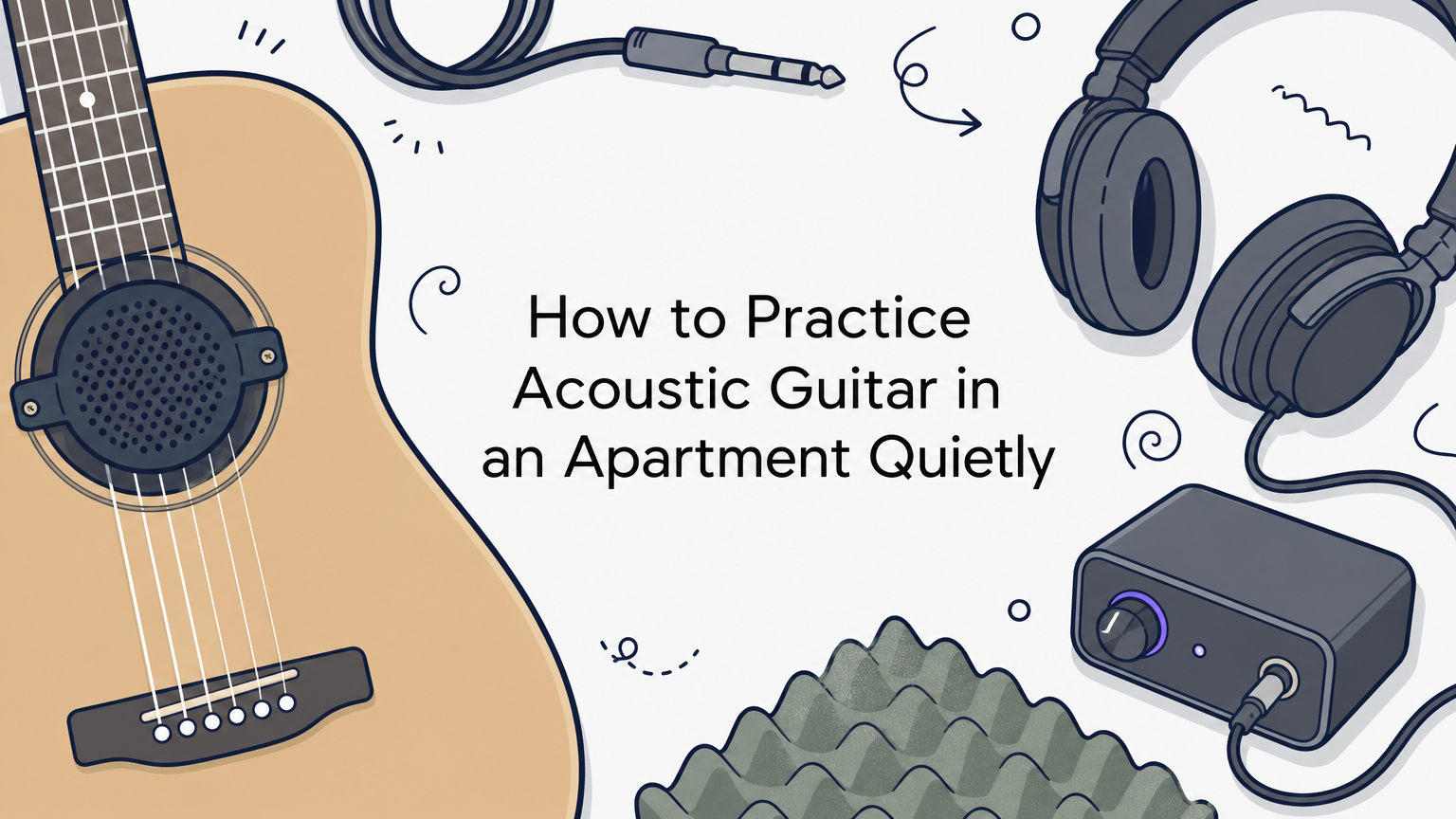
The way to handle how to practice acoustic guitar in an apartment is to cut sound at three points: the guitar, the room, and the clock. Put a soundhole cover and a foam string mute on the guitar, or move your sound into headphones with a pickup and a small amp. Then set up away from shared walls, practice when your neighbors are awake, and keep sessions short and planned.
The problem is that an acoustic guitar has no volume knob. Thin walls carry sound farther than you expect, and the fear of a complaint makes you either skip practice or play tense and distracted. Both stall your progress. Most advice online stops at "buy a mute," which fixes only part of the problem.
This guide covers gear and routine, not how to play. Your teacher is the right person for technique and theory. Here you get four steps: quiet the guitar, use headphones, set up the room and the clock, and plan short sessions. For the last step, MemoRep, a spaced repetition practice app, schedules what to practice so that a short quiet window is never wasted.
Why apartment practice needs a plan
You can practice acoustic guitar in an apartment as long as you control how much sound leaves your unit and when. That is a planning problem, not a reason to quit.
Is it okay to play guitar in an apartment?
Yes, in most cases. Leases rarely ban instruments, but they do set quiet hours and prohibit disturbances, so read yours before you buy anything. Playing is rude only when it is loud, late, or a surprise to the people next door. Respect the posted hours and your neighbors have little to complain about.
What actually carries through the walls
Two things travel. Airborne sound leaves the soundhole and the strings and fills the room. Structure-borne vibration moves through the floor and the walls wherever the guitar, your chair, or your amp touches them. Mutes and covers handle the first kind. Placement and pads handle the second. Amplifiers add a third problem, because bass-heavy sound passes through walls more easily than treble.
You cannot silence an acoustic guitar, but you can control how much of it your neighbors hear and when.
Step 1. Quiet the guitar itself
Start with a soundhole cover and a foam string mute. It is the cheapest combination, and it lowers the volume right at the source. Add lighter strings only if you need more reduction.
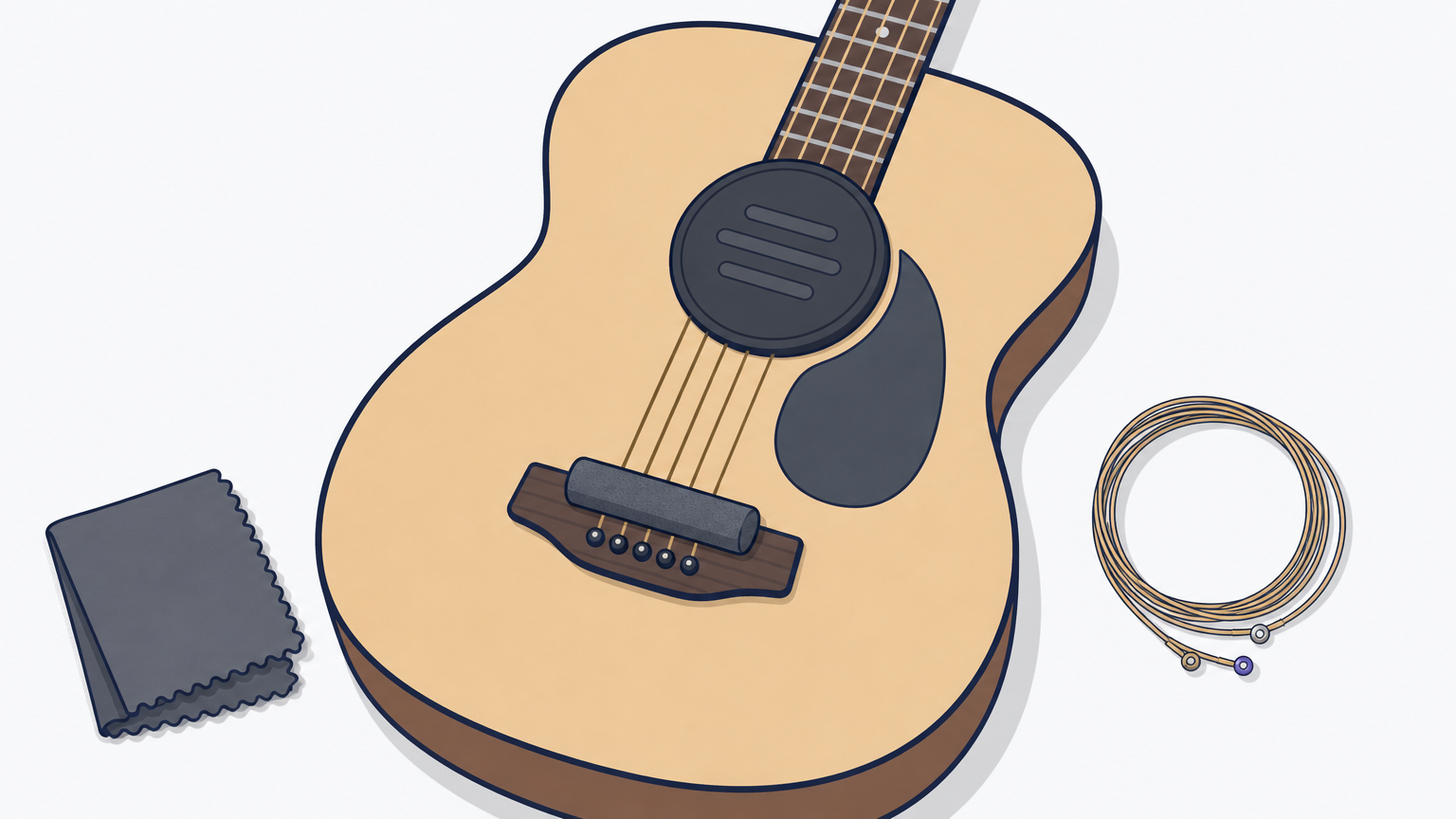
Pick your quiet gear
| Item | What it does | Trade-off |
|---|---|---|
| Rubber or foam soundhole cover | Blocks sound projecting out of the hole | Tone gets boxy and muffled |
| Foam string mute near the bridge | Dampens string vibration | Strings feel and sound deadened |
| Extra-light or silk-and-steel strings | Lower tension and a softer sound | Thinner tone; ask a repair tech first, since a gauge change can shift your setup |
| Silent guitar with headphone output | Nearly silent body, sound goes to headphones | Costs far more than accessories |
Expect a trade-off
Quiet gear changes how the guitar feels and sounds. Treat muted sessions as practice, not as a test of your tone. If you can, play unmuted now and then during a window your neighbors already know about, so you do not lose touch with the real instrument.
Cover the soundhole, mute the strings, and you have removed most of the sound for very little money.
Step 2. Move the sound into headphones
Headphones are the strongest fix because the sound never enters the room. If your acoustic is an acoustic-electric, plug it into a headphone amp or a small modeling amp with a headphone jack. If it is not, you have other routes.
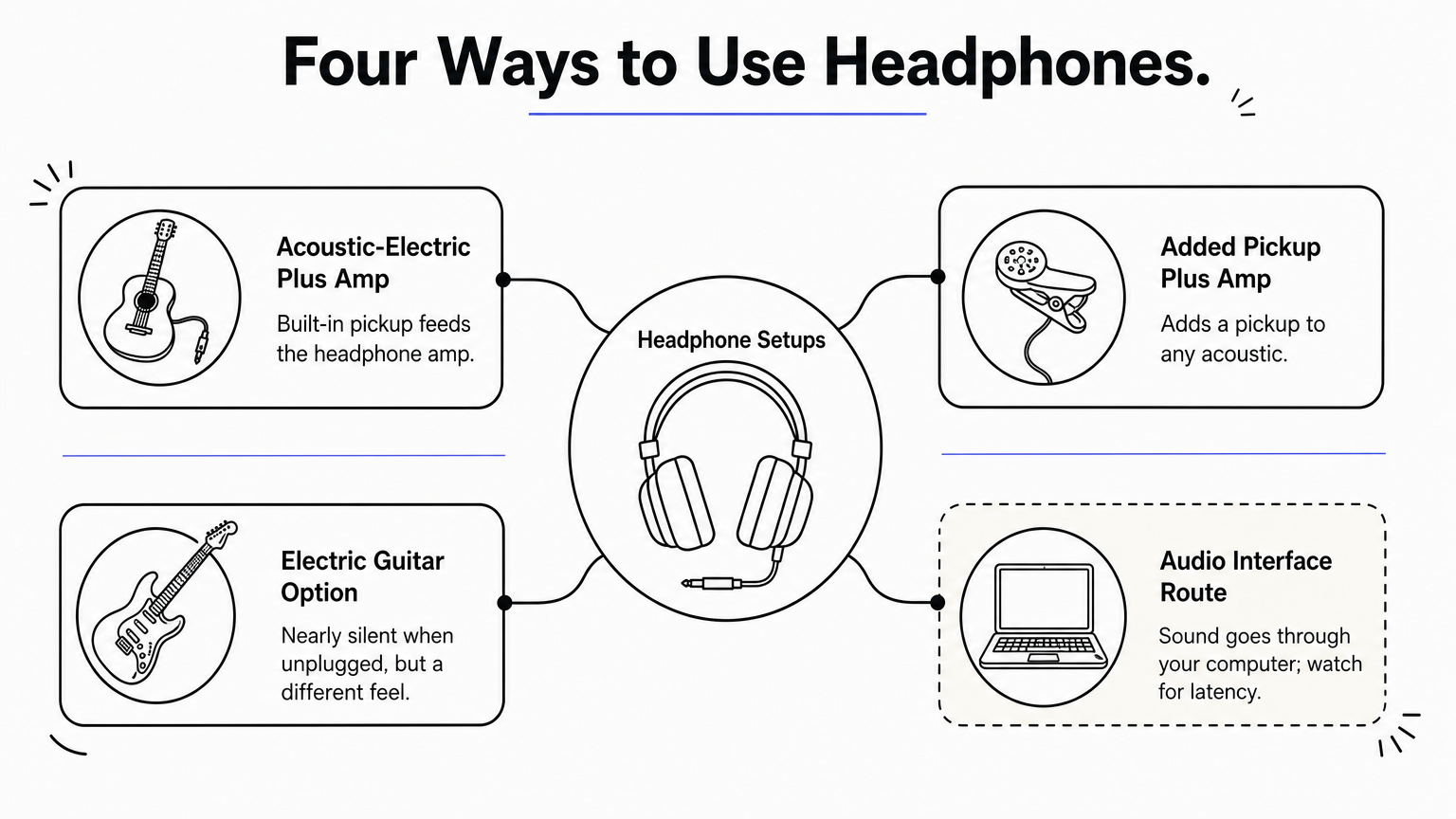
Compare the headphone setups
| Setup | How it works | Watch for |
|---|---|---|
| Acoustic-electric into a headphone amp | Built-in pickup feeds the amp | Strings are still faintly audible |
| Clip-on or soundhole pickup plus headphone amp | Adds a pickup to any acoustic | Pickup tone varies, so check it before you commit |
| Electric guitar plus headphone amp or modeler | Nearly silent when unplugged | Different instrument and feel |
| Microphone or pickup into an audio interface | Sound goes through your computer | Latency if you monitor through software |
A low-watt amp at a low setting is a common bedroom choice, but it still pushes low frequencies into the wall. With thin walls, headphones beat a small speaker. Because the unplugged string sound remains on an acoustic, pair your headphones with the mute from Step 1.
Protect your ears
Closed-back headphones leak less sound into the room than open-back ones. Keep the volume moderate. You will wear them for long sessions, and ear fatigue is real.
If walls are thin, send the sound to headphones and let the room stay quiet.
Step 3. Set up the room and the clock
Your location and your schedule matter as much as your gear. Where you sit and when you play decide whether quiet gear is enough.
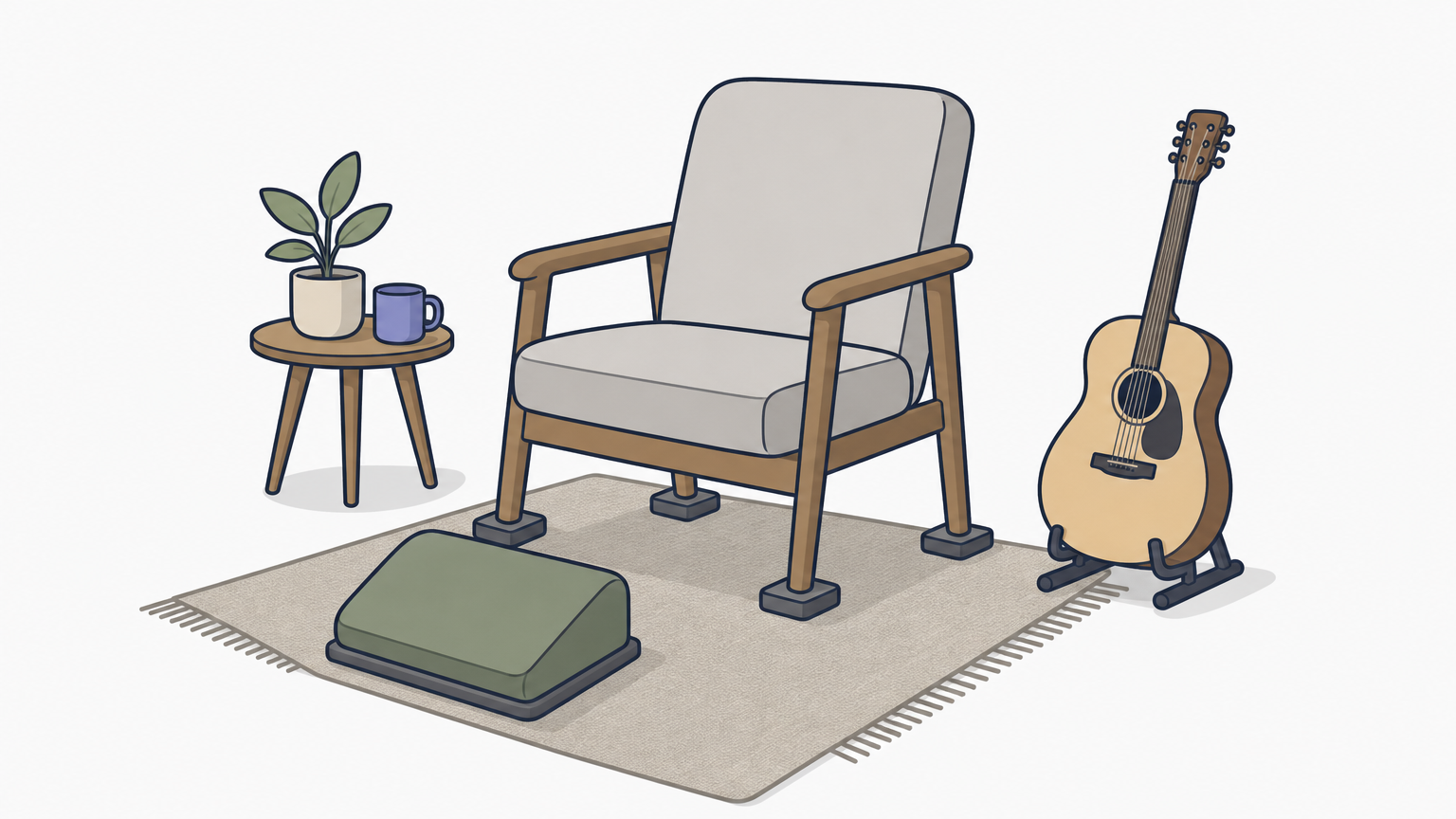
Pick the spot
Move away from shared walls. Sit near an outside wall or in the part of the room farthest from the neighbors' bedrooms. A rug and soft furniture absorb reflections and cut the echo. If someone lives below you, put a rubber or foam pad under your chair legs and footrest so vibration does not travel into the floor.
Choose your hours and tell your neighbors
Practice when people are awake and active, such as mid-day or early evening, and stay well inside your lease's quiet hours. A short heads-up turns a possible complaint into a conversation. Copy and adapt this:
Hi, I'm in 4B. I've started practicing acoustic guitar, usually
weekdays between 6:00 and 6:30 pm, and I use a mute so it stays
quiet. If it ever carries into your place, text me and I'll adjust.
Thanks!
A neighbor who knows your schedule and has your number is far less likely to complain than one who is surprised.
Step 4. Plan short sessions with spaced repetition
Quiet practice works best in short, planned sessions, so decide in advance what each session covers. A 20-minute window spent choosing what to play is a window wasted.
Why short and planned works here
Apartment limits push you toward short windows. Random picking inside a short window means some songs and exercises get all your time while others fade. Spaced repetition fixes that by bringing each item back just before you would forget it, based on the Ebbinghaus forgetting curve.
Set it up in MemoRep
In MemoRep you create a project and add practice cards for the songs, exercises, and techniques your teacher or lesson materials have given you. After each pass, you rate the card Again, Hard, Good, or Easy. The SM-2-based scheduler uses that rating to decide when the card returns, and daily notifications remind you to open your session. MemoRep does not tell you how to play anything. It tells you what to practice and when.
Here is a worked example. You have 8 cards and a 20-minute window after dinner. On a given day only some cards are due, say 4. At about 5 minutes each, that fills the window, and the other 4 wait for their turn. You never have to decide, and nothing gets forgotten.
In a short quiet window, the best use of time is knowing exactly what to practice before you pick up the guitar.
Keep it quiet and keep it regular
Practicing acoustic guitar in an apartment comes down to four moves. Quiet the guitar with a cover and a mute, shift the sound into headphones when walls are thin, choose your spot and hours with your neighbors in mind, and plan short sessions so no minute is wasted. None of it requires a bigger space or a different instrument.
If you want the planning handled for you, try MemoRep and get free premium access during the limited beta. It schedules your practice cards so you know what to play next, and the beta is open to the first 200 users.