How to Practice Guitar Quietly Without Annoying Neighbors
You want to play, but it's 10 p.m., the walls are thin, and your neighbor has already knocked once. Skipping practice isn't the answer. Missing a few nights is how songs get rusty and progress stalls. Learning how to practice guitar quietly lets you keep your routine without starting a feud.
The short answer: use gear that cuts the sound before it reaches the room. On electric, plug headphones into your amp's output or a small headphone amp. On acoustic, a string dampener or a silent guitar drops the volume sharply. Your own playing touch matters too, and you can adjust it without changing what you practice.
Below, you'll find each option compared by cost, comfort, and how much noise it actually removes. We also cover how to protect your practice time once the volume problem is solved. At MemoRep, we help musicians decide what to practice and when, so quiet sessions stay short, focused, and consistent.
Why quiet practice works and what to expect
Your hands don't need volume
Skill builds through repetition and recalling a passage from memory, not decibels. A passage you play ten times at a whisper puts the same movement into memory as one you play at full blast. If you want to know how to practice guitar without making noise, start there: quiet is a setting, not a downgrade.
Your hands learn from repetition, not from volume.
Consistency matters even more than loudness. Short sessions on five nights beat one loud Saturday, which is exactly how effective practice is built. That is why a setup that lets you play at 11 p.m. is worth getting right.
What changes when you go quiet
Some things will feel different, and knowing them early saves frustration. Whether you're working out how to practice electric guitar quietly or how to practice guitar silently on an acoustic, expect these tradeoffs:
- Tone changes. Headphones sound different from a speaker in a room, and dampened acoustic strings sound muted.
- Feel changes. Silent guitars and dampeners alter string response slightly, so give yourself a few sessions to adjust.
- Some noise stays. An unplugged electric still makes pick and string sounds, and taps on the fretboard can carry through a thin floor.
- Your ears need care. Headphones sit close to your eardrums, so a low volume still feels loud.
Keep headphone volume moderate and take short breaks. The CDC's NIOSH guidance sets its recommended exposure limit at 85 decibels over eight hours, and louder sound shortens the safe time quickly.
What quiet gear will not fix
Gear solves the noise problem, not the planning problem. Silence removes the complaint, but it doesn't decide what you work on. Without a plan for organizing guitar practice, a quiet hour drifts into replaying the pieces you already like.
That is why the last step in this guide covers scheduling. First you need the right setup, so let's pick one.
Step 1. Choose your quiet setup for your guitar
Match the gear to your guitar
The best answer to how to practice guitar quietly depends on what you hold. Electric players have the easiest path, because the sound lives in the amp and you can route it to headphones. Acoustic players need to cut string vibration or body resonance directly. Here is how the main options compare:
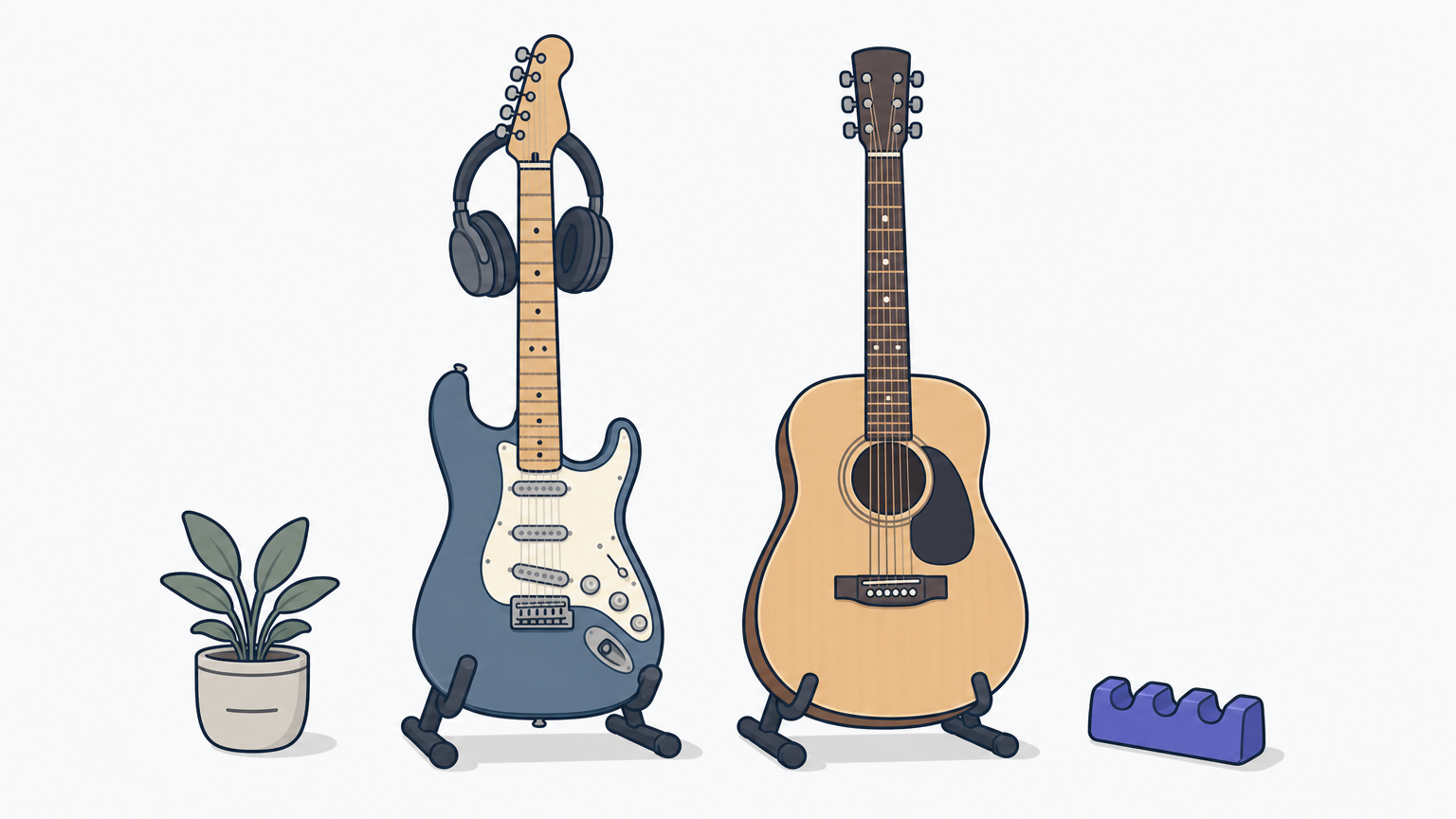
| Setup | Best for | Typical cost | Noise left |
|---|---|---|---|
| Amp headphone jack | Electric | $0 if built in | Pick and string clicks |
| Pocket headphone amp | Electric | $30 to $80 | Pick and string clicks |
| String dampener | Acoustic | $5 to $25 | Muted but audible |
| Silent guitar | Acoustic feel | $500 and up | Pick and string clicks |
Pick by budget and room
Start with what you already own. If your amp has a headphone jack, you're done, and it costs nothing. If it doesn't, a pocket headphone amp is the cheapest fix. Check your amp's manual for a headphone or line out before you buy anything.
Acoustic players should try a dampener first. At $5 to $25, it's a low-risk test. A silent guitar makes sense if you play most nights and the walls are very thin.
Start with the cheapest option that fits your guitar, and upgrade only if it fails you.
Whatever you pick, test it at your real practice hour. Play for ten minutes at night and ask a roommate or listen from the hallway. Then move on to the setup steps below.
Step 2. Plug in headphones for electric guitar
This is the easiest answer to how to practice electric guitar quietly. Headphones turn your amp into a private speaker, so the room hears little beyond string and pick noise.
Connect through the amp's headphone jack
Most small practice amps have a headphone output, and plugging in usually cuts the speaker automatically. Do this in order:
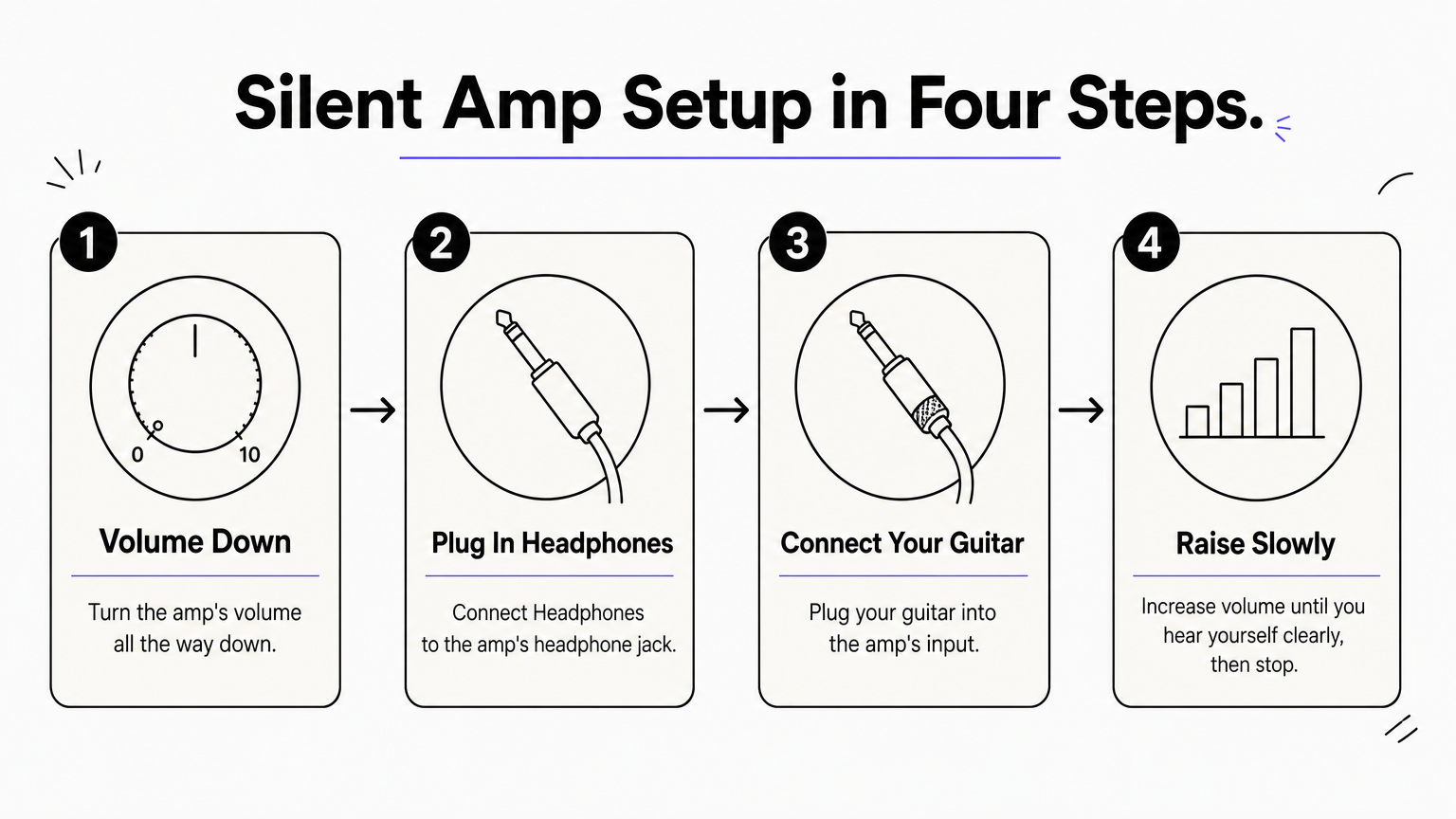
- Turn the amp's volume all the way down.
- Plug your headphones into the headphone jack. Many amps use a 1/8 inch jack, so a $5 adapter may be needed for 1/4 inch plugs.
- Plug your guitar into the amp's input.
- Raise the volume slowly until you hear yourself clearly, then stop.
If the speaker still makes sound, you aren't practicing quietly yet.
No headphone jack? Use a pocket headphone amp
Without a jack, a pocket headphone amp is the fix. It clips to your guitar strap or sits on your desk. Plug the guitar into it, then plug your headphones into it. The amp stays off, and the room stays silent.
Fix the common problems
Most issues come from a short list of causes. Check this table before you buy anything new:
| Problem | Likely cause | Fix |
|---|---|---|
| Speaker still plays | Amp doesn't mute on plug-in | Check the manual, or use a headphone amp |
| Loud hiss | Gain set too high | Lower the gain knob |
| Plug won't fit | 1/4 inch vs 1/8 inch jack | Use an adapter |
| Tone sounds thin | Headphones flatten the sound | Adjust the amp's EQ slightly |
Step 3. Dampen strings on an acoustic guitar
Acoustic guitars are the harder case, because the body amplifies every string. Dampening attacks the problem from two sides. It stops the strings from ringing, and it limits how much sound escapes into the room. Expect a muted but usable result, not silence.
Install a string dampener
A string dampener is a foam or rubber pad that rests against the strings near the bridge. Most slide or clip on without tools. Set it up in this order:
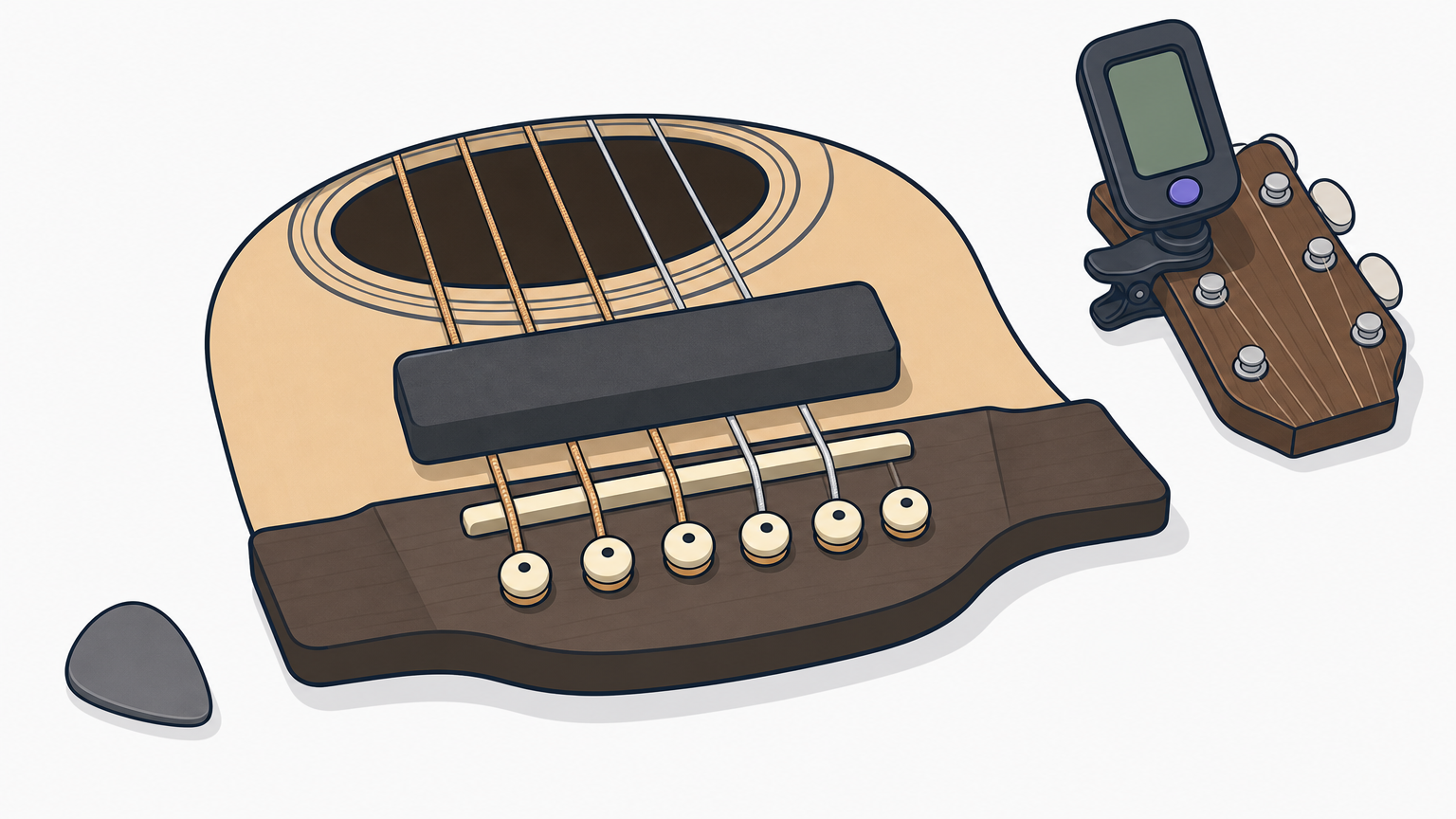
- Tune the guitar first, so you have a clean baseline.
- Place the pad against the strings close to the bridge, following the maker's instructions.
- Pluck an open string. If it still rings, reseat the pad so it touches all six strings.
- Remove it when you finish, so the strings ring normally again.
Dampening shrinks the sound of an acoustic, but it never erases it.
Cut body resonance and test the result
Next, consider a soundhole cover, a rubber or foam disc that blocks the opening and reduces the sound leaving the body. Most cost around $10 to $20. Paired with a dampener, it removes a good share of what a neighbor would hear.
Finally, check the result from outside the room. Close the door, stand in the hallway, and have someone listen while you play. If it's still audible, move to the room farthest from the shared wall. If you need to practice guitar without making noise at all, the silent guitar from Step 1 is your next move.
Step 4. Plan quiet sessions with spaced repetition
Knowing how to practice guitar quietly is half the job. The other half is deciding what to play at 11 p.m. Spaced repetition answers that. You revisit each item just before it fades, following the Ebbinghaus forgetting curve, so a short quiet session covers more than random replaying.
Turn your material into practice cards
Split your repertoire into small items, such as one song section, one drill, or one chord change, the same chunking approach that makes a song stick. Each item becomes a card. After you play a card, rate it honestly, because the rating decides when the card comes back, which is the heart of spaced practice on guitar.
| Rating | What it means | What happens next |
|---|---|---|
| Again | You couldn't play it | Returns very soon |
| Hard | You got through it with effort | Returns after a short gap |
| Good | You played it cleanly | Returns after a longer gap |
| Easy | It felt effortless | Returns after a much longer gap |
Keep each session short
Short sessions suit quiet practice. Aim for 15 to 20 minutes of due cards, then stop when the list is empty. Your headphones come off on time, and your neighbors get their evening back.
Practice what's due, not what's fun, and your quiet hours add up.
MemoRep handles this scheduling for you with the SM-2 scheduling algorithm. You open the app, see today's cards, rate each one, and know exactly what to play before the next quiet night.
Keep the practice going, keep the peace
Learning how to practice guitar quietly comes down to two decisions. First, cut the sound at the source: headphones through your amp or a pocket headphone amp on electric, a dampener or soundhole cover on acoustic. Second, plan what you play, so a quiet 15 minutes actually counts.
Gear keeps your neighbors happy. A schedule keeps your progress steady. Together, they let you pick up your guitar at 11 p.m. without guilt and without wondering where to start.
If you want the scheduling handled for you, see the science behind how MemoRep schedules your practice and get a free-for-life subscription for a limited time. Add your pieces as cards, rate each session, and let the app show you what is due tonight.