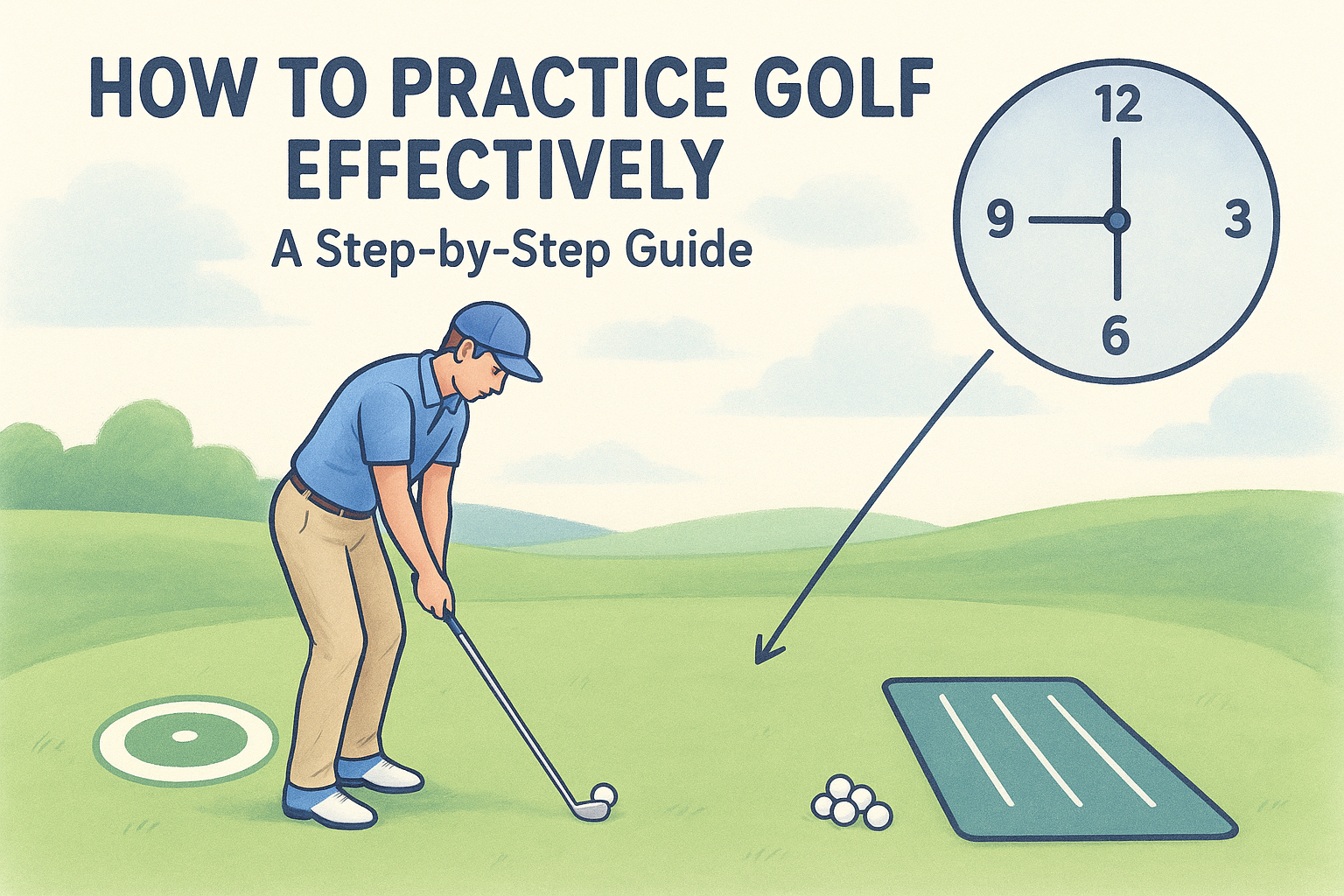
How to Practice Golf Effectively: A Step-by-Step Guide
You hit a bucket of balls, feel great for ten minutes, then watch your swing fall apart by ball fifty. Sound familiar? Most golfers practice by accident: no plan, no tracking, just hitting shots until the bucket runs out. If you want to know how to practice golf effectively, the answer isn't more range time, it's structured range time.
Effective golf practice means splitting your session into clear blocks, like the popular 20/20/20 method, so you work on full swing, short game, and putting with equal intensity instead of drifting to whatever feels fun that day. It also means building in feedback: rating each drill as you go so you actually know what's improving and what's still shaky, rather than guessing.
This guide walks through a step-by-step system for practicing golf, covering at-home drills for days you can't reach the course, range session structure, and how to sequence skills so nothing gets rusty between sessions. It's the same spaced-practice thinking we build into MemoRep for musicians, applied directly to your golf game.
What makes golf practice actually effective
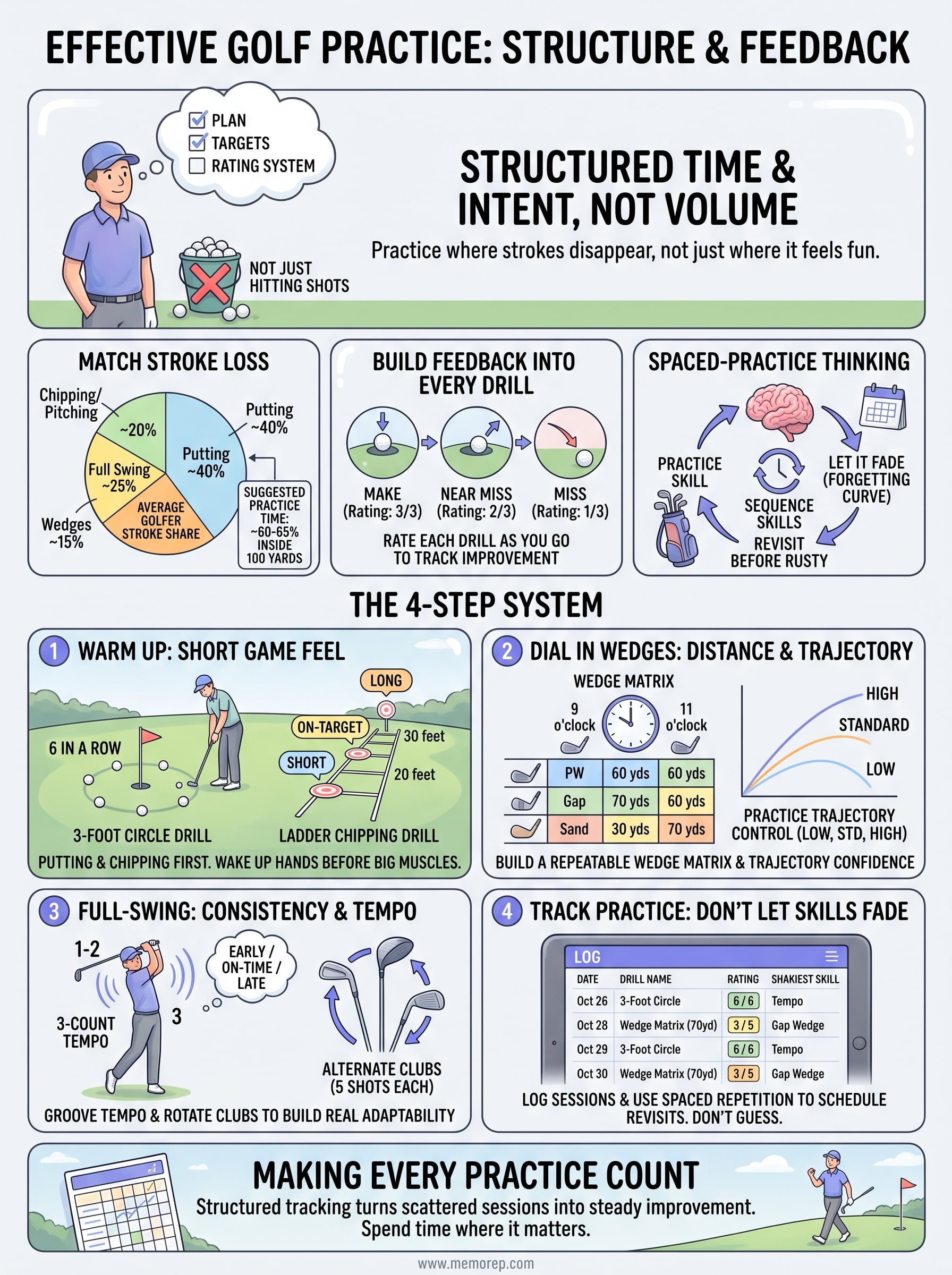
Effective golf practice starts with intent, not volume, the same principle behind these 5 science-backed practice tips. Swinging without a target, a plan, or any way to check your progress is exactly what keeps golfers stuck at the same handicap year after year. When you're figuring out how to practice golf more effectively, the real question isn't how many balls you hit, it's whether your practice time matches where strokes actually disappear on the course. Most amateurs spend 80 percent of their range session on full swing and 20 percent on everything inside 100 yards, even though the data runs the opposite direction.
Match your practice time to where you lose strokes
Data from shot-tracking systems used by teaching pros consistently shows that the short game and putting account for the majority of strokes gained or lost for mid-to-high handicappers. Time allocation should follow that reality instead of habit.
| Skill Area | Share of Strokes (avg. golfer) | Suggested Practice Time |
|---|---|---|
| Putting | ~40% | 30-35% |
| Chipping/pitching | ~20% | 25-30% |
| Wedge shots (50-100 yds) | ~15% | 15-20% |
| Full swing | ~25% | 20-25% |
Practice where the strokes actually live, not where the swing feels good.
Build feedback into every drill
Repetition without feedback just grooves whatever you're already doing, good or bad. Rating every drill, the way you'd score a rep in weight training, is how you turn range time into practice with measurable goals and fast feedback, because it forces you to notice which shots are actually reliable and which ones only work when you're relaxed and alone at the range. Simple scales work fine: mark each attempt as a miss, a make, or a
Step 1. Warm up with putting and chipping drills
Skip the temptation to grab a driver first. Golfers who jump straight into full swings without warming up their short game feel waste the sharpest part of their focus on the skill that moves the needle least. Start every session, whether it's a range day or a living-room floor, on the putting green or a chipping mat, and let your hands wake up before your big muscles take over.
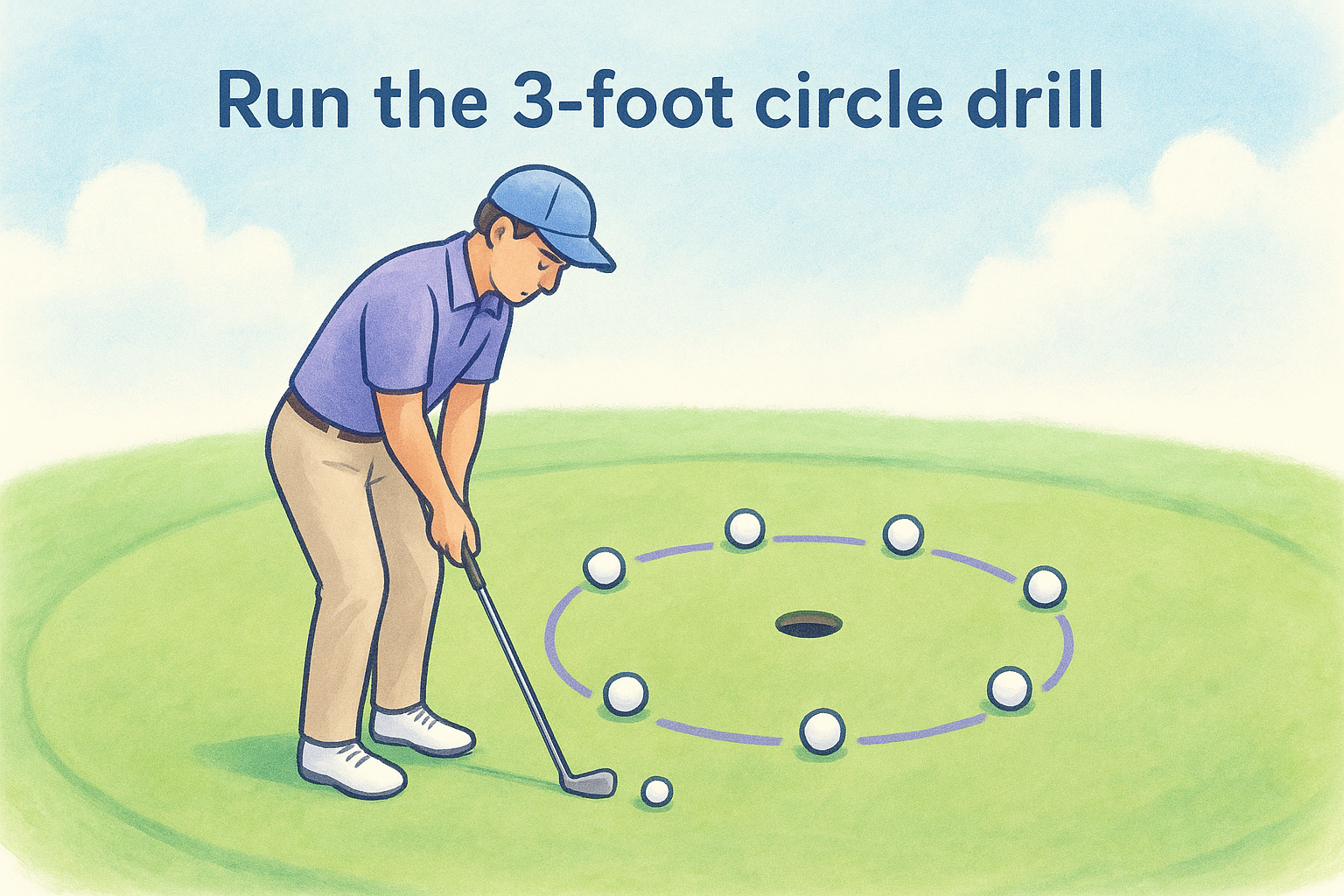
Run the 3-foot circle drill
Place six balls in a circle three feet from the hole and putt them one at a time until you make all six in a row without a miss. This drill builds short putt confidence fast because it punishes sloppy setup and rewards a repeatable stroke. Once you clear six in a row, back up to five feet and repeat.
Add a ladder chipping drill
Drop three balls at 10, 20, and 30 feet from the same spot and chip each one, rating the result as short, on-target, or long. This teaches distance control across different lies without changing your technique, which is exactly what separates a good chipper from someone who only has one shot in the bag.
- 3-foot circle drill: 6 makes in a row before moving back
- Ladder chipping: 3 distances, rate each shot short/on/long
- Total time: 10-15 minutes before hitting a single full swing
A cold putter costs more strokes than a cold driver ever will.
Step 2. Dial in your wedge distances and trajectory
Wedges are where scorecards get saved or wasted, yet most golfers only know their gap wedge distance as "somewhere between 90 and 110." That range is too wide to trust under pressure. Nail down exact carry distances for three swing lengths on each wedge, and you turn guesswork into a number you can commit to before every approach shot.
Build a wedge matrix with the clock system
Use the clock system, where your backswing length is described by hand position (9 o'clock, 10 o'clock, 11 o'clock) instead of feel, to create repeatable, measurable swings. Hit five balls at each length with your pitching wedge, gap wedge, and sand wedge, then log the average carry distance for all nine combinations.
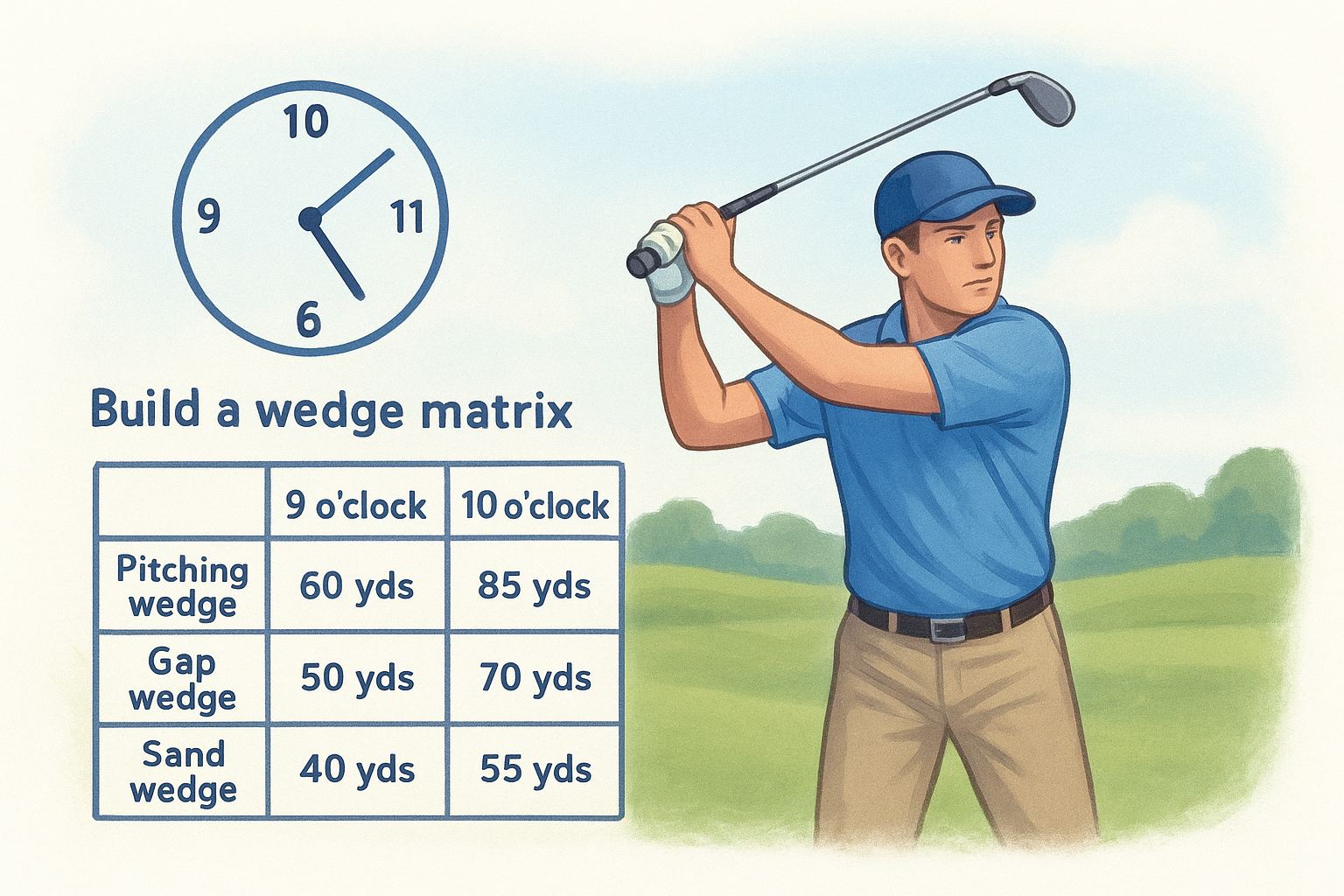
| Wedge | 9 o'clock | 10 o'clock | 11 o'clock |
|---|---|---|---|
| Pitching wedge | 60 yds | 85 yds | 110 yds |
| Gap wedge | 50 yds | 70 yds | 95 yds |
| Sand wedge | 40 yds | 55 yds | 75 yds |
A wedge you've measured beats a wedge you merely trust.
Practice trajectory control, not just distance
Greens firm up, wind picks up, and pins tuck behind bunkers, so distance alone won't save you. Rotate through low, standard, and high trajectory shots with the same wedge from the same distance, rating each one on whether it landed and stopped where you wanted. Ten reps per trajectory type, three times a week, builds the shot-shaping confidence that separates a scrambler from someone who just hopes the ball behaves.
Step 3. Build full-swing consistency and tempo
Full swing practice fails most golfers because they hit ball after ball with the same club at the same target, which grooves whatever tempo they happened to bring that day. Consistency comes from controlling tempo on purpose, not from volume. Before you touch a driver, decide on a swing tempo ratio and a target, then hold yourself to both for every rep.
Groove tempo with a three-count swing
Count "one-two" on the backswing and "three" through impact, out loud if you have to, until the rhythm feels automatic rather than rushed. This three-to-one tempo mirrors what most tour players show on launch monitor data, and it's far easier to repeat under pressure than a swing built on raw speed. Hit ten balls per club using the count, rating each swing as early, on-time, or late.
Tempo you can count is tempo you can trust on the course.
Alternate clubs to build real adaptability
Swinging the same club fifty times in a row teaches your body one narrow motion, which falls apart the moment you switch clubs mid-round. Rotate through your bag instead:
- 7-iron, then driver, then pitching wedge, repeat
- 5 balls per club before switching
- Rate each shot: solid, thin, or fat contact
This rotation forces your setup and tempo to reset every five swings, which is exactly what a real round demands. Building full-swing consistency this way takes longer per session, but it transfers to the course instead of just to the range mat under your feet.
Step 4. Track your practice so skills don't fade
Skills fade the moment you stop revisiting them, following the predictable curve of forgetting, and golf skills fade faster than most because they're purely physical. That gap wedge distance you dialed in on Tuesday starts slipping by the following week if you don't touch it again. Tracking your practice, not just swinging until the bucket empties, is what separates golfers who keep improving from golfers who plateau and blame their equipment.
Log every drill session, not just outcomes
Writing down what you practiced matters more than writing down your score. A simple log, built along the lines of these practice log templates, turns vague memories into real data you can act on:
- Date and drill name (3-foot circle, wedge matrix, tempo count)
- Rating for each attempt (miss/make, short/on/long, early/on-time/late)
- Which skill felt shakiest that day
Over a few weeks, this practice log shows you exactly which drills need more reps and which ones you can safely space out further.
The golfer who tracks practice beats the golfer who just repeats it.
Let spaced repetition schedule your revisits
Guessing when to revisit a skill is the same mistake as guessing wedge distance, you'll either overdo drills you've already mastered or forget ones about to slip. This is where spaced repetition schedules that work for practical skills do the heavy lifting: instead of manually tracking every drill in a notebook, MemoRep schedules your next putting, chipping, or tempo drill right when it's about to fade, using the same Ebbinghaus-based scheduling that keeps musicians' repertoire sharp. Rate each session Again, Hard, Good, or Easy, and the app pushes the drill further out or brings it back sooner automatically.
Making every practice session count
Good golf practice isn't about grinding through more buckets, it's about spending your limited time on the drills that actually move your handicap. Warm up your short game, measure your wedges instead of guessing, count your tempo, and rotate clubs so your body learns to adapt instead of repeat. None of that matters, though, if you can't remember what you worked on last week or when a skill is about to get rusty again.
That's the piece most golfers skip, and it's exactly where structured tracking turns scattered range sessions into steady improvement. Instead of building your own spreadsheet to guess when to revisit each drill, let a system built on proven spaced-repetition science handle the scheduling for you. Curious how the algorithm decides what you practice next? See the science behind MemoRep's scheduling and turn your next range trip into practice that actually sticks.