The 5 Principles of Deliberate Practice Explained
You practice for an hour, but you're not sure if you're actually getting better or just going through the motions. That's the difference between logging hours and real improvement, and it comes down to the five principles of deliberate practice. Musicians, athletes, and anyone building a technical skill run into this wall: repetition alone doesn't create expertise, and without a clear structure, practice time gets wasted on things you already know instead of what you actually need to work on.
So what are the 5 principles of deliberate practice? They come from research on how experts actually develop their skills, not from generic motivational advice. Each principle addresses a specific reason practice fails: vague goals, no feedback, skipping the hard parts, or losing focus halfway through a session. Understanding them changes how you plan every single practice block.
In this article, we break down the 5 principles of deliberate practice one by one, with concrete examples of how they show up in real practice sessions. We also touch on why tools like spaced repetition scheduling, which MemoRep uses, help you apply these principles consistently instead of relying on memory or willpower alone.
1. Push beyond your comfort zone
What it means
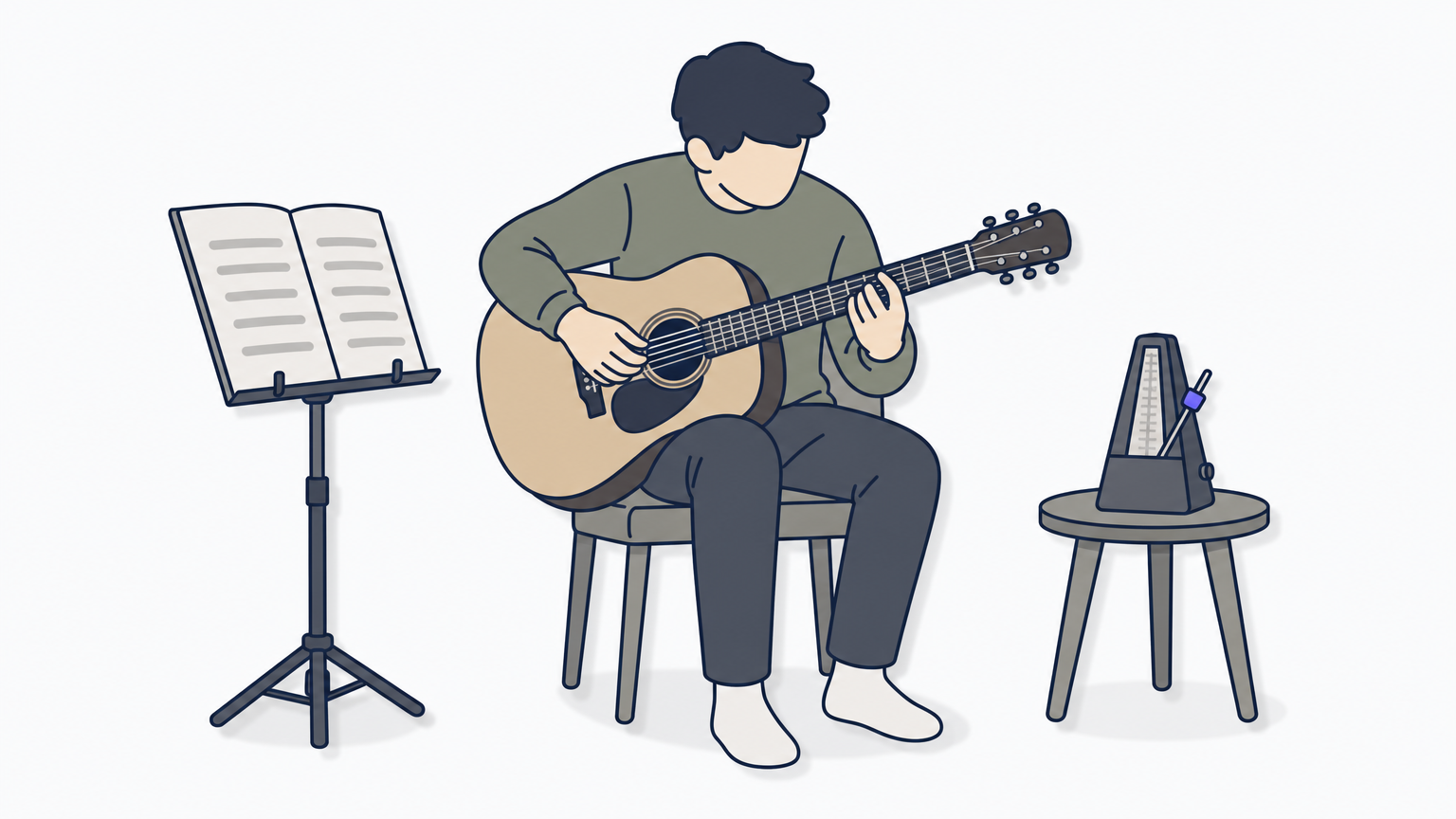
Deliberate practice starts with a simple, uncomfortable truth: if a passage feels easy, you're not improving anymore. Pushing beyond your comfort zone means deliberately choosing exercises that sit just past what you can currently do reliably, not a comfortable review of things you already know. Psychologist Anders Ericsson, whose research forms the basis of these principles, called this working at the edge of your current ability rather than on autopilot.
Why it matters for skill development
Growth happens in that stretch zone between "too easy" and "too hard." Comfort zone practice feels productive because it's smooth and error-free, but smooth sessions rarely change anything. Your brain adapts to challenge, not repetition. A guitarist who runs the same scale at a tempo they've already mastered for six months isn't building new skill, they're just maintaining an old one. The discomfort of stumbling through a slightly-too-fast tempo or a slightly-too-hard technique is the actual mechanism of improvement, not a sign you're doing it wrong.
Real progress only happens in the space between what you can already do and what you can't do yet.
How to apply it in your practice
Structuring a session deliberately takes more than good intentions, since it's tempting to default to what feels good. Try these adjustments in your next few sessions:
- Increase tempo or difficulty by small increments (5-10%) rather than jumping straight to the hardest version
- Isolate the exact bar, chord change, or movement that trips you up instead of replaying the whole piece
- Track when a skill starts feeling automatic, that's your cue to raise the difficulty again
- Rotate between challenge work and consolidation so you don't burn out chasing difficulty every session
Applying this consistently is exactly where structure helps. Inside a MemoRep project, you can log each skill as a practice card and let the scheduling adjust the difficulty and timing based on your own performance ratings, so you're always working near that edge instead of guessing.
2. Work toward well-defined, specific goals
What it means
Vague intentions like "get better at piano" don't give your brain anything to aim at. Well-defined goals break that big ambition into a specific, measurable target for a single session, like "play measures 12-16 at 100 BPM with no missed notes." This is one of the 5 principles of deliberate practice that separates focused improvement from aimless noodling.
Why it matters for skill development
Specificity turns practice into something you can actually evaluate. Without a defined target, you can't tell if a session worked, so you default to "it felt fine." Goals also narrow your attention to the exact skill that needs work, instead of spreading effort across an entire piece or routine.
A goal you can't measure is just a wish disguised as a plan.
How to apply it in your practice
Before each session, write down one specific, checkable outcome rather than a general area to "work on" (guitarists can see what efficient guitar practice looks like built around targets like these). Compare:
| Vague goal | Specific goal |
|---|---|
| Practice scales | Play C major scale, 3 octaves, cleanly at 120 BPM |
| Work on the solo | Nail the bend on beat 3 of bar 24 |
Each practice card in MemoRep works this way by design, since you define the skill precisely when you create it, which forces the specificity that vague practice plans usually lack.
3. Focus intently on practice activities
What it means
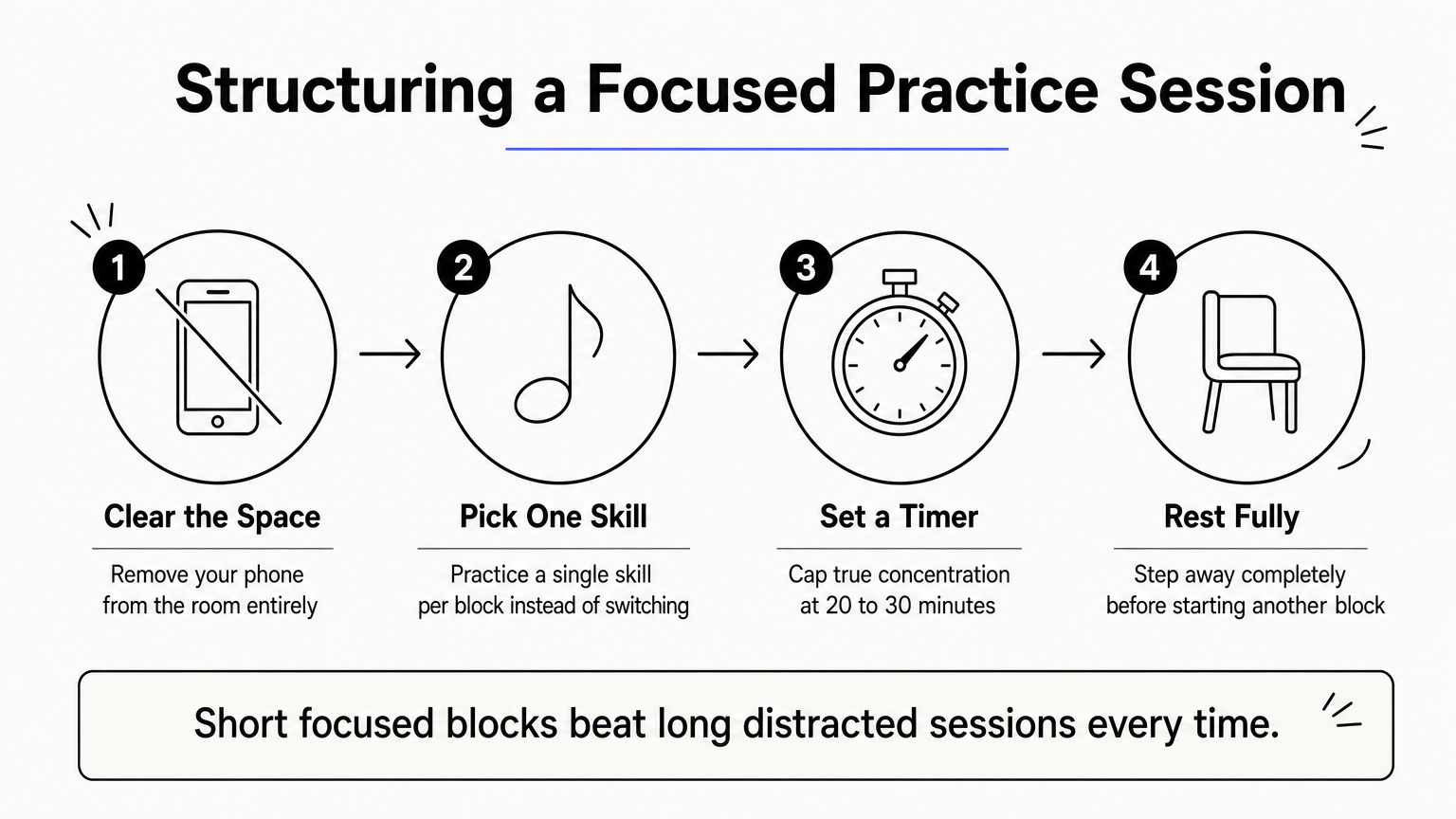
Deliberate practice demands full concentration, not background-noise repetition while your mind drifts to your phone or tomorrow's schedule. Ericsson's research found that experts rarely sustain this kind of focus for more than an hour at a stretch, which is why elite practice sessions are shorter and more intense than casual ones, not longer.
Why it matters for skill development
Unfocused reps don't build skill, they build bad habits you'll have to unlearn later. Your brain only encodes the corrections you consciously notice, so playing through a passage while thinking about dinner teaches you nothing new. Sessions with genuine focus feel harder and shorter, but they produce results that ten unfocused hours never will.
Twenty minutes of full attention beats two hours of distracted repetition every time.
How to apply it in your practice
Treat focus as a resource you budget, not a switch you flip, and learn the techniques that get you into deep focus faster. Try this:
- Cap sessions at 20-30 minutes of true concentration, then rest
- Remove your phone from the room, not just silence it
- Practice one skill per block instead of jumping between several
MemoRep supports this by scheduling one card at a time inside a session, so you're never juggling a full list while trying to concentrate.
4. Receive and respond to feedback
What it means
Practice without feedback is just repetition with extra steps. Immediate feedback tells you whether what you just did worked, so you can correct course on the next attempt instead of the next week. Ericsson's research treats this as non-negotiable: expert-level improvement never happens in a feedback vacuum, whether that feedback comes from a teacher, a recording, or your own honest self-assessment.
Why it matters for skill development
Growth requires a loop, try, notice the gap, adjust, try again. Skip the noticing step and you just reinforce whatever you already did, mistakes included. Responding to feedback is what turns a mediocre take into a better one, rather than a slightly different mediocre take.
Feedback you ignore is worth exactly as much as feedback you never got.
How to apply it in your practice
Build a feedback habit around every attempt, not just the ones that feel off, using practice methods built around fast correction:
- Record yourself and listen back the same day
- Rate each attempt honestly rather than by how it felt in the moment
- Adjust the next rep based on that rating, not on a fixed plan
This is exactly what MemoRep's Again/Hard/Good/Easy rating system captures. Every rating you give feeds directly into when and how that skill resurfaces next.
5. Build and refine a mental model of expertise
What it means
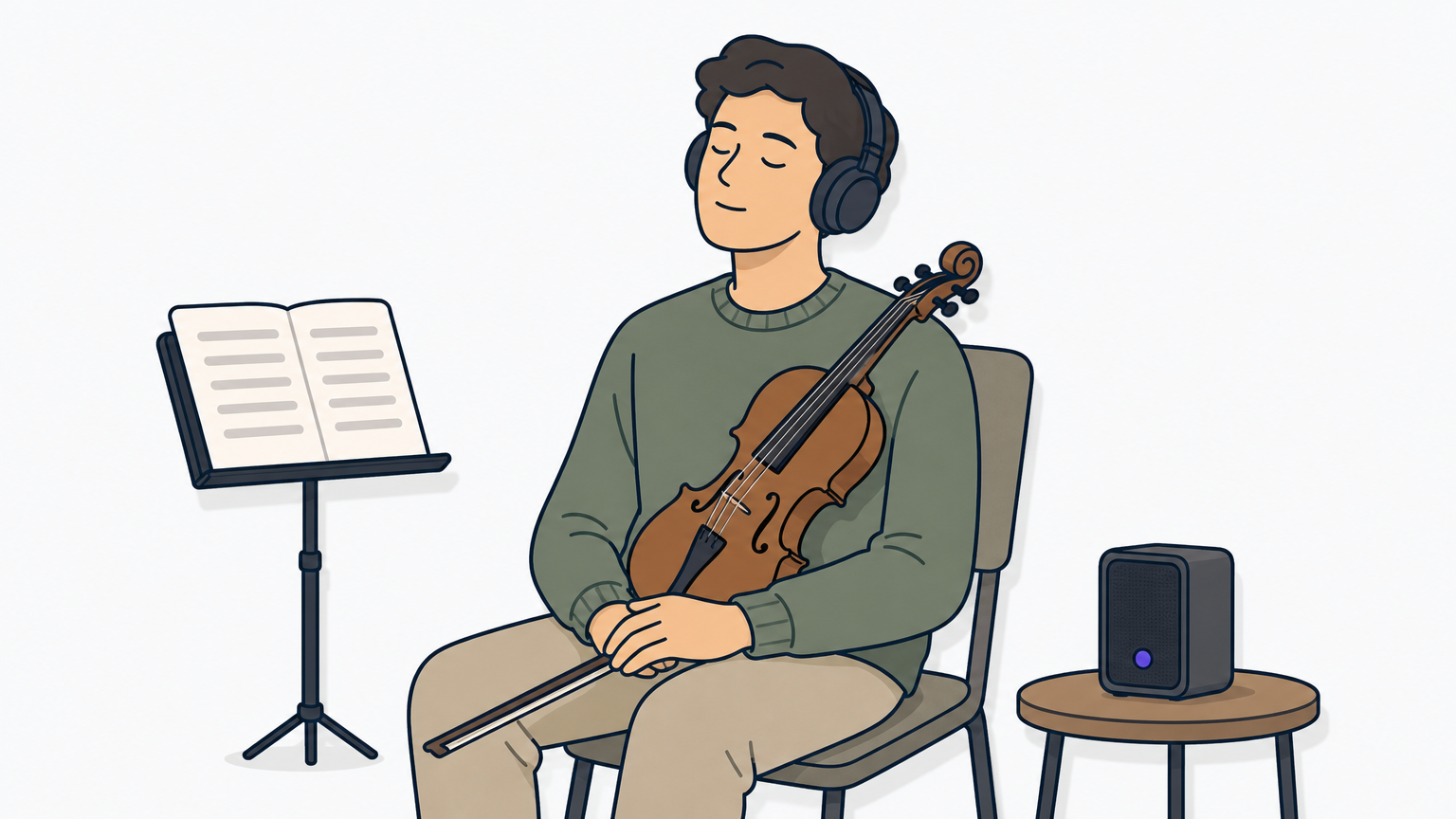
Experts don't just execute skills, they carry a mental model of what correct performance actually sounds, looks, or feels like. This principle means building an internal reference point sharp enough to catch your own mistakes before a teacher or recording has to point them out. A violinist who has internalized what a clean shift sounds like can hear the flaw the instant it happens, not after a full playback.
Why it matters for skill development
Self-correction speeds up everything else on this list. Without an internal standard, you depend entirely on outside feedback, which is slower and less available than your own ear or eye. Refining that model over time is also what separates someone who plateaus at competent from someone who keeps advancing, since each new insight raises the bar you're measuring yourself against.
The better your internal model of correct execution, the less external feedback you need to keep improving.
How to apply it in your practice
Strengthen this model deliberately, leaning on recalling the standard from memory before you check it:
- Study recordings or footage of players who've mastered the exact skill you're working on
- Narrate out loud what "correct" should feel like before you attempt it
- Compare your own recordings against that mental standard, not just against how the attempt felt
Revisiting a card in MemoRep after weeks away often reveals how much your internal standard has sharpened.
Making deliberate practice part of your routine
Knowing the five principles of deliberate practice doesn't automatically make you apply them at 7 AM before work or after a long day. Comfort zone pressure, specific goals, focus, feedback, and a sharpening mental model all take deliberate structure, and that structure is easy to abandon after a few busy weeks. The gap between understanding these principles and actually living them session after session is where most practice routines quietly fall apart.
That's the exact gap MemoRep is built to close. Instead of relying on memory or motivation to track what needs work and when, the platform schedules each skill using the same spaced repetition science that keeps these five principles active by default, not just on your best days. If you want to see the algorithm behind that scheduling, see the spaced repetition science powering memoRep, or just start building your first practice cards and feel the difference within a week.