How to Practice Bass Guitar Effectively: a Routine That Works
You pick up your bass, run through the same three scales, noodle on a riff you already know, and put it down twenty minutes later wondering what you actually accomplished. If that sounds familiar, you're not alone. Learning how to practice bass guitar effectively comes down to structure, not motivation or talent. The real problem is usually a missing practice routine, not a missing skill.
This guide gives you a repeatable framework for organizing your sessions so every minute on the instrument moves you forward. You'll learn how to split your time across techniques, repertoire, and ear training, how to track what needs revisiting before it gets rusty, and how to avoid the trap of practicing whatever feels comfortable instead of what actually needs work. The goal is consistent progress, not random effort.
We'll walk through building a weekly schedule, deciding what deserves daily attention versus occasional review, and setting up a feedback loop so you know when something is actually locked in. If you've ever felt decision fatigue staring at your bass wondering where to start, this routine solves that.
Why a Structured Routine Beats Random Practice
Most bass players don't fail because they lack talent. They fail because they treat practice like a hobby instead of a system. Grabbing your bass and playing whatever feels good for twenty minutes is fun, but it rarely builds new skill. Without a plan, you gravitate toward what you already play well, because sounding competent feels satisfying in the moment. Meanwhile the techniques you actually need to fix sit untouched, week after week. A real practice routine removes that bias by deciding in advance what gets attention and when, instead of leaving it up to whatever mood you're in that day, which is the core of a routine you'll actually stick with.
Why Your Brain Forgets What You Don't Revisit
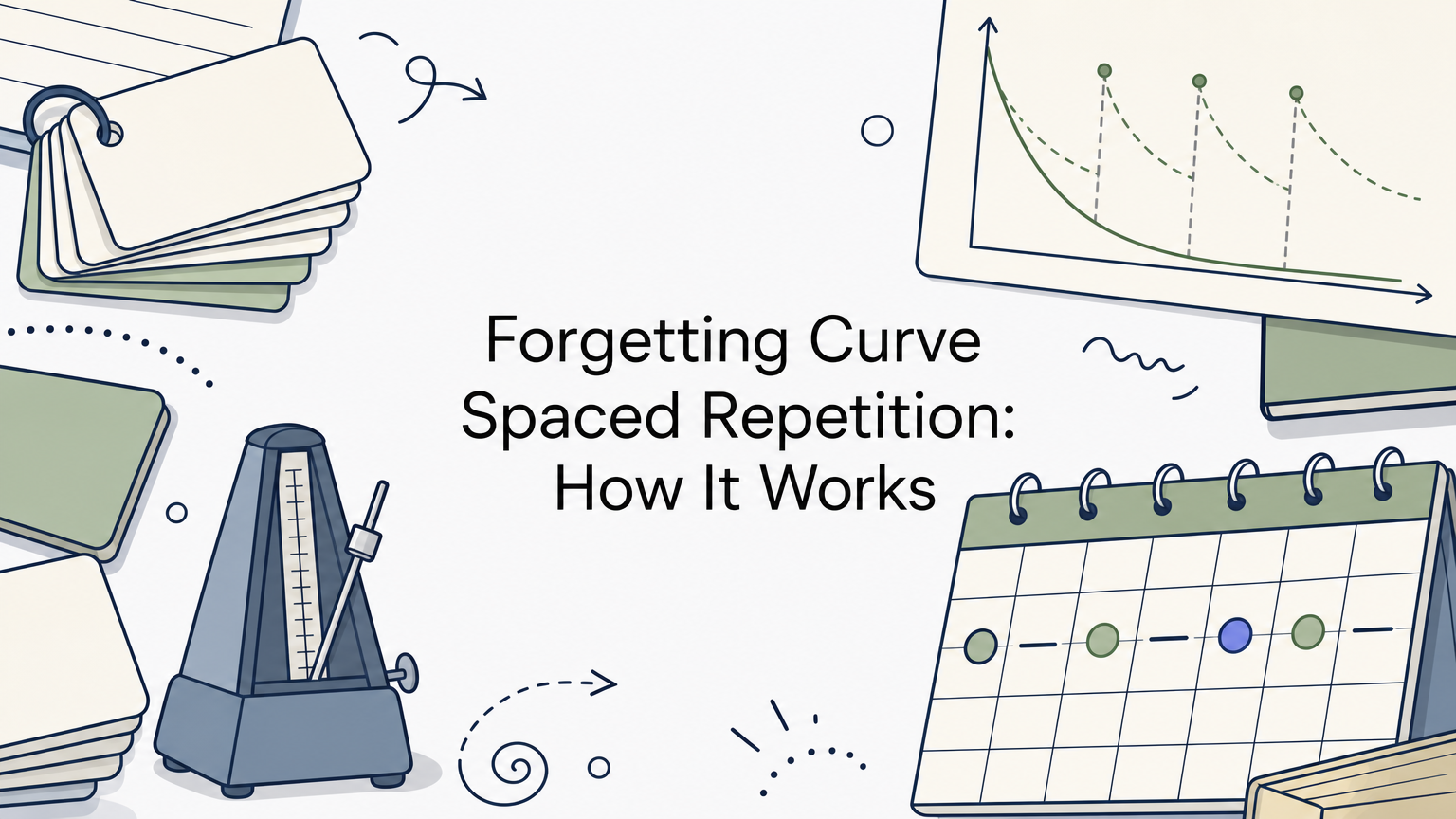
Your brain drops skills fast when you stop reinforcing them. Hermann Ebbinghaus mapped this decay back in the 1880s, and the same math applies whether you're memorizing vocabulary or locking in a walking bass line: retention drops sharply within days of the last review. That's why the riff you nailed three weeks ago now sounds shaky. You moved on before it was actually locked in. The forgetting curve doesn't care how hard you drilled something once; it only responds to whether you came back at the right moment. Spaced repetition works by resurfacing material right before you'd forget it, not weeks after you already have, which is exactly how spaced review timing works.
If you don't revisit a skill before it fades, you're not building progress, you're just repeating the same first month over and over.
Random Practice vs a Structured Routine
Picture two bass players practicing the same hour daily for a month. One rotates between whatever riff feels fun that day. The other follows a session plan: warm-up, technique focus, repertoire section, ear training, each rotated on a schedule with specific pieces flagged for review. After thirty days, the second player can point to exact intervals mastered and specific weak spots eliminated. The first player just feels vaguely "better," with no way to prove what actually changed. That gap between feeling productive and being productive is the whole argument for building a bass practice schedule you actually follow.
| Random Practice | Structured Routine |
|---|---|
| Plays whatever feels comfortable | Targets specific weak spots on purpose |
| No record of what was covered | Logs sessions and review dates |
| Skills fade unnoticed | Skills resurface before they decay |
| Progress feels vague | Progress is measurable week to week |
What a Real System Gives You
Structure also kills decision fatigue. Instead of staring at your bass wondering where to start, a session template tells you exactly what comes first, second, third, no negotiating with yourself at 7am. Tools like MemoRep automate the scheduling side of this using the same spaced repetition math behind flashcard apps, but built around practical skills like scales, riffs, and technique drills instead of text. It queues up exactly which exercise or passage needs your attention today, so you're not the one deciding when something is due for review. You still decide what to practice and how well you play it; the system just handles when.
Step 1. Set Clear, Measurable Goals
Vague intentions like "get better at bass" don't give you anything to schedule or measure, and science-backed practice habits all start with something concrete. You need a specific goal with a deadline attached, something you can break into weekly checkpoints. "Play the bassline to Higher Ground cleanly at full tempo by the end of the month" tells you exactly what to practice and when you'll know you succeeded. Without that specificity, every session becomes a guessing game about what deserves your time.
Break Big Goals Into Weekly Targets
Once you have a destination, work backward into smaller pieces you can tackle in a single week. A three-month goal of learning ten songs for a gig means roughly one new song every nine days, plus review time for the ones you've already learned. This is where most players stall: they set the big goal but never translate it into a weekly target, so nothing gets scheduled and the goal quietly dies. Write the breakdown down somewhere, even if it's just a note on your phone.
A goal without a weekly checkpoint is just a wish, not a practice plan.
Examples of Measurable Bass Goals
Good goals are specific enough that you can answer yes or no when you check them. Compare these pairs:
- Vague: "Improve my slap technique." Measurable: "Play a clean 16th-note slap pattern at 100 BPM without buzzing."
- Vague: "Learn more songs." Measurable: "Memorize the walking bass line for a 12-bar blues in three keys."
- Vague: "Get faster." Measurable: "Run the chromatic scale cleanly at 140 BPM for two minutes straight."
Match Goals to Your Actual Skill Gaps
Don't pick goals based on what looks impressive online. Pick them based on what's actually holding your playing back right now. If your timing drifts during fills, that's your goal, not learning a flashy solo you saw on video. This is the first real step in how to practice bass guitar effectively: aiming your limited practice time at your actual weak points instead of whatever feels exciting to work on. Once the goal is clear, the next step is building a session structure that guarantees you actually work toward it every day, not just when you feel inspired.
Step 2. Build a Repeatable Practice Session Structure
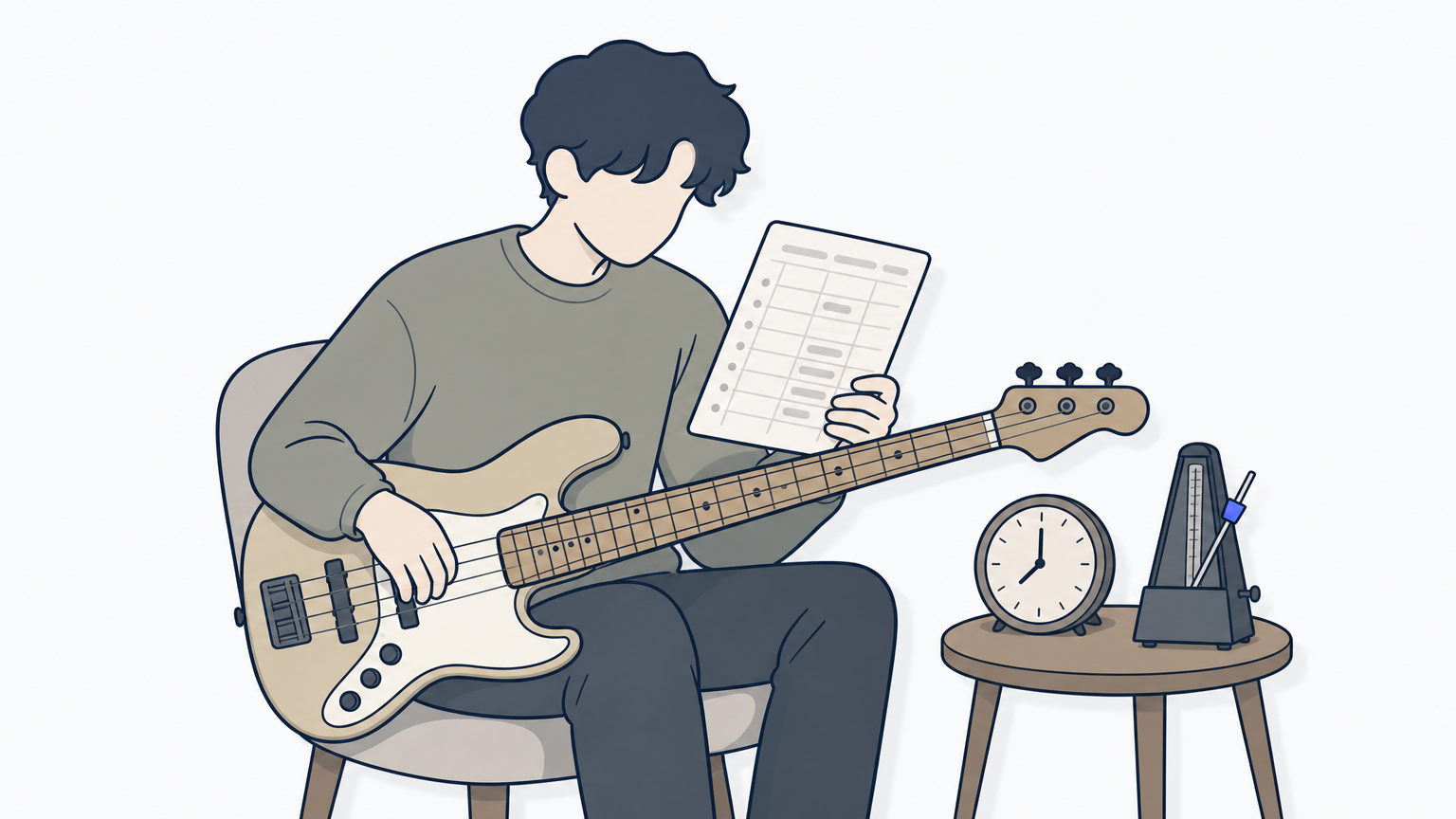
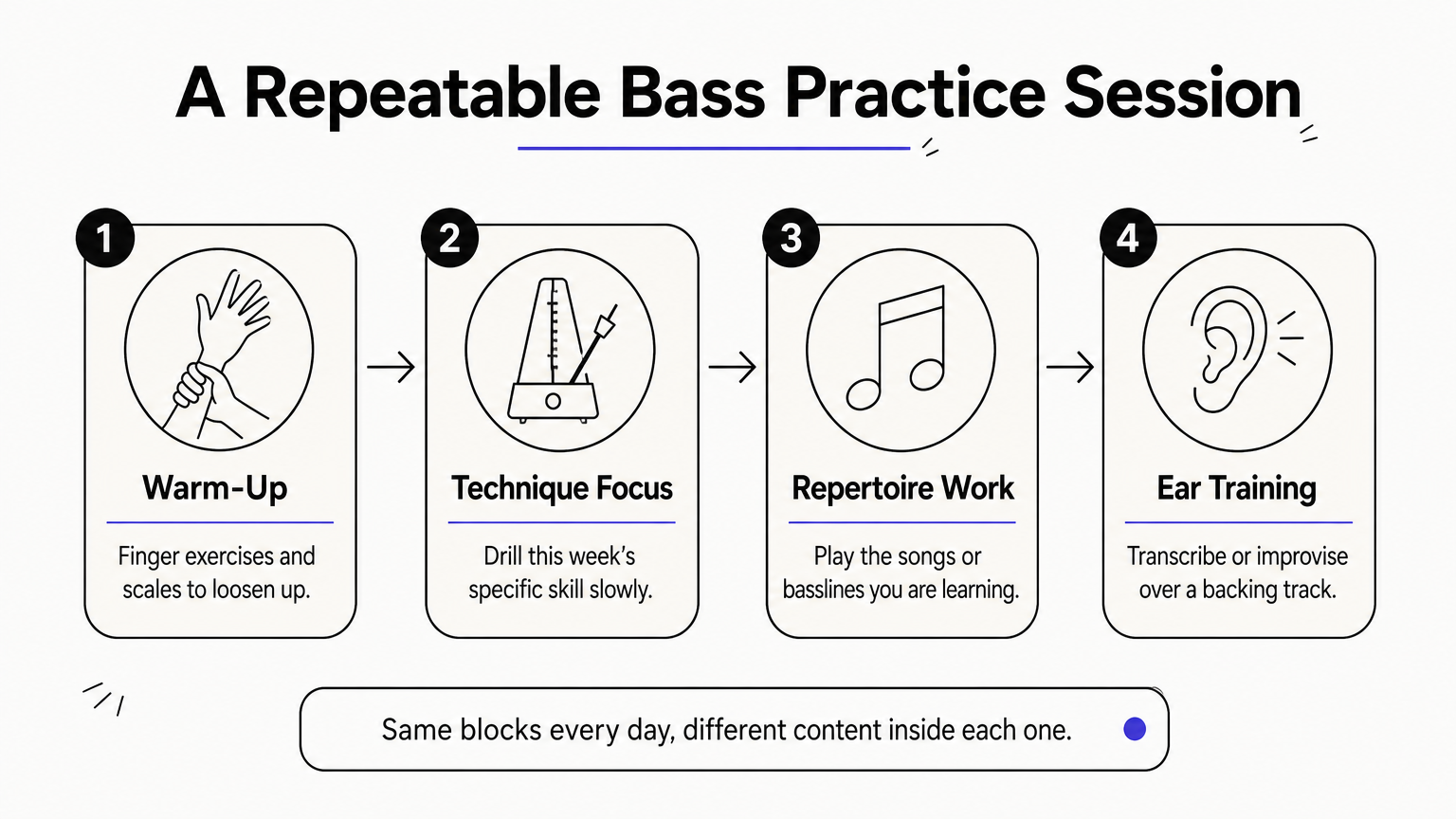
Every session should follow the same skeleton, even though the specific exercises change daily. A repeatable structure means you never waste the first five minutes deciding what to do first, because the order is already fixed: warm-up, technique, repertoire, ear training, the same skeleton behind a deliberate practice plan you can follow. This isn't about rigidity for its own sake. It's about removing friction so you sit down and start playing something useful within thirty seconds of picking up the bass.
Divide Your Session Into Blocks
Split your available time into fixed blocks rather than one long, undirected stretch. A typical session breaks down like this:
- Warm-up (5-10%): finger exercises or scales to get blood flowing and fix your hand position before anything demanding.
- Technique focus (25-30%): the specific skill from your weekly goal, drilled slowly and cleanly.
- Repertoire work (35-40%): the actual songs or basslines you're learning or maintaining.
- Ear training or improvisation (15-20%): transcribing a line by ear or playing over a backing track.
A session without fixed blocks turns into whatever you feel like playing, and that's exactly the habit you're trying to break.
Sample 30-Minute and 60-Minute Templates
How you allocate time depends on how much you have that day, but the ratios stay roughly the same:
| Block | 30-Minute Session | 60-Minute Session |
|---|---|---|
| Warm-up | 3 min | 5 min |
| Technique | 8 min | 18 min |
| Repertoire | 12 min | 25 min |
| Ear training | 5 min | 10 min |
| Review buffer | 2 min | 2 min |
Keep the buffer minute at the end for jotting a quick note on what felt shaky, since that note directly feeds the next step in this routine.
Keep the Structure, Rotate the Content
Only the content inside each block should change day to day, not the blocks themselves. Monday's technique block might drill string skipping, Tuesday's might drill hammer-ons, but the fifteen-minute slot stays put on your calendar. This is where a bass guitar practice schedule with weekly rotation earns its keep: instead of you deciding by memory which technique or riff is due for a refresher, a tool like MemoRep slots the right exercise into that block automatically, based on how long it's been since you last touched it and how well you played it then.
Step 3. Track Progress and Schedule Reviews
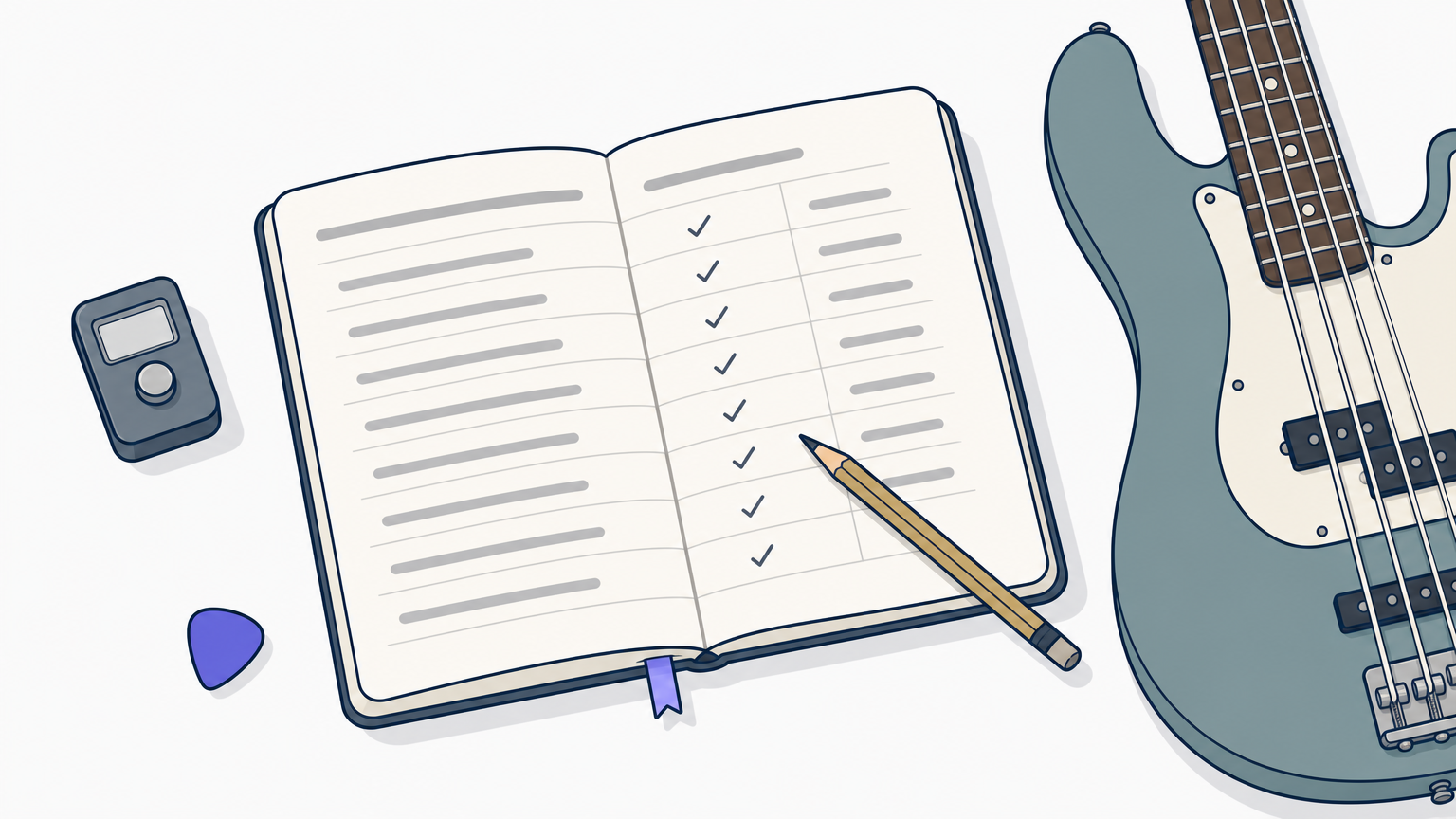
A session you don't log is a session you'll forget by Friday. Once you finish practicing, write down what you worked on, how it went, and when it needs another pass, ideally in a ready-made log you can fill in each session. This is the piece most self-taught players skip, and it's exactly why they can't answer basic questions like "when did I last play this bassline cleanly?" Tracking progress turns a vague sense of improvement into a record you can actually check against.
Rate Every Item Honestly
After each exercise or passage, give it an honest rating instead of just moving on, the same feedback step behind rating each rep against a target. A simple four-point scale works well here, borrowed from spaced repetition systems: Again, Hard, Good, Easy. If you rate something Again, it comes back tomorrow. If you rate it Easy, it can wait two or three weeks before you touch it again. This single habit is what separates guessing from a real spaced repetition schedule.
- Again: fell apart or needed constant stopping, review tomorrow
- Hard: got through it but shaky, review in 2-3 days
- Good: played it cleanly once, review in about a week
- Easy: solid and automatic, review in two to three weeks
If you can't say when a skill is due for review, you're not tracking progress, you're just hoping it stays sharp.
Let the Schedule Decide, Not Your Memory
Manually recalculating review dates for a dozen scales, riffs, and songs gets tedious fast, and tedious systems get abandoned within two weeks. This is where a practice tracker app built for the job beats a notebook. MemoRep applies the same math behind how SM-2 sets your next review date to your practice cards, so your Again-rated hammer-on drill resurfaces tomorrow while your Easy-rated blues line waits three weeks, without you doing the arithmetic. You still decide how well you played it; the app decides when it's due next.
Review the Calendar, Not Just the Song
Weekly, glance back at what got rated Again or Hard repeatedly. That pattern tells you where your practice routine has a real gap, not just a bad day. If the same slap pattern keeps landing on Again for three weeks straight, that's a signal worth acting on, and it feeds directly into the next step: refining the routine itself based on what the data actually shows you.
Step 4. Refine Your Routine Based on Results
A bass guitar practice routine isn't fixed forever. After a few weeks of logging sessions, you'll start seeing patterns that tell you exactly where your practice routine needs adjusting. Maybe your technique block is too short for the drills you actually need, or your repertoire block is padded with songs you already play well. Refining based on real data, not gut feeling, is what separates a routine that keeps working after month three from one you quietly abandon.
Spot Patterns in Your Weekly Log
Go back through your ratings from the past two or three weeks and look for repeat offenders. If a specific drill keeps landing on Again or Hard, that's not bad luck, that's a skill gap your current structure isn't addressing well enough. Common patterns worth watching for:
- The same technique gets rated Again three sessions in a row, meaning your technique block needs more time or a slower tempo target
- Repertoire pieces you rated Easy keep reappearing sooner than expected, meaning your review intervals are too conservative
- Ear training gets skipped most days, meaning the block is scheduled at a point in your session when you're already tired
Your log tells you what to fix; guessing tells you what to worry about.
Adjust Block Ratios When Something Isn't Working
Once you've spotted a pattern, change the ratio, not the whole system. If technique keeps failing, borrow five minutes from repertoire for two weeks and see if the Again ratings drop. Small, deliberate shifts beat scrapping your entire bass practice schedule every time you hit a rough week. Test one change at a time so you actually know what caused the improvement.
Revisit Goals Every Few Weeks
Check back against the measurable goal you set in Step 1 every two to three weeks. If you hit it early, set a harder tempo target or a new song. If you're consistently behind, the goal was too ambitious for your available practice time, not a sign you're failing. This is also where automated scheduling pays off: MemoRep already tracks which cards keep resurfacing on Again versus which ones you've cleared, so instead of manually combing through a notebook, you can see the pattern at a glance and adjust your session template accordingly. Refining isn't a one-time fix, it's a habit you build into the same routine you're already running.
Turning Practice Into Progress
Effective bass practice isn't about finding more hours in the day. It comes down to knowing exactly what to work on, tracking whether it's actually improving, and letting that data steer your next session instead of guesswork. Set a measurable goal, run the same session structure every time, rate your progress honestly, and adjust the routine when your log shows a pattern. That's the whole loop, and it works whether you have fifteen minutes or an hour.
The hardest part isn't the practicing itself, it's the scheduling and tracking that most players abandon after two weeks because a notebook gets tedious fast. That's exactly the gap MemoRep was built to close, applying spaced repetition math to your scales, riffs, and repertoire so you always know what's due today. See how MemoRep decides what's due today, then start your own bass routine.