9 Research-Backed Ways to Practice More Effectively
The short answer to how to practice more effectively is to practice in short, focused blocks, work at the edge of your ability, fix one small thing at a time, get feedback, and revisit each skill on a schedule before you forget it. If you keep losing things you learned last month, spaced repetition suits you best. If your sessions drag on without results, short blocks and a narrow target will help most. If you feel stuck on a plateau, feedback and varied practice are your best bets.
Most people practice by repeating what they can already do, for as long as they have time, in the same order every day. That feels productive, and it is exactly how plateaus form. The problem is rarely effort. It is structure: what you work on, in what order, for how long, and when you come back to it.
MemoRep was built by a musician who kept forgetting guitar techniques he had already learned, so this topic is personal to us. The nine methods below draw on music education research from the University of Texas Center for Music Learning, Anders Ericsson's work on deliberate practice, and learning science on spacing. They cover how to organize practice, not what to play or how to play it. That part belongs to your teacher.
1. Use spaced repetition to schedule your reviews
Practicing more effectively starts with deciding when to return to a skill, not only how long to play. Spaced repetition brings each skill back at the moment you are about to forget it.
What it means
Spaced repetition is a review schedule in which the gap between practice sessions for the same skill grows each time you succeed. Hermann Ebbinghaus charted the forgetting curve in the 1880s. Memory drops steeply right after learning, then flattens, and each well-timed review pushes the next drop further away.
For practice, the unit is a skill: a concrete piece of work such as a passage, an exercise, a warm-up or a technique your teacher has already shown you. This is not flashcard memorization of facts. You are scheduling revisits of things you do with your hands or your voice.
Why it works
Memory researchers call it the spacing effect. Material you meet across several sessions with growing gaps sticks better than the same material crammed into one long block. Each return forces you to pull the skill back from memory, and that effort is what strengthens it.
It also removes a hidden cost. Without a schedule, you spend the first minutes of every session deciding what to work on, and you drift toward what feels good. A schedule cures that decision fatigue and the rusty skill problem, where something you nailed in March is gone by June because nothing ever brought it back.
A skill you review just before it fades costs far less time than one you have to relearn from scratch.
How to apply it
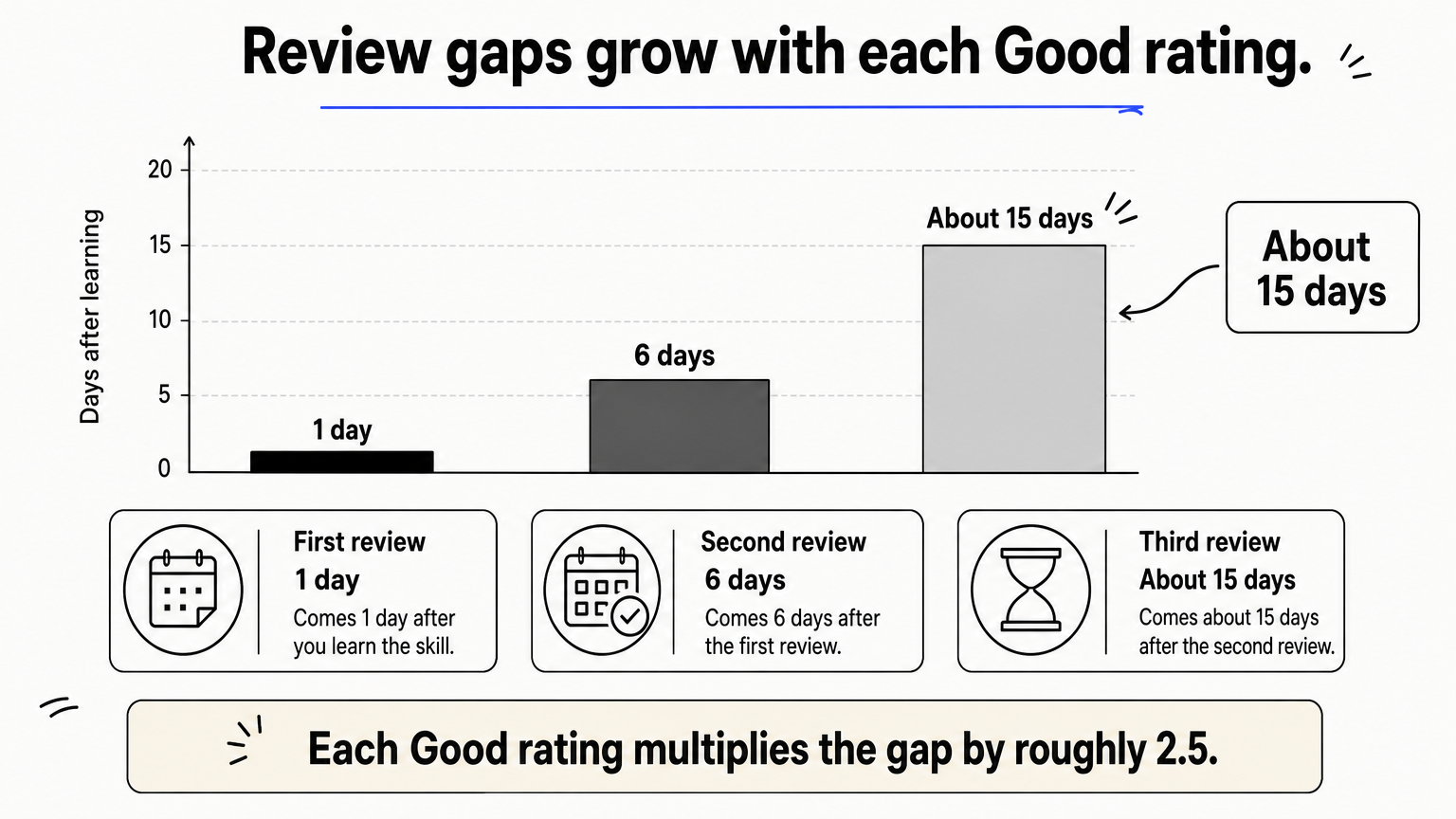
Give every skill your teacher assigns its own card, and rate it honestly after each run: Again, Hard, Good or Easy. The classic SM-2 algorithm, which MemoRep builds on, starts with a one-day gap, then six days, then multiplies the gap by roughly 2.5 for each Good result. An Again rating sends the skill back to a short gap. Here is how a skill learned on day 1 moves if you rate it Good every time:
| Review | Gap since last practice | Falls on |
|---|---|---|
| Learn | none | Day 1 |
| 1st review | 1 day | Day 2 |
| 2nd review | 6 days | Day 8 |
| 3rd review | about 15 days | about Day 23 |
You can run this on paper, but a spreadsheet gets tedious fast. MemoRep does it for you inside projects and shows the next-review date before you save the session, so exact dates shift with your ratings. It tells you what is due, never what to play or how. The first 200 musicians to create an account get permanent free access to the future Premium plan.
2. Split practice into short sessions
You practice more effectively when you divide your daily time into several short sessions instead of one long block. Short sessions keep attention high and give your brain time to store what you did.
What it means
Take the time you have and cut it into segments. Bob Duke and Amy Simmons of the University of Texas suggest that an hour becomes three 20-minute sessions or two 30-minute sessions. They say to do this even if you feel you could keep going.
Their most counterintuitive advice is to stop each session before you really want to stop. You leave with energy left, and you sit down next time wanting to continue rather than dreading it.
Why it works
Deliberate practice is mentally demanding, and attention fades. Geoff Colvin, summarizing Ericsson's research, notes that elite performers rarely sustain more than four or five hours of deliberate practice a day, usually in sessions of 60 to 90 minutes at most. If professionals hit that ceiling, most of us hit it much sooner.
Breaks matter as well. TED-Ed's practice lesson by Annie Bosler and Don Greene points out that frequent repetition with breaks is a habit of elite performers. Memory of what you did needs gaps to settle, so two focused 20-minute blocks usually beat one distracted 40.
Stop while you still want to continue, and your next session starts itself.
How to apply it
Use a timer and honor it, even when the session is going well. Here are example splits for common daily totals. They are starting points, not rules, so adjust them with your teacher.
| Daily time | Example split |
|---|---|
| 30 minutes | Two 15-minute sessions |
| 60 minutes | Three 20-minute or two 30-minute sessions |
| 90 minutes | Three 30-minute sessions |
Put real breaks between sessions, ideally hours apart. If your life only allows one block, split it with a five-minute pause in the middle and treat the halves as two sessions.
3. Aim at the edge of your ability
To practice more effectively, spend your effort on material that is just beyond comfortable, not in the middle of what you already do well. That edge is where learning happens.
What it means
Management educator Noel Tichy describes three zones: the comfort zone, the learning zone and the panic zone. Bosler and Greene define effective practice as consistent, intensely focused work that targets content or weaknesses at the edge of your current abilities.
Duke and Simmons add a balance. Most of your session should be music you can mostly play. If you spend most of your time on pieces you can barely get through, you are wasting time and may be making yourself worse. The two views fit together: a base of mostly playable material, plus one small edge per session.
Why it works
The comfort zone feels good and changes nothing, because you are only repeating what you can already do. The panic zone changes nothing either, because the task is too big to know where to start. Ericsson asked elite violinists to rate practice activities by enjoyment and by usefulness and found the two ratings moved in opposite directions.
This also answers a common question: why am I not getting better even though I practice? Often the honest answer is that your hours are going to the comfort zone. A simple test helps. If you zone out or feel bored during practice, you are probably not stretching.
If practice never feels slightly uncomfortable, it is probably maintenance, not improvement.
How to apply it
Label each item in your session as comfortable, edge or too big. If a skill always earns an Easy rating, it has stopped teaching you, so ask your teacher what comes next. If it always earns Again, it is probably in the panic zone, and your teacher can break it into smaller pieces.
- Mostly Easy ratings: the skill is maintenance. Keep it on a slow review schedule.
- Mix of Hard and Good: you are in the learning zone. This is where most of your focus belongs.
- Repeated Again: the piece is too big right now. Ask for a smaller version.
4. Fix one small thing at a time
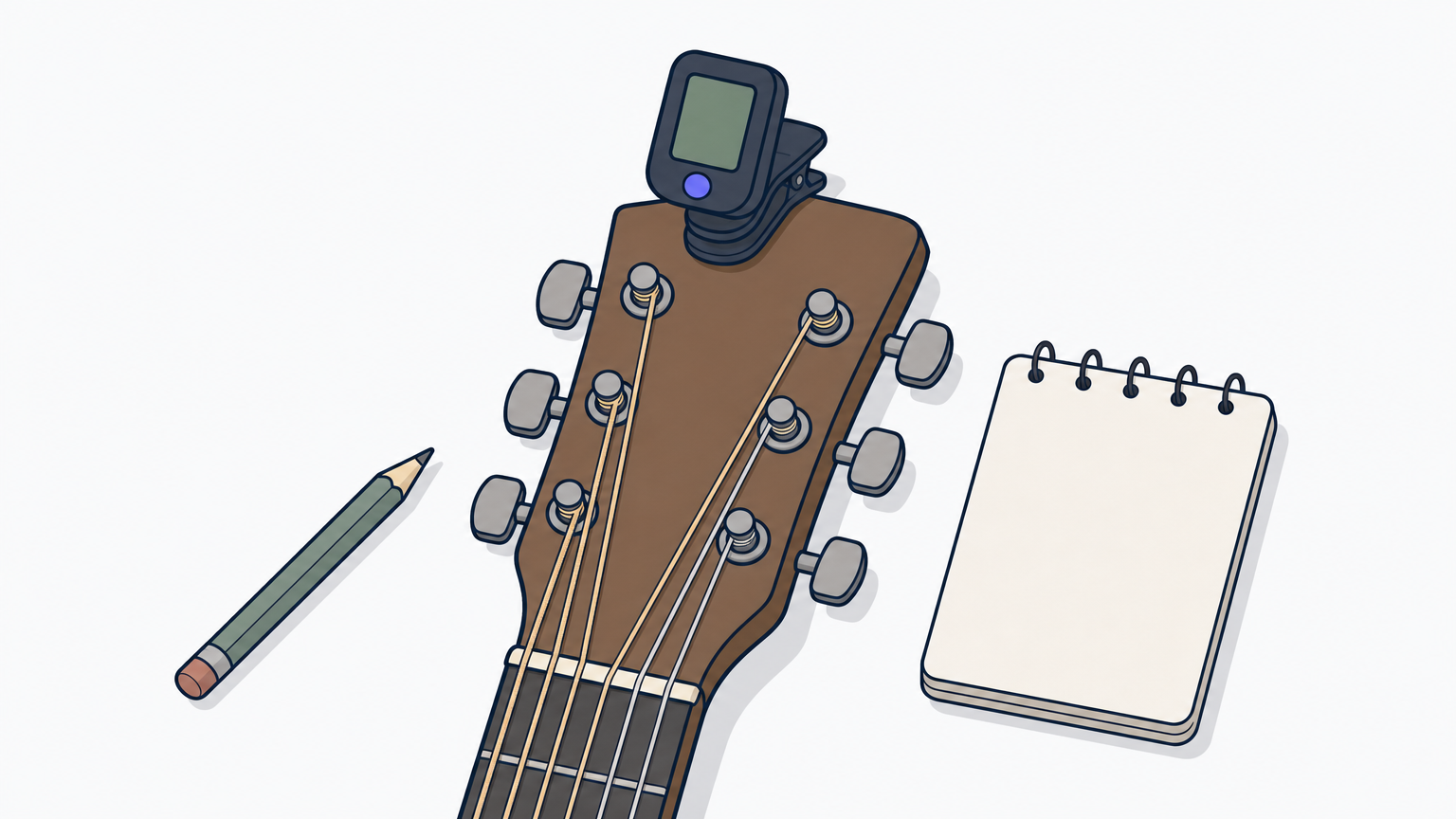
Practicing more effectively means picking one small target per session and making it truly good, rather than trying to improve everything at once.
What it means
Duke and Simmons put it plainly: rather than make a lot of things better in a single session, make one small thing great. Their examples of "small" are refining how a single note starts, making a slur sound even, or ending a note quietly. Not better, but great.
The size of the target matters more than its topic. Your teacher decides which small thing deserves your attention. Your job is to keep the target narrow enough that you can tell when you have reached it.
Why it works
A narrow target gives you a clear finish line and a clear signal. If you never experience moments when a small thing sounds and feels terrific, Duke argues, you will have difficulty refining how you play at all. You need to know what "great" feels like to aim at it.
Narrow targets also keep you honest about difficulty. When a hard passage is too much, the researchers advise simplifying it, but changing as little as possible so it stays close to the final version. A heavily simplified exercise teaches a different thing than the real one.
One thing made great teaches you more than ten things made slightly better.
How to apply it
Before each session, write one checkable target per skill. The test is whether a stranger could tell if you hit it. Duke and Simmons contrast "I can now play that interval perfectly in tune" with "I got the rhythm a little better," which means almost nothing. Copy this template into your notes:
Skill: ______________________
One small target: ______________________
Done when: ______________________ (something I can hear, see or count)
After practice, did I hit it? Yes / Not yet
If the answer is "not yet" three sessions in a row, bring it to your teacher. The target may be too big, or something is missing that only a trained ear will spot.
5. Mix the order and vary conditions
Practice more effectively by rotating between goals in short stretches and changing small details from day to day, instead of repeating one routine in one fixed order.
What it means
Two ideas live here. Interleaving means switching between goals during a session. Variation means changing something minor each time, such as the order of your items, where you start within a piece, or the exact conditions you practice under.
Duke and Simmons give a clear example. With 45 minutes and three goals, do not give each one 15 straight minutes. Work about five minutes on the first, move to the next, then the next, and cycle.
Why it works
Changing things up makes your brain pay more attention and work harder, and that extra effort is what helps it remember. Duke notes this way of working has been shown to be very effective for refining skills, even though you may not perform as accurately in the moment as you would with long blocks.
Learning researchers call this a desirable difficulty. Practice feels messier but the gains last longer. If you only judge a session by how smooth it felt, you will pick the method that feels best and works worst.
Smooth practice feels productive. Slightly messy practice usually sticks better.
How to apply it
Rotate your goals rather than finishing one before the next. Here is the same 45 minutes, both ways, with three goals A, B and C:
| Approach | Order of the 45 minutes |
|---|---|
| Blocked | A (15) → B (15) → C (15) |
| Rotated | A (5) → B (5) → C (5), repeated three times |
Then add small variations. Shuffle the order of your items each day. Start a piece from a different spot than usual. Keep the target the same and change only the surroundings. This is also the cheapest answer to the question of how to practice more effectively at home: the room never changes, so you change the order.
6. Get feedback and measure real progress
You practice more effectively when something outside your own impression tells you whether practice is working. Feedback is the difference between repeating and improving.
What it means
Ericsson's research on deliberate practice treats continuous feedback as a core ingredient, usually from a teacher or coach. Without it, you keep making the same mistakes because you do not notice them.
Measurement matters just as much. Choose results that reflect real improvement, such as whether a passage now holds up under your target, not vanity metrics like minutes logged. Minutes tell you how long you sat. They tell you nothing about what changed.
Why it works
A teacher sees your performance from outside, without overconfidence or bias, and knows the best order in which to learn things. Colvin notes that even the world's best golfers still go to teachers. If you have no teacher right now, you can still borrow the principle by building self-observation: listening to yourself as a critical outsider and asking what caused each miss.
Duke and Simmons recommend a few minutes at the end of every session to describe what you accomplished in tangible terms. The act of describing it forces precision and lets you enjoy small wins, which keeps you motivated.
If you cannot say what changed in a session, you cannot know whether it worked.
How to apply it
Build a short feedback loop into every week. Use this list as your minimum:
- End each session with a three-minute review. Write one concrete thing you got better at and one thing that still fails.
- Record yourself once a week. Listen the next day, when you are no longer in the moment.
- Bring your notes to every lesson. Ask your teacher about the misses, not just the wins.
- Rate each skill honestly. A skill that moves from Hard to Good over several weeks is real progress.
In MemoRep, you can log what happened in a session, keep notes at the skill or session level and attach image evidence. Over time, that journal shows you your own pattern of progress, with no guessing.
7. Remove distractions and protect your focus
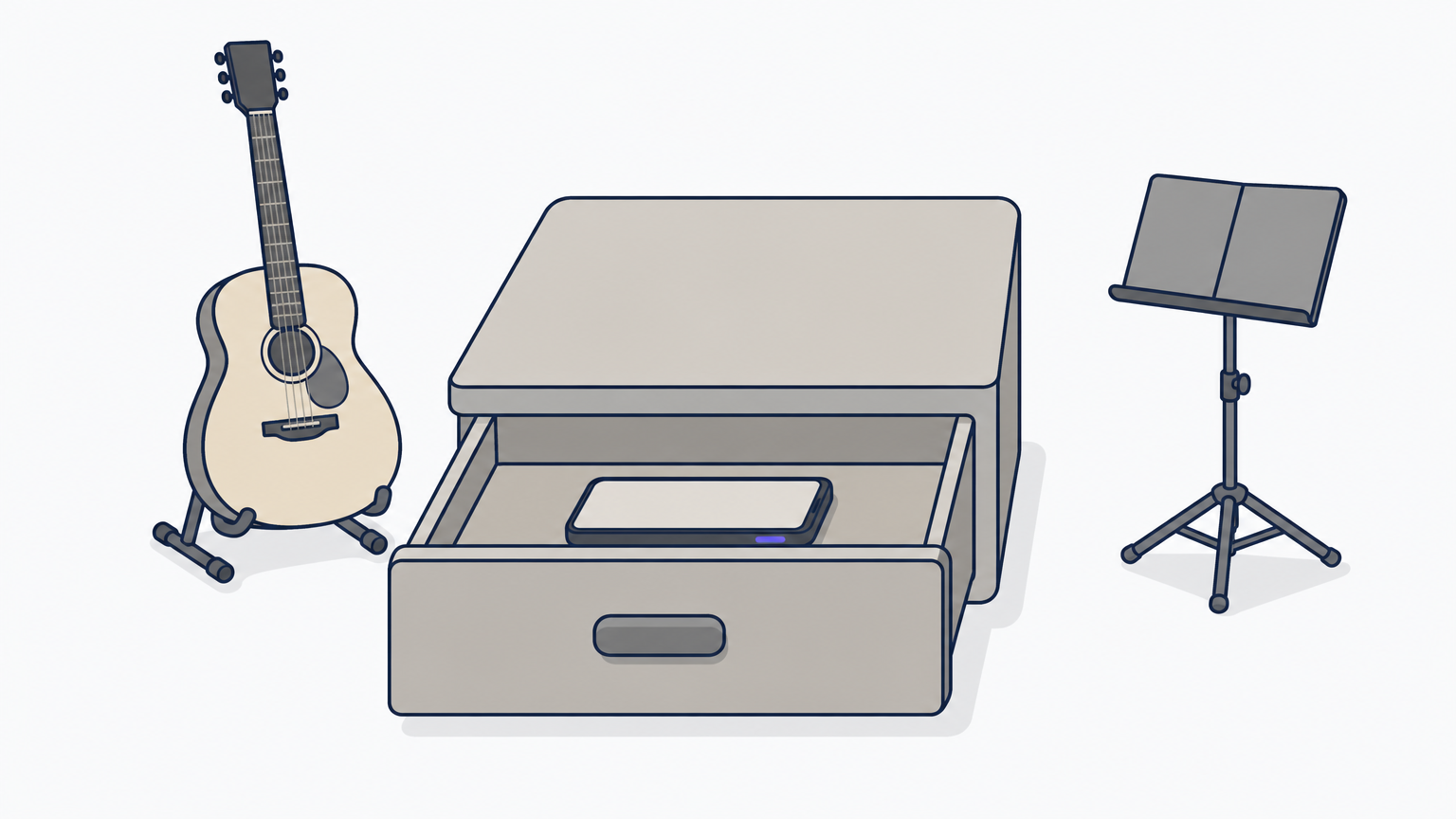
Practicing more effectively means giving the task your full attention for a short, defined time. A distracted hour produces less than a focused fifteen minutes.
What it means
The first point in Bosler and Greene's TED-Ed lesson, as NPR summarized it, is to focus on the task at hand and shut off digital distractions. Ericsson put it bluntly: you seldom improve much without giving the task your full attention.
Focus is a skill you can train. The authors of The Game Before the Game suggest that if you can only stay present for five minutes, take a break every five minutes, then extend your attention span over time.
Why it works
Deliberate practice is hard mental work. Divided attention means you repeat actions without noticing what is happening, which is exactly how people log hundreds of hours without changing. That is another reason "why am I not improving?" has such a frustrating answer: your hands were there, but your attention was not.
Intense focus also lets you read your own feedback. You cannot tell whether a change worked if half your mind is on a notification.
Quality of attention beats quantity of minutes every time.
How to apply it
Prepare the environment before the timer starts, so nothing pulls you out mid-session:
- Put your phone in another room, or use Do Not Disturb.
- Set out materials and your instrument beforehand.
- Decide what you will work on before you sit down, so you do not use focus on choosing.
- Use a timer for each block and stop when it ends.
- Practice when you are freshest. Many players find early in the day works best, but pick the time when you are actually alert.
Planning ahead is where a scheduler earns its keep. When MemoRep opens your session with the due skills and an estimated time, you start immediately instead of deliberating. The running session keeps the active skill, timer and notes in one view, and you can pause or skip a skill when something interrupts you.
8. Treat rest and sleep as part of practice
You practice more effectively when you plan rest as carefully as work. Your brain stores what you practiced while you rest and sleep, so cutting rest cuts results.
What it means
Rest includes three things: breaks between sessions, days with lighter loads, and sleep. Ericsson found that elite violinists slept an average of about eight hours a night and often took afternoon naps. They did not treat sleep as lost practice time.
The idea is that deliberate practice is sustainable only when it is balanced with real recovery. How long you keep at a skill over months and years matters more than how many hours you cram into a single day.
Why it works
Sleep helps move new learning from short-term to long-term memory. Sleep loss hurts attention and recall, so you remember less of what you worked on. If you trade sleep for extra practice, you are paying twice: the session is worse, and less of it stays.
Mind-wandering plays a role too. After a focused burst, relaxed activity lets your brain make connections it cannot make under pressure. Learning researchers describe a focused mode for details and a diffuse mode for the bigger picture, and complex skills need both.
Rest is where practice gets stored, so skipping it wastes the work you already did.
How to apply it
Take real breaks. Between blocks, spend at least five minutes on something low-effort like a walk, washing dishes or looking out a window. Avoid scrolling, which keeps your brain in focused mode.
Protect your sleep. Do not stay up late to squeeze in extra minutes. A well-timed session earlier in the day is worth more than a tired one at midnight.
Let your schedule give you lighter days. With spaced repetition, not every skill is due every day, so some days are naturally short. If you feel worn out in the middle of a session, pause or skip a skill and come back. If anything physically hurts when you practice, stop and talk to your teacher.
9. Make practice a routine you can keep
Practicing more effectively over months comes down to consistency. A modest routine you actually keep beats an ambitious plan you drop after two weeks.
What it means
A routine is a fixed time, a minimum session and a plan for what you will work on. Piano teachers often advise scheduling practice like an appointment, at the same time each day, and the logic holds for any skill. When the decision of whether to practice is already made, you spend your willpower on the practice itself.
Consistency also works over long stretches. Psychologist John Hayes studied composers and found that notable works almost always came at least ten years after serious study began. Skill is built slowly, and routines make slow work possible.
Why it works
Routines cut the friction of starting. They also match how memory works: regular, shorter sessions use the spacing effect, which a weekend cram cannot.
Expect honest limits. You may have heard of the 20-hour rule. Josh Kaufman popularized it as a rule of thumb: about 20 hours of focused practice, roughly 40 minutes a day for a month, gets you past the frustrating beginning of a new skill. It is not a research finding and it does not promise mastery. Likewise, no method makes you learn ten times faster. What works is stacking several modest gains: less wasted time, fewer forgotten skills and clearer feedback.
Consistency compounds. A small daily routine outperforms occasional heroic sessions.
How to apply it
Build the routine in four steps:
- Pick a fixed time that you can defend on a bad day.
- Set a floor. Ten minutes counts as a session, so a busy day never becomes a zero day.
- Keep a main project. Too many things at once splits your attention, so mark one as your focus.
- Review weekly with your teacher and adjust what you work on.
MemoRep supports this by letting you keep several projects organized in groups, with one marked as your main focus, and by sending practice reminders. You can use any calendar and notebook for the same purpose. What matters is that the plan exists before the day starts.
Where to start
Every method above rests on one idea: practice is a system, not a number of hours. Short sessions, a narrow target, work at the edge of your ability, varied order, honest feedback, focus, rest and a routine you can keep all protect the same thing, which is that your effort turns into skill that lasts.
You do not need to adopt all nine at once. Choose the one that matches your biggest problem. If you forget things, start with spacing. If you plateau, start with the edge of your ability and feedback. Then bring your results to your teacher, who decides what to practice and how.
If you want the scheduling handled for you, start your first project in MemoRep and let it tell you what to practice and when.